Jan Victors
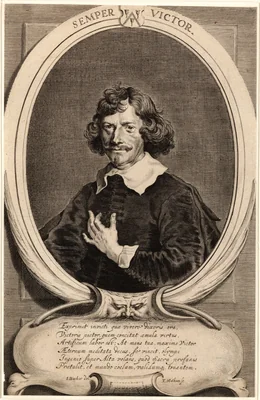
Jan Victors (or Fictor) holds a significant, if often underappreciated, position among the artists flourishing during the Dutch Golden Age. Active primarily between 1640 and 1655, his output consisted mainly of large-scale history paintings based on Biblical narratives, although he occasionally turned his attention to robust genre scenes.
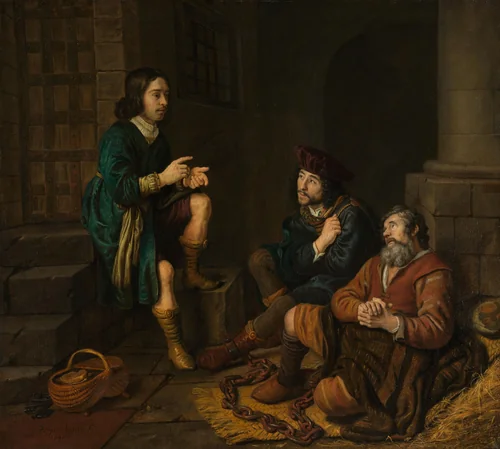
Scholarly consensus frequently links Victors to Rembrandt van Rijn, suggesting he was likely a pupil in the master's Amsterdam studio during the early 1630s. This close association is evident in Victors’s assured technique, his strong grasp of chiaroscuro, and his preference for dramatic, high-contrast lighting designed to highlight emotional turning points. His monumental compositions, such as Joseph Interprets the Dreams of the Baker and the Butler, demonstrate his capacity for focusing on the psychological stress inherent in complex narrative moments.
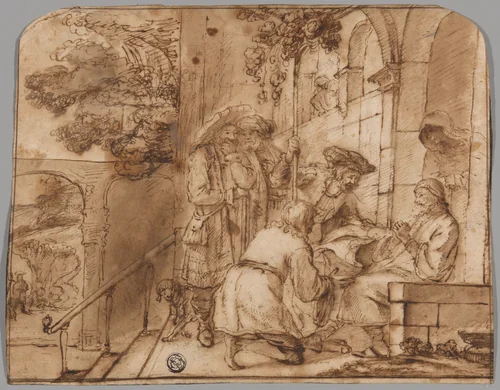
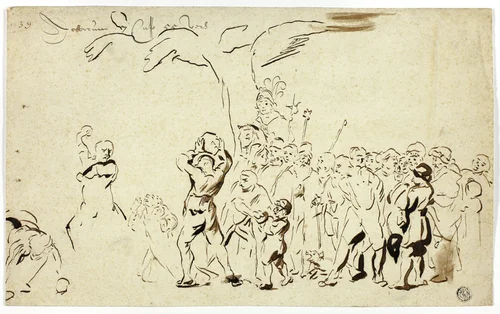
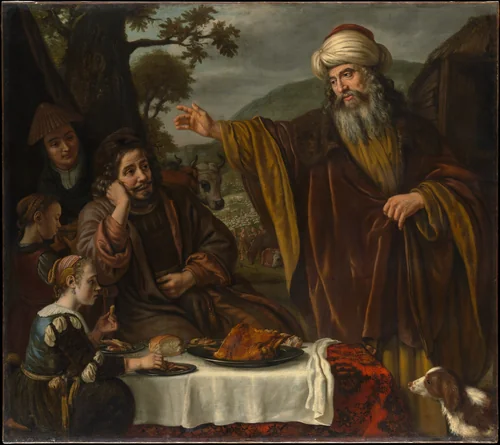
Victors excelled at illustrating scenes of high drama and moral crisis, managing multiple figures within elaborate settings, as seen in the striking composition of Joseph's Brothers Showing His Coat to Jacob and the harrowing subject matter of Stoning of Saint Stephen. Yet, it is the juxtaposition of these sacred history pieces with his more visceral genre works that defines his versatility.
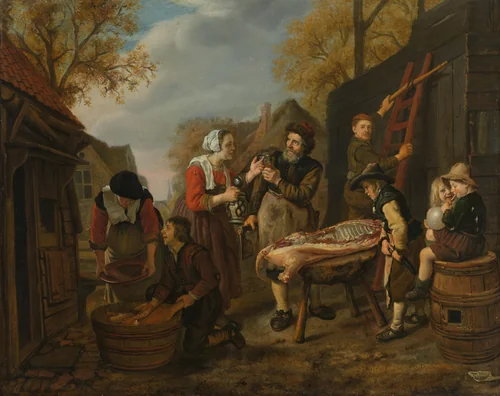
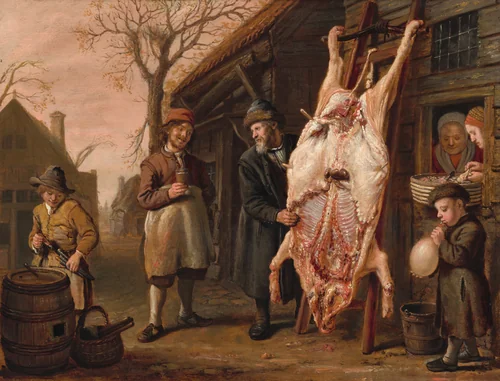
His paintings depicting agricultural life, particularly Butchering a Pig and The Slaughtered Hog, stand as striking counterpoints to his elevated Biblical scenes. These powerful images of domestic labor and preparation eschew idealism, displaying instead a grounded reality that suggests an artist comfortable observing both the divine narrative and the daily routines of Amsterdam life. It takes a certain confident draughtsman to shift seamlessly from the suffering of a martyr to the exacting depiction of the hanging viscera of a carcass.
Despite a relatively short documented career in the Netherlands, the clarity and dramatic quality of Jan Victors paintings ensured his stature. Today, important examples of his work are held in prestigious international institutions, including the Rijksmuseum, the Art Institute of Chicago, and the National Gallery of Art. Many of his significant compositions, now entering the public domain, are becoming available as high-quality prints and downloadable artwork, ensuring that his technique continues to be studied globally. Victors’s life concluded around 1655, most likely after embarking on a migration to the Dutch East Indies, adding a final, somewhat enigmatic coda to the career of this versatile Golden Age master.
Source: Wikipedia · CC BY-SA 4.0