Jan van Londerseel
Jan van Londerseel occupies a crucial position within late 16th and early 17th-century Northern European graphic arts. A highly proficient Flemish draughtsman, engraver, and etcher, Londerseel’s active career, spanning approximately 1580 to 1602, coincided with the vital shift in artistic authority from the established center of Antwerp to the burgeoning cultural landscape of the Dutch Republic. After training and early professional work in Flanders, his subsequent relocation and activity in the North cemented his relevance as a printmaker operating during a time of significant political and stylistic transition. His importance is confirmed by the sustained inclusion of his work in major institutional holdings today, including the Rijksmuseum and the Cleveland Museum of Art.
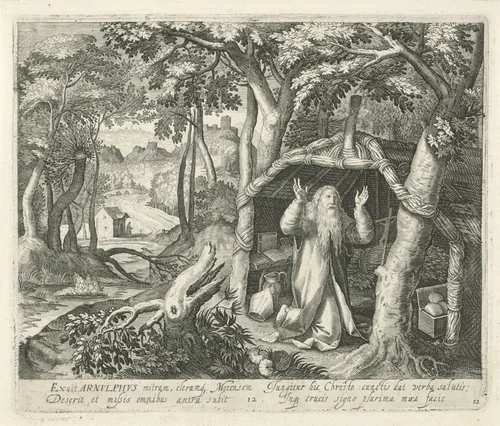
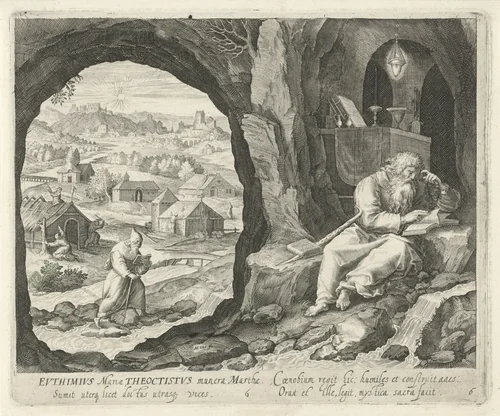
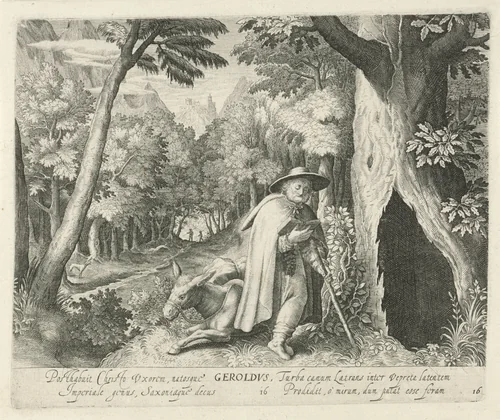
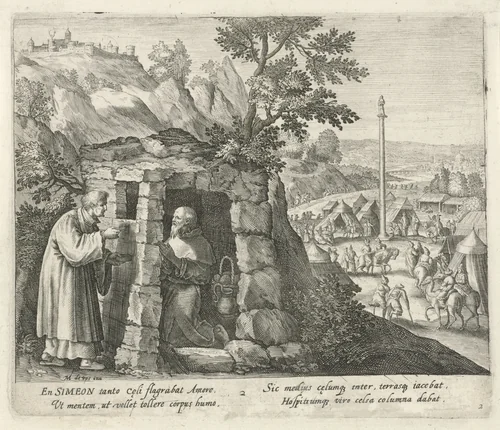
Londerseel demonstrated technical command across various printmaking processes. While celebrated for the precision required of line engraving, his oeuvre also benefited from the immediacy and atmospheric quality of etching. His limited known body of work highlights a dedication to both devotional subjects and integrated narrative landscapes. A thematic grouping that defines a significant portion of his output features the intense ascetic lifestyle, exemplified by prints such as H. Arnulphus van Metz als kluizenaar and H. Simeon de Styliet als kluizenaar. It is perhaps an intriguing quirk of his biography that Londerseel appears so dedicated to the solitary, contemplative lives of hermits.
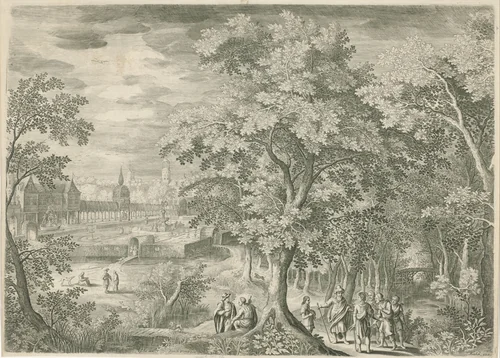
Contrasting these intense figure studies, his production also included complex genre compositions, such as the ambitious Bosrijk landschap met de parabel van de arbeiders in de wijngaard, where detailed biblical narrative is seamlessly integrated into a densely rendered wooded environment. This synthesis of figure and landscape reflects the continuing influence of the Antwerp tradition filtered through the emerging tastes of the Dutch market.
Though his documented output occurred across barely two decades, Londerseel’s technical proficiency ensured the survival and influence of his compositions. The commercial nature of printmaking allowed for broad distribution across Europe, democratizing access to high-quality prints featuring both spiritual and observational subjects. Today, the clarity and detail of his compositions remain highly valued by scholars and collectors. Fortunately, many of Londerseel's key works are preserved in the public domain, allowing contemporary audiences the opportunity to study the nuanced draftsmanship of this influential transition-era master.
Source: Wikipedia · CC BY-SA 4.0