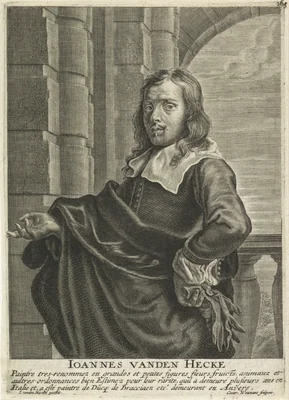
Jan van den Hecke
Jan van den Hecke (1620–1684) occupies an important position within seventeenth-century Flemish Baroque art, distinguished by his expansive versatility. Operating simultaneously as a painter, draughtsman, and master engraver, his output spanned the major genres of the period: the precise still life, the expansive landscape, and the often-dramatic battle scene.
Following foundational training in Antwerp, Van den Hecke undertook a formative journey to Italy. His sojourn in Rome was instrumental, establishing connections with influential figures and securing important patrons who appreciated his ability to render both detailed naturalism and grand narratives. This period solidified the high technical standard evident across all his subsequent work.
Upon returning north to the Spanish Netherlands, Van den Hecke enjoyed a brief but strategically important tenure in Brussels. Here, he focused on refined flower still lifes that catered to the sophisticated tastes of Archduke Leopold Wilhelm of Austria, the Hapsburg governor. While today known largely for his sweeping military canvases and landscapes, this focused period suggests that Van den Hecke could shift from painting cavalry charges to rendering the delicate perfection of a tulip with effortless grace. After this successful segment in Brussels, he ultimately returned to work in Antwerp.
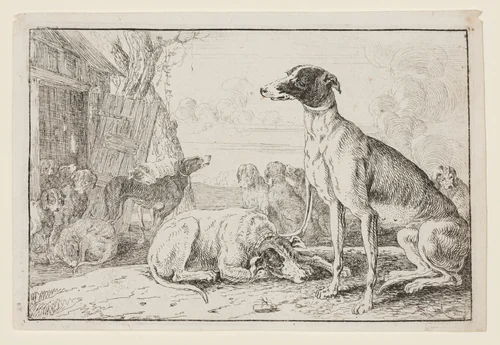
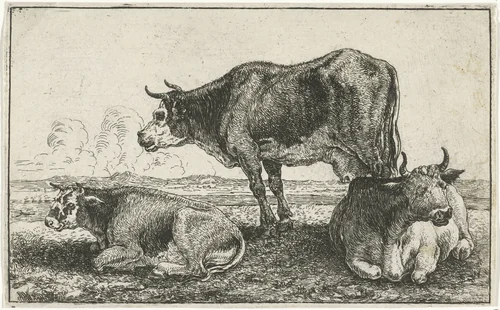
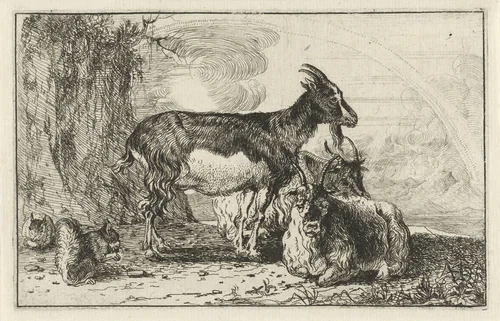
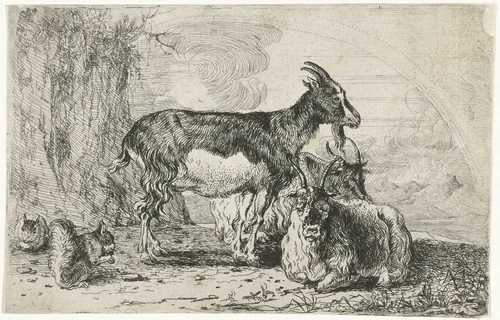
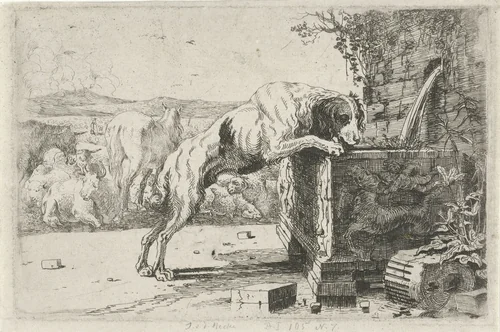
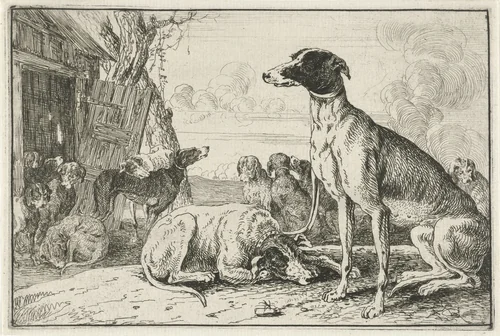
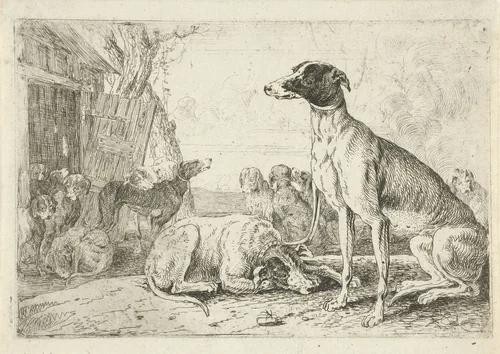
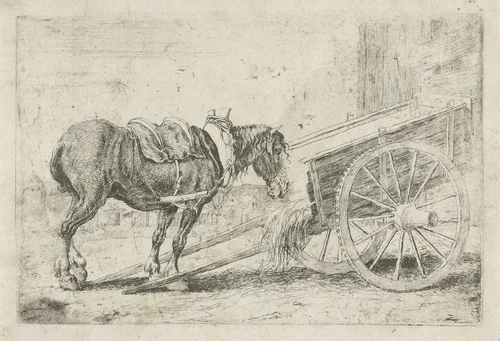
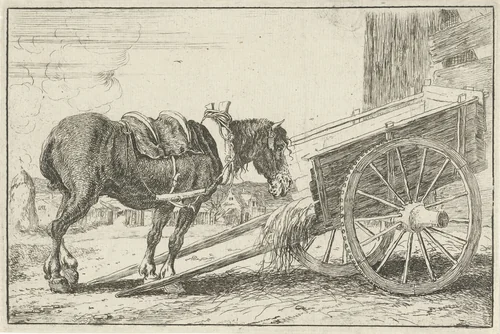
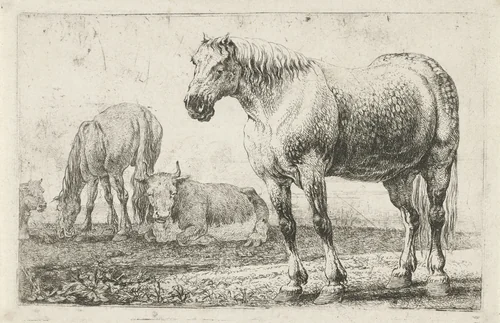
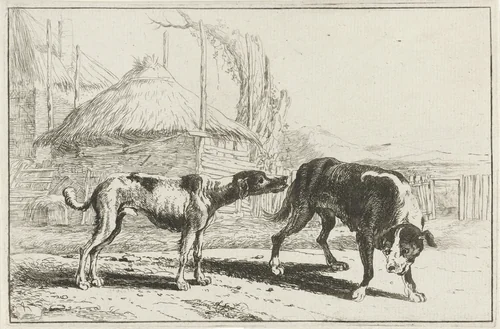
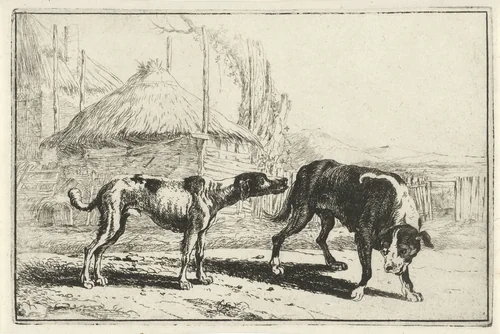
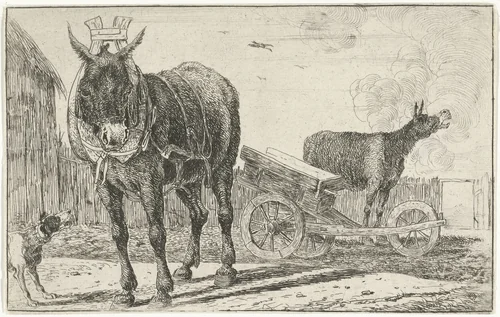
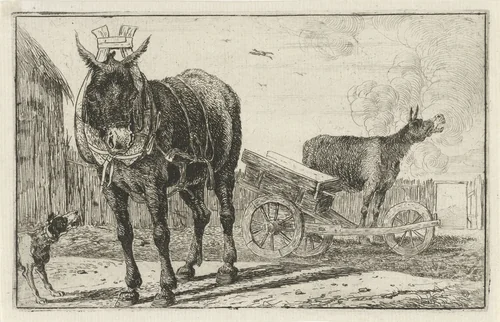
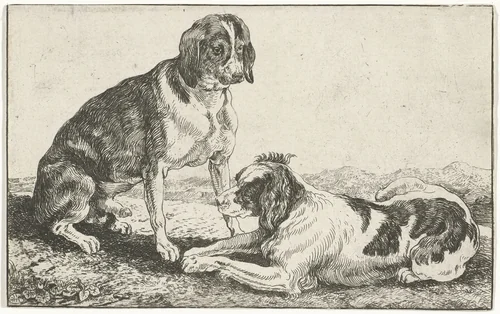
Although recognized globally for his Jan van den Hecke paintings, the period between 1651 and 1656 was particularly productive for his graphic arts practice. His commitment to engraving yielded a distinctive suite of Jan van den Hecke prints, many focusing on animal subjects, such as The Dog Kennel, from his celebrated Set of Animals, and observational studies like Drie koeien and Hond bij een fontein. These works, held in major institutions including the Rijksmuseum and the Metropolitan Museum of Art, demonstrate his precise line work and keen observational skill. Today, Van den Hecke’s prolific oeuvre, particularly his graphic art, has entered the public domain, allowing institutions to provide museum-quality prints and downloadable artwork to scholars and enthusiasts worldwide.
Source: Wikipedia · CC BY-SA 4.0