Jan Stobbaerts
Jan Stobbaerts (1838-1911), or Jan-Baptist Stobbaerts, stands as a foundational figure in the late 19th-century Belgian visual arts, widely recognized for his decisive role in bridging academic tradition and modern aesthetics. Active across painting and printmaking, Stobbaerts pioneered a localized form of Realism that ultimately paved the way for an ‘autochthonous’ Impressionism, distinct from its contemporary developments in France.
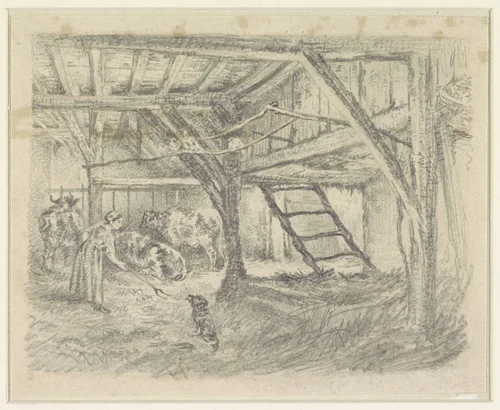
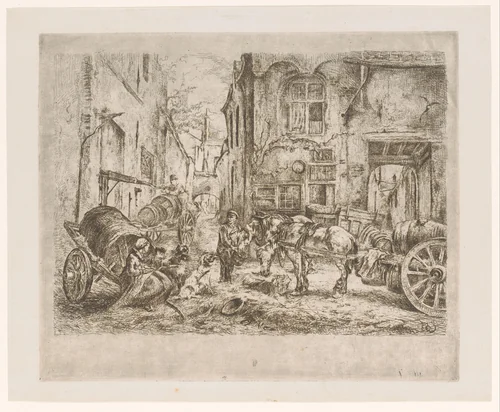
His career, evidenced by key activities between 1848 and 1861, showcases an intense focus on quotidian, often rough-hewn reality. Stobbaerts challenged prevailing artistic conventions by elevating ostensibly trivial subjects, such as stable interiors, farm animals, and cluttered urban scenes, through a rigorous and forceful execution. His signature use of dark-brown studio tones provides an undeniable, earthy immediacy, lending unexpected weight and dignity to mundane settings like the interior documented in Koestal (Cowshed).
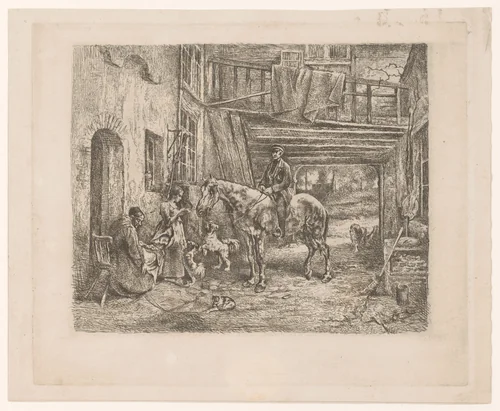
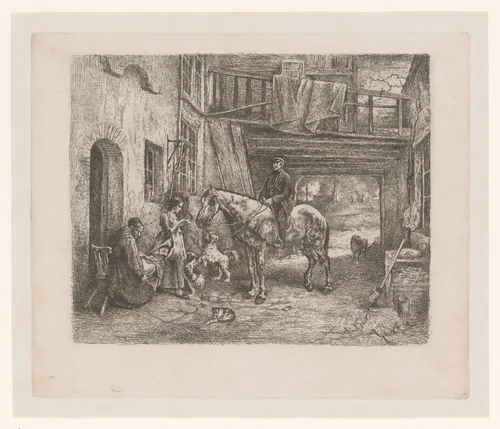
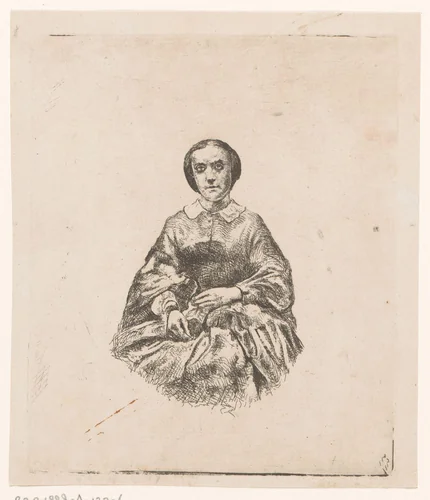
While perhaps best celebrated for his animal studies and robust genre pieces, the artist’s documented output was remarkably varied. Narrative works such as Binnenplaats met man te paard die een brief bezorgt aan een jonge vrouw (Courtyard with Man on Horse Delivering a Letter to a Young Woman) demonstrate his compelling sense of human interaction and environmental documentation, while his Portret van een onbekende vrouw confirms his ability to capture unvarnished, immediate observations of personality. One could observe that even within the confines of his severe, monochromatic palettes, Stobbaerts consistently found something profoundly worthwhile in the detailed, demanding documentation of the ordinary life.
This pioneering approach established a new and grounded visual vocabulary for subsequent Belgian artists. Stobbaerts proved equally adept as a graphic artist; the Rijksmuseum holds a significant collection encompassing four Jan Stobbaerts prints alongside drawings, confirming his mastery of multiple media. Today, many examples of his work are now in the public domain, allowing for widespread study and making high-quality prints freely available for global appreciation.
Source: Wikipedia · CC BY-SA 4.0