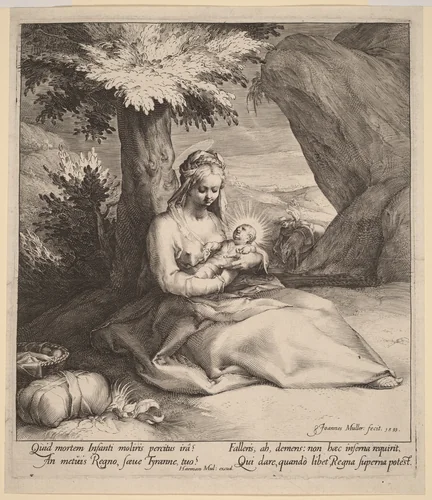
Jan Muller
Jan Harmensz. Muller (1571-1628) stands as a pivotal figure among the Northern Mannerist engravers, whose technical dexterity and expressive flair helped define the dramatic, muscular style prevalent in the Low Countries at the turn of the 17th century. Active during a period of intense artistic exchange, Muller translated complex painterly visions into highly finished copperplate images, achieving a standard of technical mastery recognized today across major international collections.
Born in Amsterdam, Muller developed his skills within the robust Dutch tradition of graphic arts. His surviving oeuvre, comprising approximately fourteen prints and at least one drawing, demonstrates a profound versatility, moving effortlessly between detailed portraiture and dynamic narrative invention.
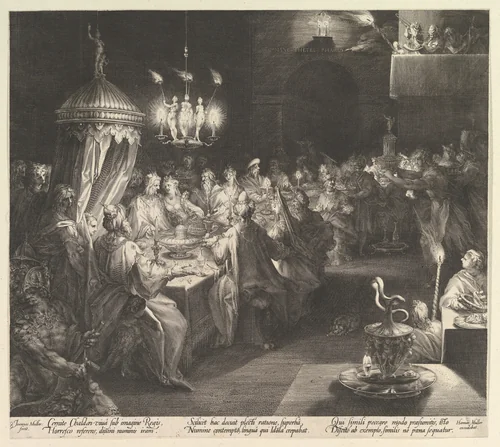
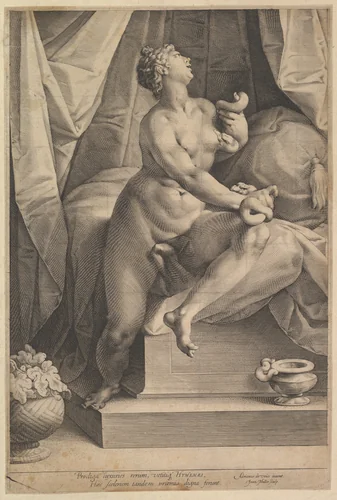
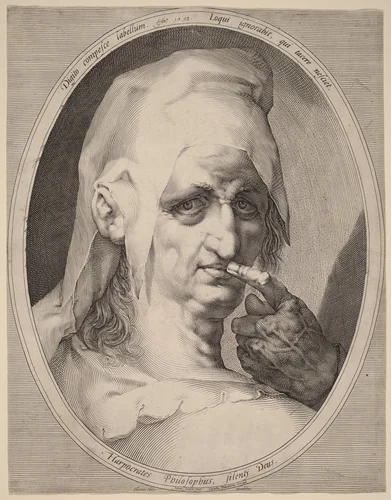
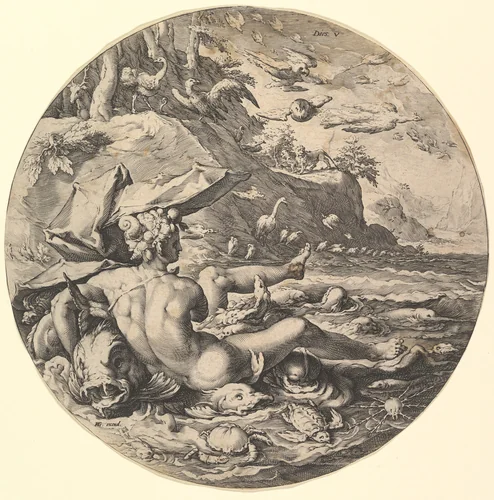
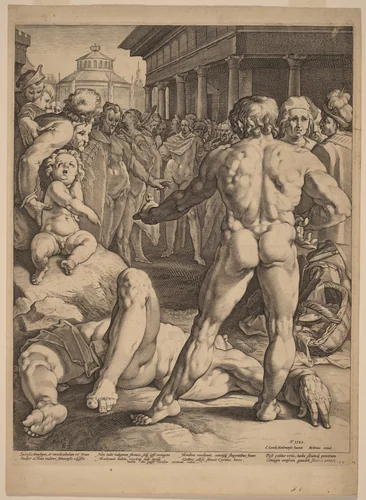
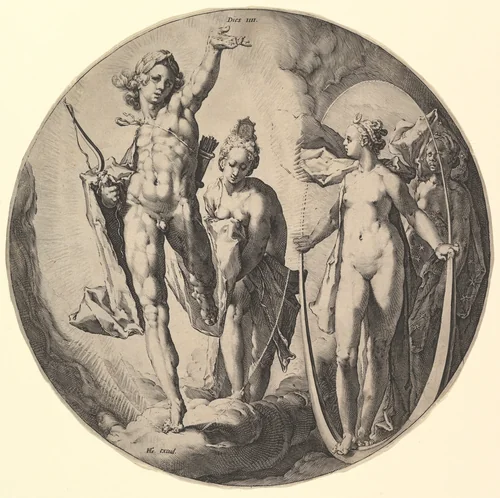
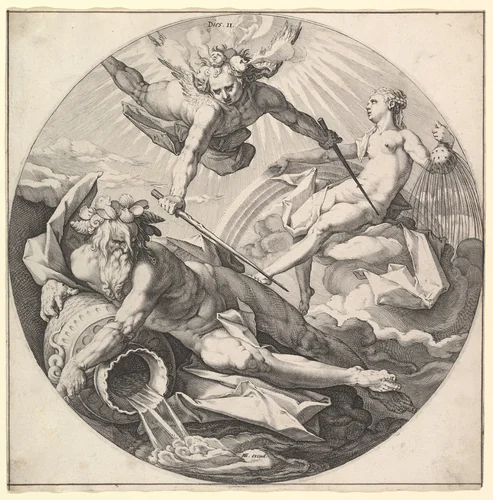
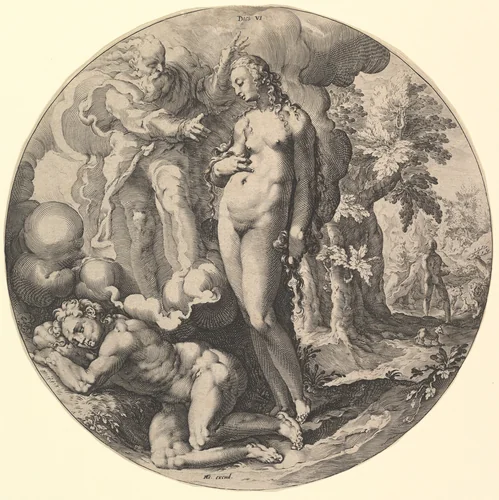
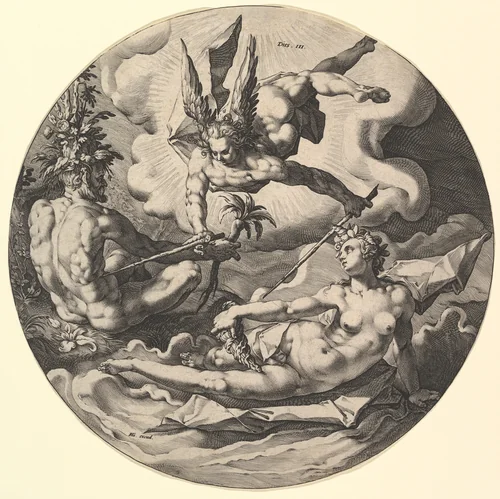
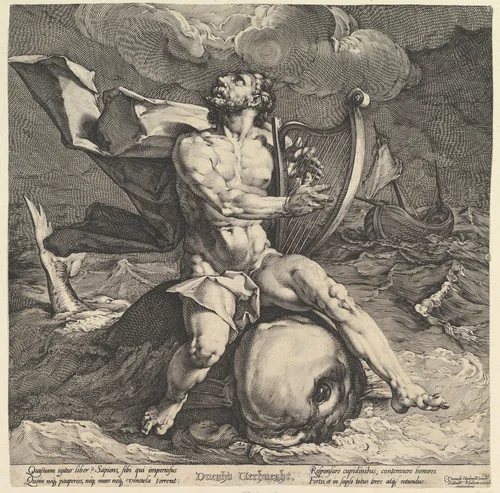
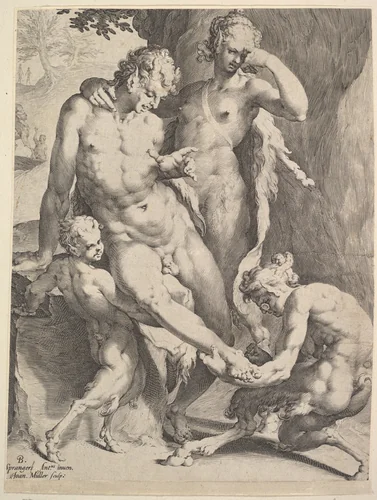
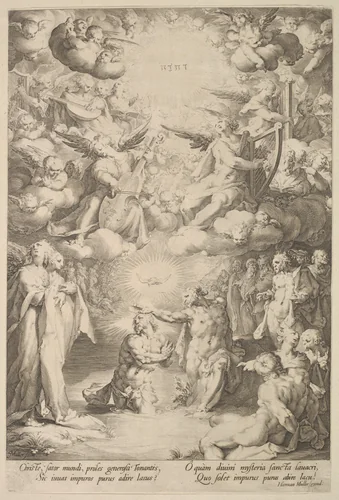
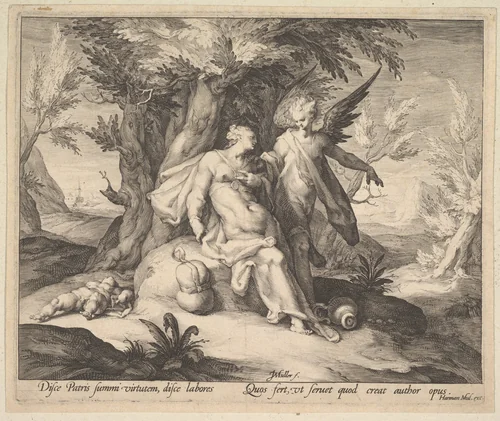
Muller was particularly adept at rendering the human form in states of intense action or high tension. His works frequently showcase figures twisting and interweaving, utilizing the burin with precision to create deep shadows and luminous highlights. This sophisticated control is evident in monumental pieces like the portrait Emperor Maximilian I and the dramatic biblical scene Cain Killing Abel, where the figures possess an almost sculptural intensity. Similarly, mythological subjects such as Arion on a Dolphin display a restless energy, characteristic of late Mannerism's engagement with classical antiquity filtered through the lens of movement.
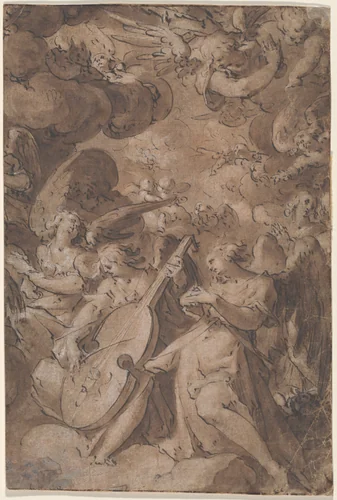
While documentation on Jan Muller paintings is scarce, his graphic output remains central to his legacy. He established a high benchmark for complex, museum-quality engraving, ensuring his work was sought after by collectors throughout Europe. His interests extended beyond grand historical subjects; one intriguing aspect of his repertoire is the meticulous attention paid to domestic or spiritual tranquility, as seen in the lyrical arrangement of instruments and figures within Holy Family and Two Music-Making Angels.
Today, Muller’s significant contributions to print culture are preserved in institutions such as the Art Institute of Chicago, the Metropolitan Museum of Art, and the National Gallery of Art. Thanks to their historical significance and age, many high-quality Jan Muller prints are now situated firmly within the public domain, allowing modern viewers direct access to the expressive genius of this foundational Northern artist.
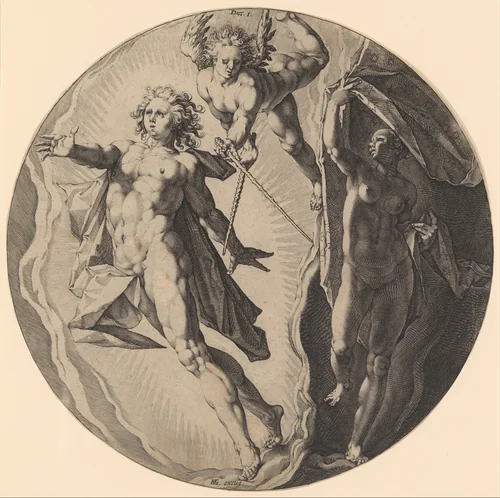
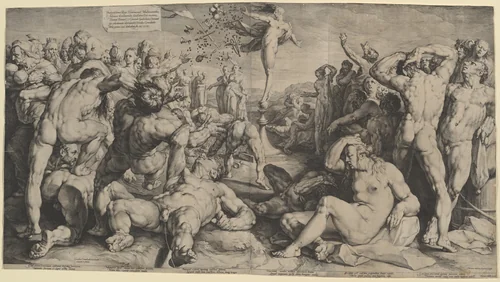
![Sine Cerere et Baccho Friget Venus [Without Ceres and Bacchus Venus Grows Cold] by Jan Muller, print, 1592-1602](https://img.artbee.org/1d35bb6c-0d1f-4ef2-8745-863d411de120/small.webp)