Jan Martszen de Jonge
Jan Martszen de Jonge was a distinguished Dutch Golden Age landscape painter, active primarily between 1619 and 1645. While often categorized by the panoramic scope of his settings, de Jonge established his distinct reputation through the meticulous and kinetic integration of military action into these broad natural vistas. His work moved beyond simple topographical representation, utilizing the landscape as a dramatic stage upon which historical or contemporary conflicts unfolded.
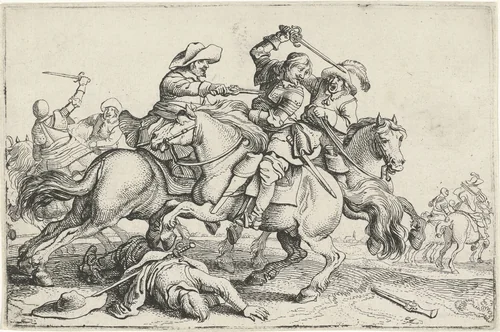
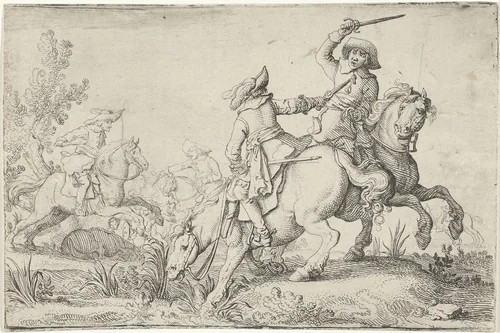
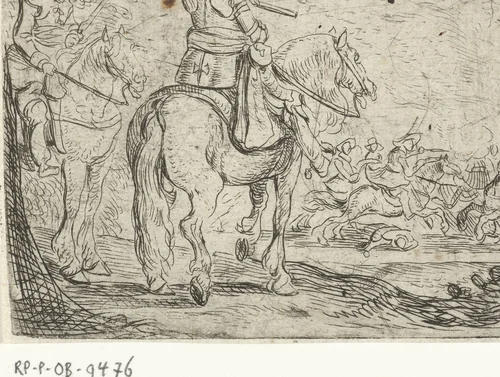
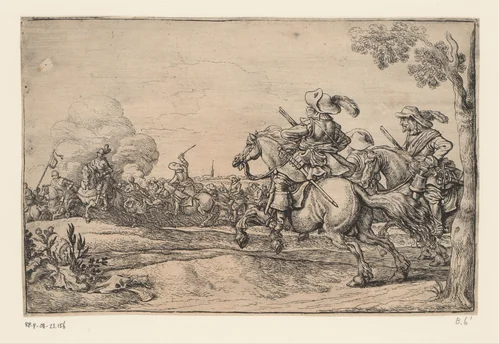
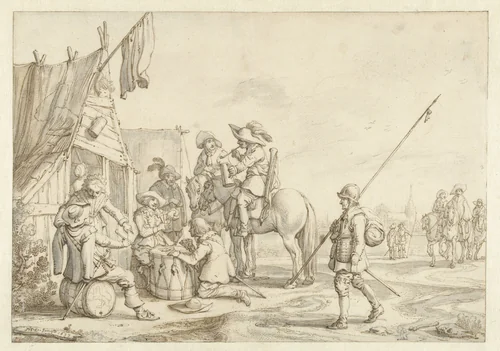
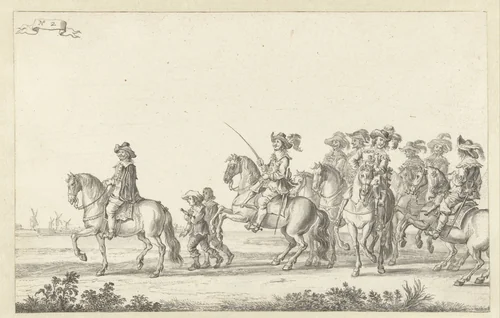
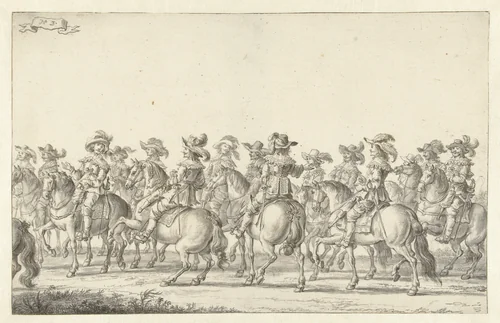
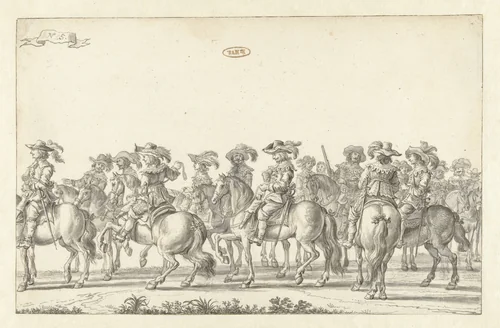
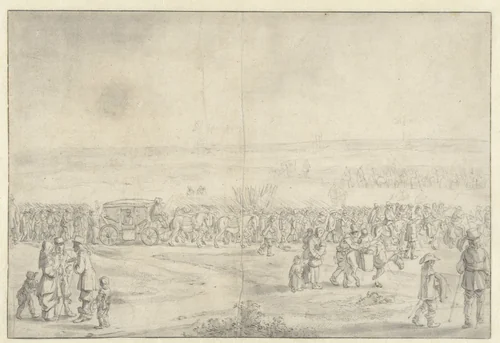
De Jonge’s specialized skill lay in capturing the energy and chaos of cavalry engagements. Works such as Drie ruiters in gevecht, Gevecht tussen twee ruiters, and the dynamic Veldslag met drie galoperende ruiters exemplify his command over movement, light, and the momentary intensity of skirmishes. These compositions are characterized by their low horizon lines and churning skies, amplifying the drama of the subjects fighting on the foreground’s dusty plains. He mastered the rendering of charging horses and clashing figures, positioning them within sprawling environmental scenes that convey the vastness of the setting while maintaining focus on individual duels.
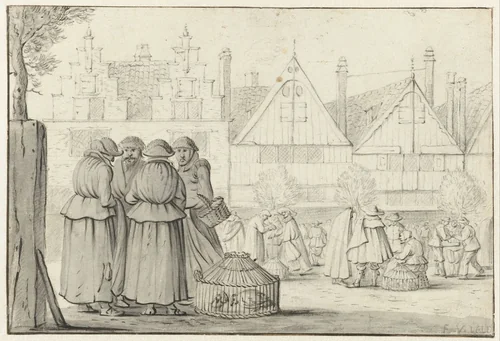
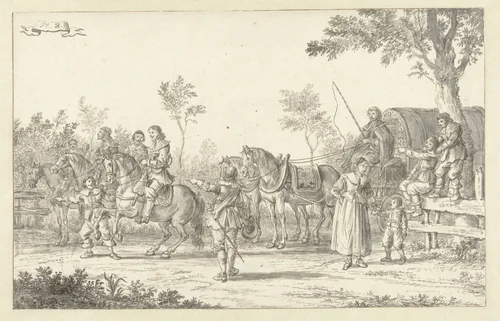
The known corpus of Jan Martszen de Jonge includes a significant number of detailed drawings and prints. This focus on working on paper suggests an emphasis on precise draughtsmanship, lending his compositions a linear clarity that translated effectively into both oil and copperplate. It is perhaps the artist’s most engaging quirk that alongside these aggressive battlegrounds, he also executed the peaceful domestic scene Hoendermarkt, indicating a versatility that extended beyond the thunder of hoofbeats and into the quieter, commercial bustle of the common market.
His continued relevance is confirmed by the sustained inclusion of his output in major institutional holdings, notably the Rijksmuseum, which collects important Jan Martszen de Jonge prints and drawings. For a contemporary audience, this emphasis on works on paper is particularly fortuitous. Much of this visual heritage, now falling into the public domain, is accessible for study and appreciation. The clarity and detail of his compositions ensure that high-quality prints derived from his originals retain the authority and narrative power that first captivated viewers four centuries ago.
Source: Wikipedia · CC BY-SA 4.0