Jan Kip
Johannes "Jan" Kip (c. 1653-1722) was a highly prolific Dutch draftsman and engraver whose primary legacy rests in the detailed topographical documentation of early eighteenth-century England. Operating successfully as both an artist and a print dealer in London, Kip fundamentally shaped the visual record of the era’s grand architecture and formalized landscape design. His most active period, centered around 1707, culminated in the publication of the monumental Britannia Illustrata, a critical achievement in architectural inventory.
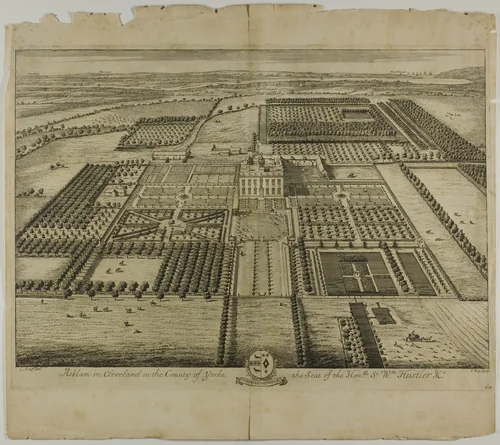
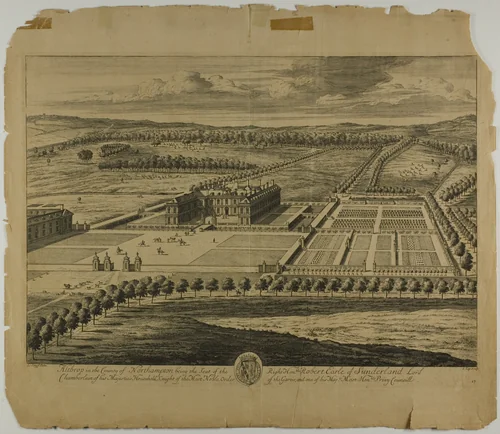
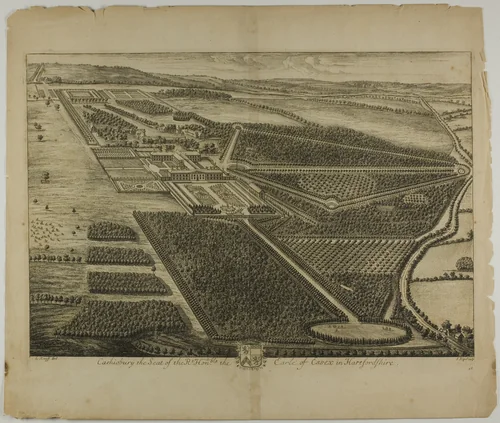
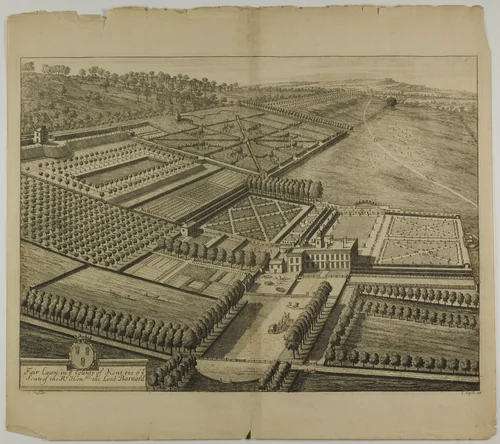
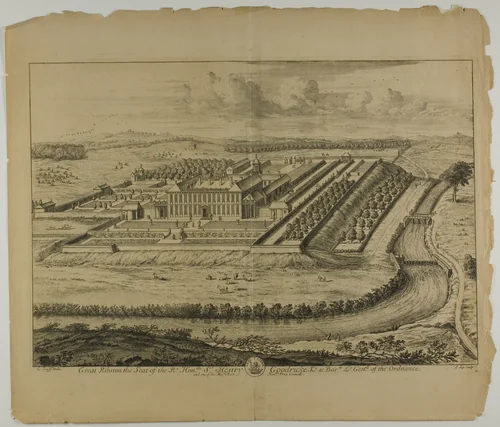
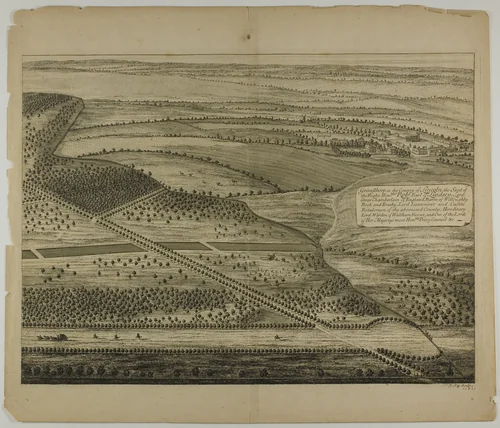
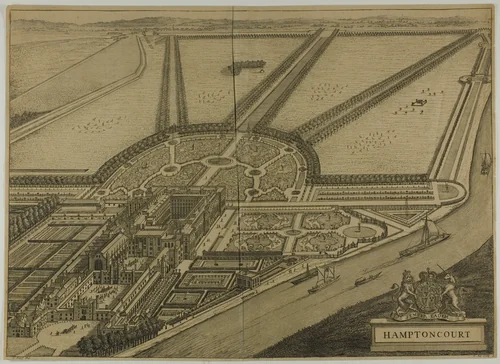
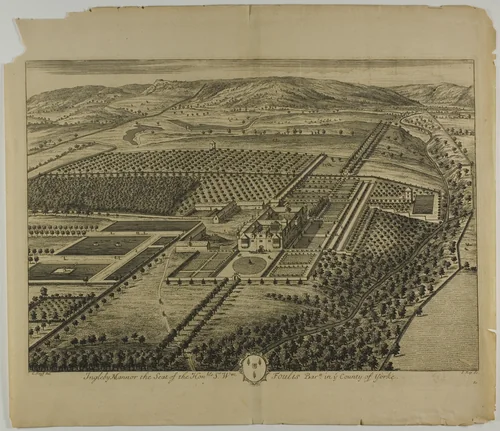
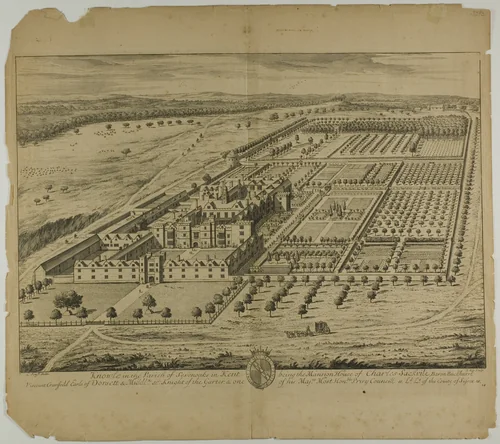
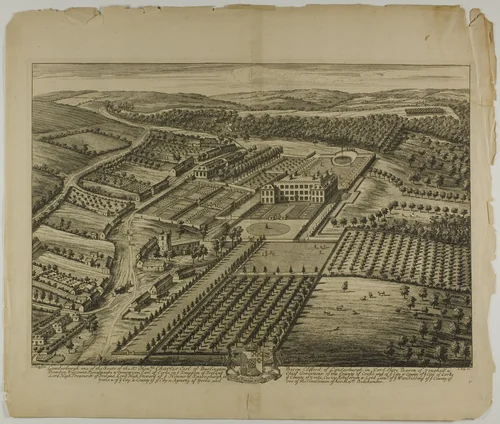
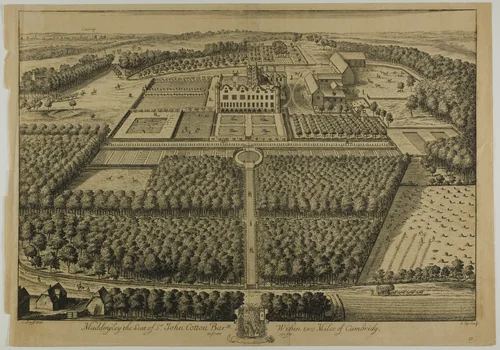
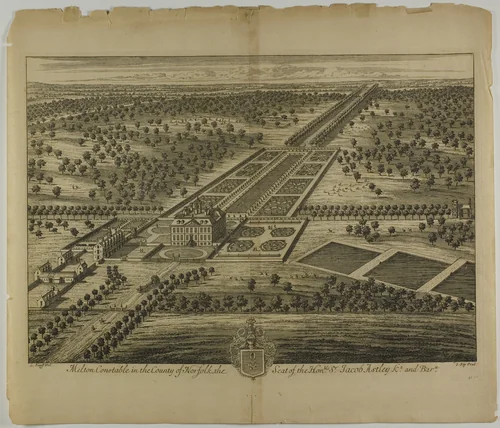
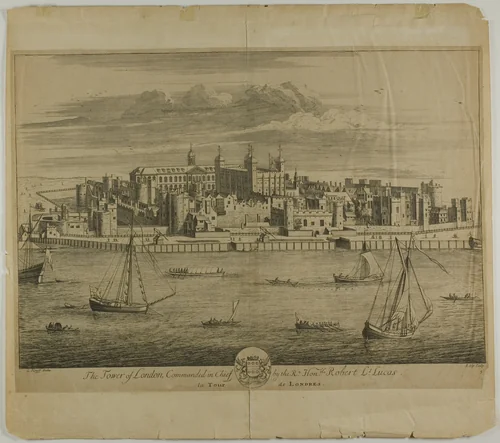
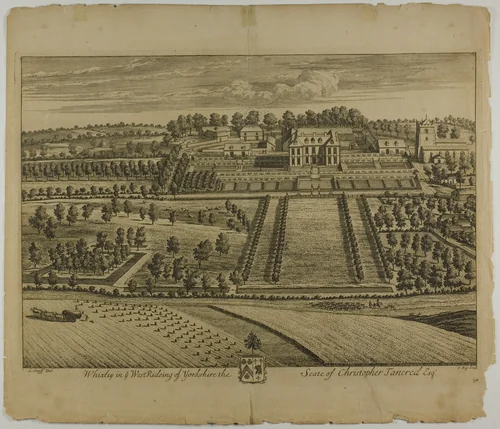
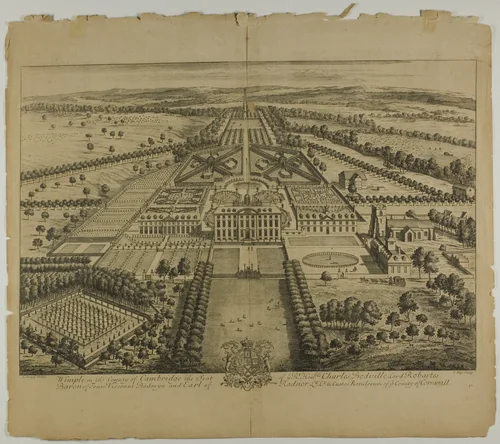
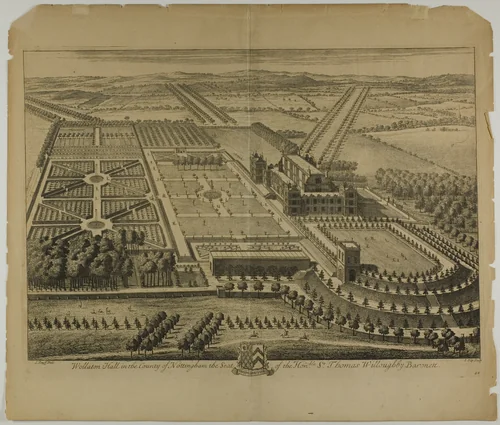
Kip’s career was defined by his essential artistic partnership with Leonard Knyff. While Kip handled the technical demands of the copperplate engraving, Knyff provided the initial, meticulous drawings, which were frequently executed from a dramatic elevated or "bird’s eye" perspective. This collaboration perfected a specialized genre: the large-scale, detailed view of the English country house. These ambitious works, which include plates such as Althrop in the County of Northampton and Acklam in Cleveland in the County of Yorke, required immense technical precision to render the complexity of Baroque architecture juxtaposed with newly fashionable, strictly manicured gardens and parkland.
The resulting high-quality prints served not merely as artistic illustrations but as definitive visual inventories for the landed gentry, capturing the impressive scope of their dominion. Kip’s meticulous output provides invaluable historical data for researchers, offering a comprehensive window into the aristocracy’s architectural ambitions at the height of the classical revival. While many country houses documented in the series have since been demolished, radically altered, or adapted, Kip’s detailed records remain the definitive visual evidence of their original, early Georgian appearance.
It is perhaps ironic that an artist whose early career included working on Dutch genre scenes became the quintessential visual chronicler of the English upper class, documenting properties often inaccessible to the public. Today, many of these museum-quality prints, like those held by the Art Institute of Chicago, are available as downloadable artwork via public domain archives, ensuring the longevity and accessibility of Jan Kip prints for modern audiences and architectural historians alike.
Source: Wikipedia · CC BY-SA 4.0