Jan Josef Horemans
The name Jan Josef Horemans signifies a crucial, if complex, artistic lineage in 18th-century Flemish painting. Encompassing both father (1682–1759) and son (1714–1792), this name represents a continuous commitment to highly detailed genre scenes of everyday life, a tradition that remains well-represented in major international collections, including the Rijksmuseum and the Metropolitan Museum of Art.
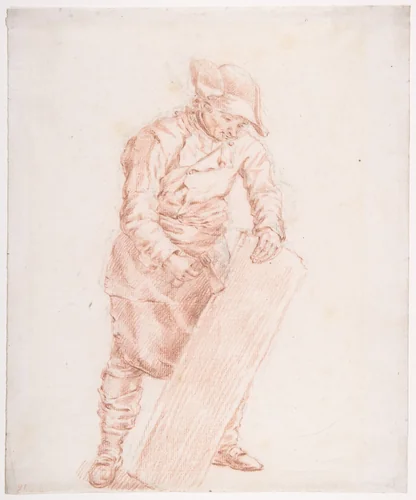
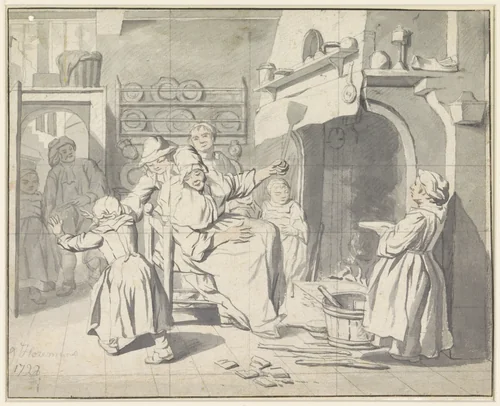
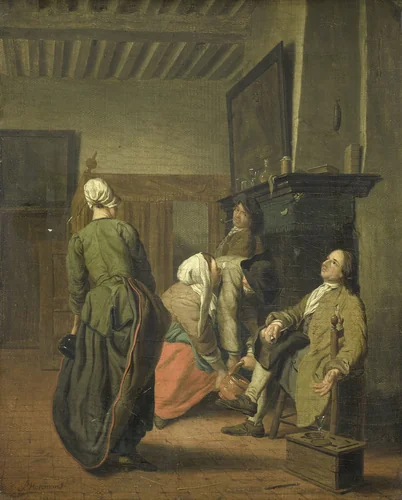
Jan Josef Horemans the Elder helped define the character of Antwerp genre painting during the transition into the Rococo era. He specialized in smaller cabinet pictures, moving away from the grander religious or historical narratives favored by earlier generations. His artistic focus was intensely trained on observation, capturing the domestic routines, social interactions, and various professions of contemporary Flemish society. Works such as the drawing A Carpenter at Work and the painting Het gebroken bord exemplify this dedication to depicting ordinary life with narrative clarity and precise composition.
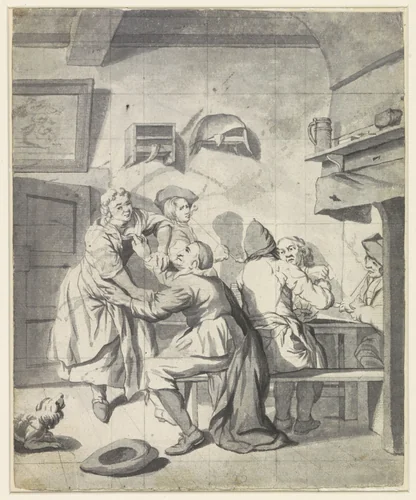
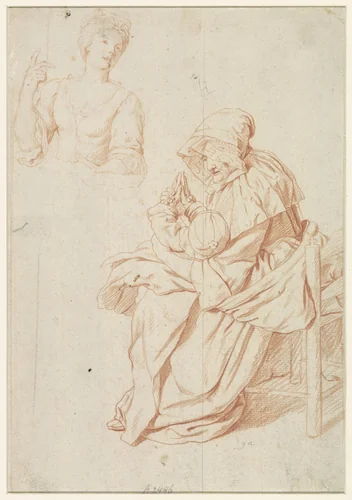
While the Younger continued the family’s lucrative trade, developing an even finer, smoother finish, distinguishing the individual output of father and son can sometimes be an amusingly fruitless scholarly pursuit, as their stylistic overlap is considerable. Nonetheless, the Horemans workshop excelled at producing intimate interieurs and lively character studies. Whether showing tavern revelry in Herberginterieur or quiet domestic intimacy in Oude vrouw met baby en halffiguur van zingende vrouw, the artists captured the socio-economic breadth of the period with consistent realism.
The Horemans contribution was essential in validating everyday subjects as worthy of high-quality artistic depiction. Their legacy is preserved not only in physical museum collections but also through the accessibility of many key Jan Josef Horemans prints and drawings. A considerable portion of their detailed visual record is now in the public domain, allowing scholars and enthusiasts worldwide to access downloadable artwork. This sustained interest confirms their status as foundational figures whose works function both as elegant artistry and as meticulous historical documents.
Source: Wikipedia · CC BY-SA 4.0