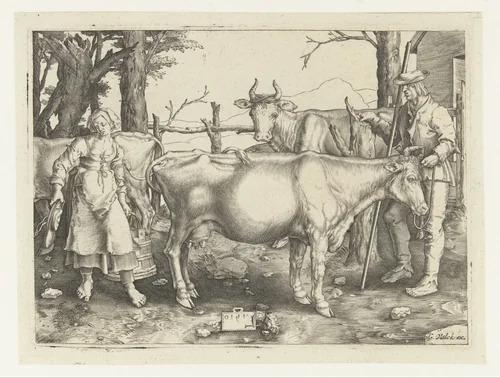
Jan Harmensz. Muller
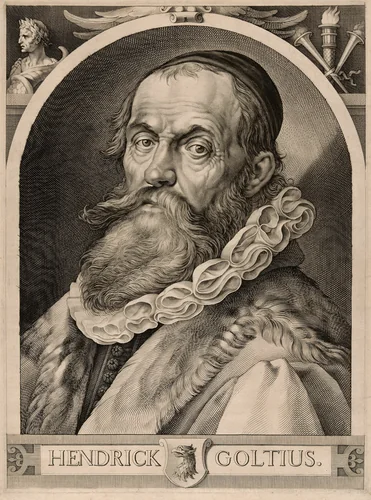
Jan Harmensz. Muller (1571–1628) was a crucial Dutch engraver and painter whose concise, intense career in printmaking defined him as a foundational interpreter of Northern Mannerism. Active primarily between 1584 and 1590, Muller’s graphic output immediately followed the influential peak of Hendrick Goltzius, situating him at the very center of the Dutch artistic revolution favoring monumental drama and virtuoso technique.
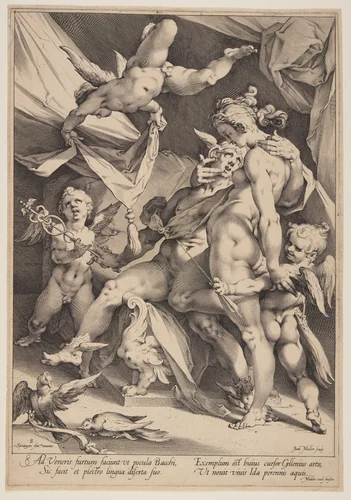
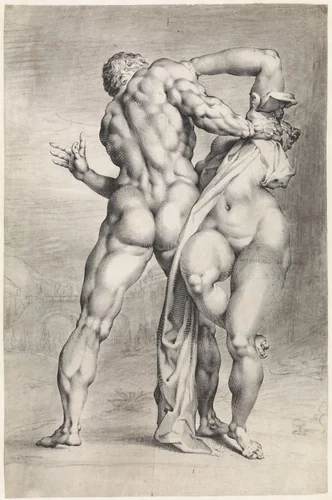
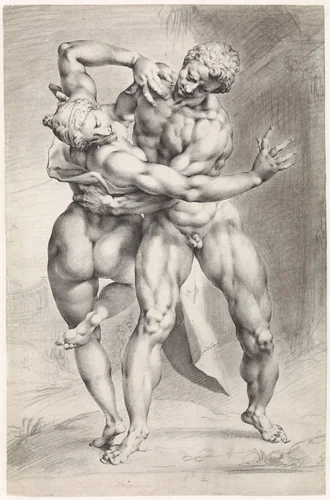
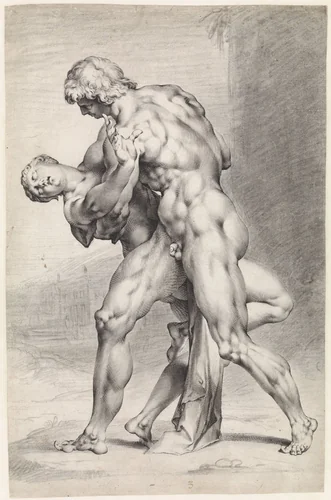
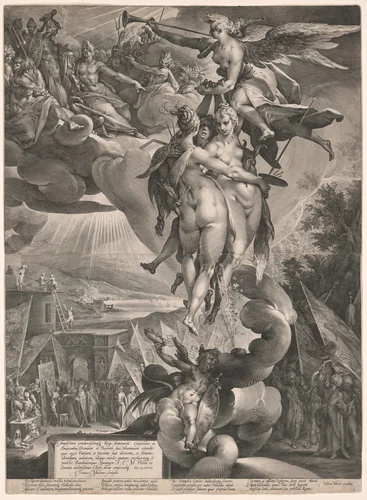
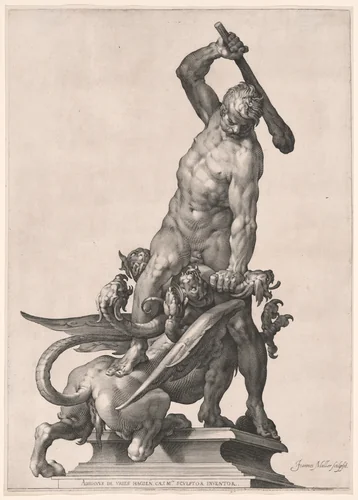
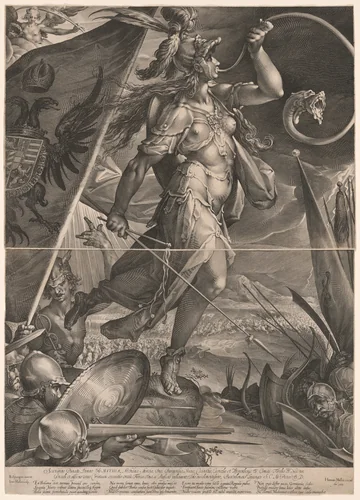
Muller’s prints display extraordinary technical precision and a predilection for colossal, often muscular figures rendered in dizzying perspective. He adopted and perfected the complex, swelling line-work—a graphic language characterized by the dot-and-lozenge system popularized by Goltzius—to give his subjects tremendous texture and kinetic movement. This mastery of dramatic tension is vividly clear in mythological compositions such as Venus Honored by the Nymphs and the overtly powerful biblical scene, Cain Killing Abel. Though his active period for graphic production was notably short, concluding around 1590, the fourteen extant prints and one known drawing cemented his indelible position in the graphic arts history of the Northern Netherlands.
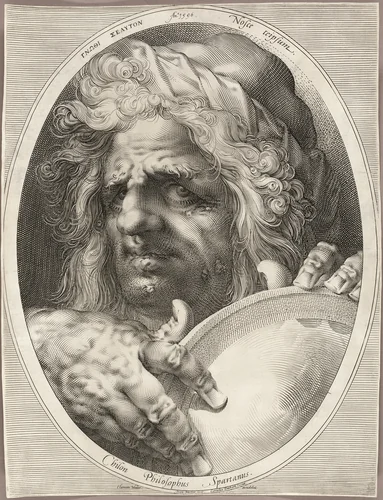
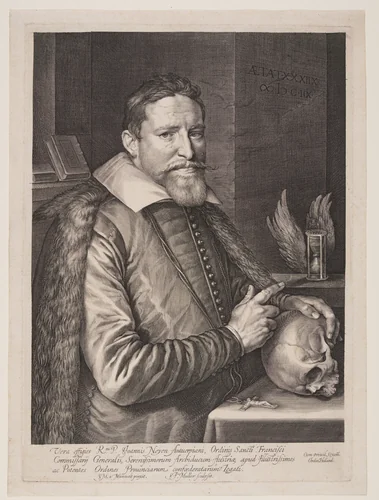
Muller’s early range was considerable. He moved adeptly from pagan subjects, like the intriguing Arion on a Dolphin, to complex historical narratives, exemplified by the elaborate execution of Het gastmaal van Belsassar. The versatility is further underscored by his detailed civic portraiture, such as the sober rendering of Joost Buyck, Burgomaster of Amsterdam. It is perhaps one of the great historical ironies that a printmaker whose career peaked so early in graphic dynamism became known later primarily as a conventional Jan Harmensz. Muller painter.
Nevertheless, his graphic legacy endures. The original Jan Harmensz. Muller prints, held today in institutions like the Rijksmuseum and the Art Institute of Chicago, remain museum-quality examples of late Mannerist engraving. Thanks to increasing global digitization efforts, much of this historical imagery is now accessible in the public domain, enabling the production of high-quality prints for contemporary scholarship and enjoyment.
Source: Wikipedia · CC BY-SA 4.0