Jan Frans van Bloemen
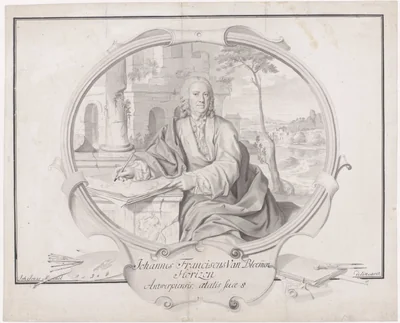
Jan Frans van Bloemen (1664-1749), a Flemish expatriate, fundamentally shaped the visual interpretation of the Roman campagna during his extensive career in Italy. Though born in Antwerp, Van Bloemen’s artistic identity was forged entirely in Rome, where he arrived in the late 1670s, establishing a remarkable period of activity spanning from approximately 1672 to 1685 and beyond. He quickly became the foremost specialist in capturing the idealized vistas of the region.
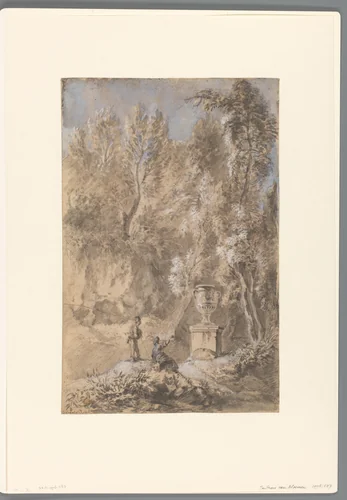
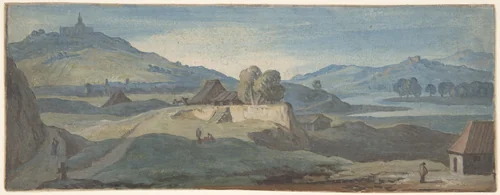
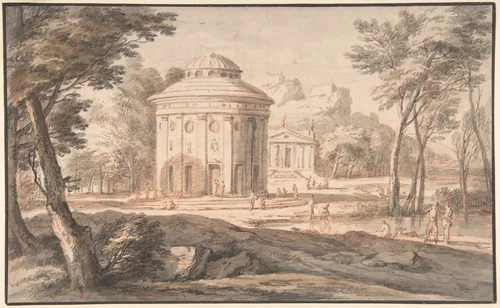
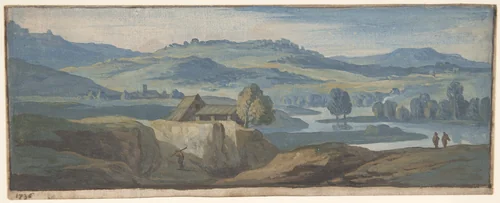
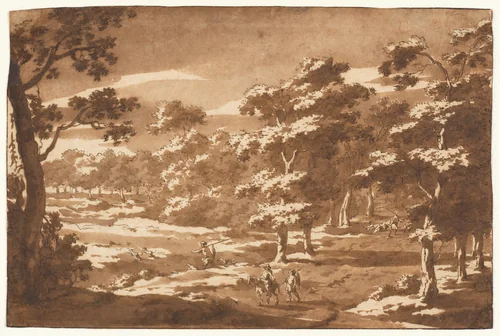
Known colloquially during his lifetime as Orizzonte (Horizon), a nickname referencing his signature mastery of expansive, light-filled settings, Van Bloemen dedicated his practice to the classical landscape tradition. He established himself as the premier painter of vedute, or detailed views, of the countryside surrounding the Eternal City. Unlike later artists who sought topographical accuracy, Van Bloemen’s mission was to evoke the mood and mythos of antiquity, following the aesthetic blueprint set by predecessors such as Claude Lorrain and Gaspard Dughet. His meticulous compositions, exemplified by works like Landscape with Two Classical Temples and Figures, frequently frame crumbling ancient architecture and monumental vases against tranquil skies and idealized foliage, creating a powerful sense of timelessness.
The resulting Jan Frans van Bloemen paintings are meticulous studies in structure and light. It is perhaps telling that while he rigorously controlled the structure of his canvases, he often outsourced the depiction of small staffage figures to collaborators. This subtle division of labor suggests his true artistic preoccupation lay solely with the sweeping horizon line and the articulation of space, treating the landscape itself as the central, monumental subject.
Van Bloemen’s work maintained immense popularity throughout the eighteenth century, ensuring a broad dissemination of his vision of an eternally elegant Italy among collectors engaged in the Grand Tour. Today, examples of his draftsmanship, including several detailed drawings and finished oils, are held in major institutions globally, including the Rijksmuseum and the Metropolitan Museum of Art. While the original Landschap met twee figuren bij een monumentale vaas remains secured in institutional collections, the enduring legacy of his vision means many of his compositions are now in the public domain, allowing access to high-quality prints and downloadable artwork for enthusiasts worldwide.
Source: Wikipedia · CC BY-SA 4.0