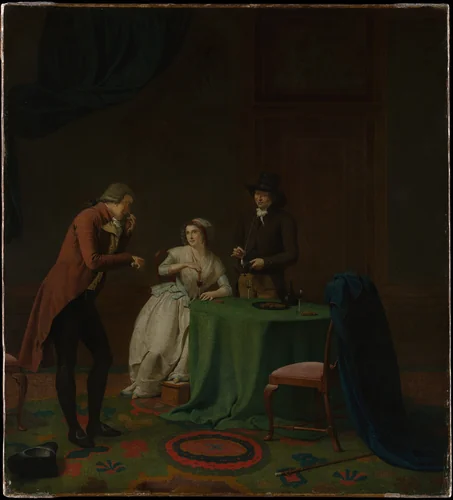
Jan Ekels
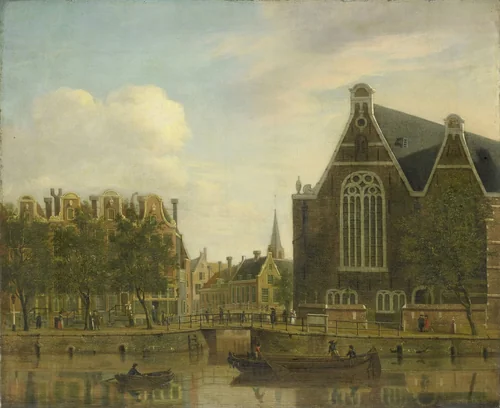
The name Jan Ekels denotes not one, but two distinct, yet interconnected, Dutch painters of the 18th century: Jan Ekels the Elder (1724–1781) and Jan Ekels the Younger (1759–1793). Operating across the later Dutch Golden Age and the transitional era that followed, their shared artistic legacy primarily resides in detailed genre scenes and meticulous architectural studies, work now represented in institutions such as the Rijksmuseum and the Metropolitan Museum of Art.
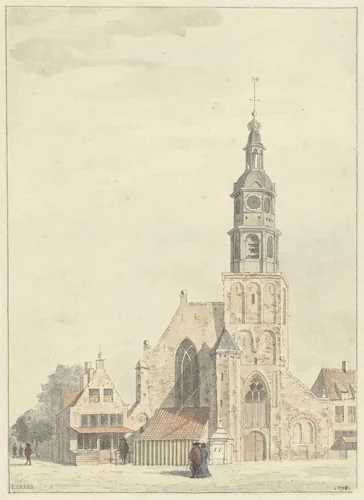
Jan Ekels the Elder focused largely on painting and drawing, delivering precise topographical renderings of Dutch urban life and domestic architecture. Works such as De kerk te Buren demonstrate a commitment to clarity, sharp detail, and balanced light characteristic of 18th-century Dutch realism, offering viewers faithful records of the physical structures of the age.
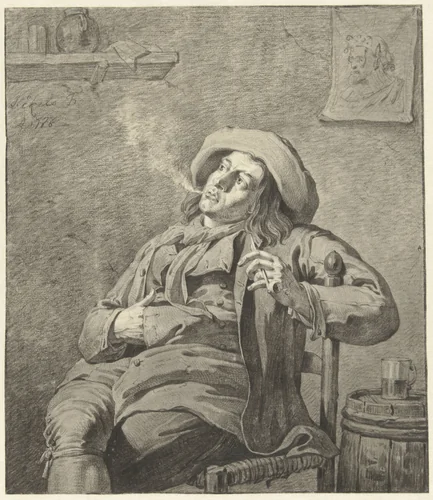
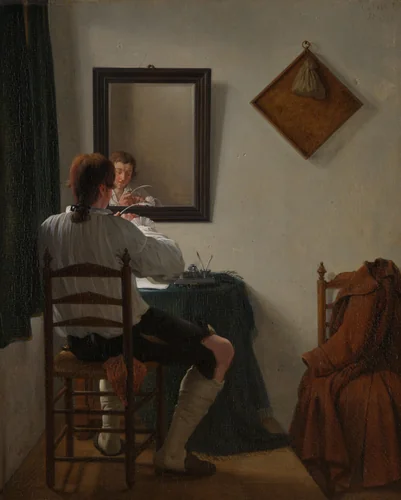
Jan Ekels the Younger, working slightly later and specializing in smaller, more intimate genre subjects, refined his father's dedication to detailed observation. The younger Ekels’s contribution includes exquisite drawings and paintings that capture the quotidian moments of domestic routine. Pieces such as Rokende man and the highly descriptive A Writer Trimming his Pen showcase an acute sensitivity to texture and human psychology, placing him firmly within the established tradition of cabinet painting. His ability to distill a moment of concentrated quietude within a domestic setting is arguably his most significant contribution to the period.
This generational focus on human interaction is best demonstrated by his unique study, Conversation Piece (The Sense of Smell), which transforms an elemental human activity into a moment worthy of detailed artistic scrutiny. Though their active careers overlapped only briefly, the sustained output of Jan Ekels paintings defined a specific moment in Dutch artistic development where genre mastery remained paramount. Today, the enduring quality of their output ensures that these museum-quality works remain subjects of study, with many high-quality prints and drawings available as valuable references for 18th-century Dutch life.
Source: Wikipedia · CC BY-SA 4.0