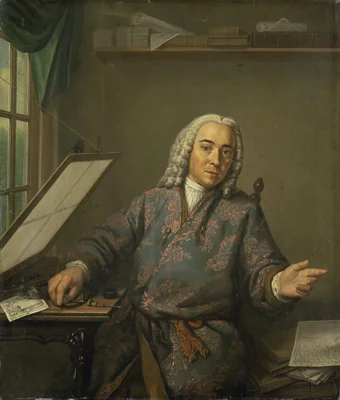
Jan Caspar Philips
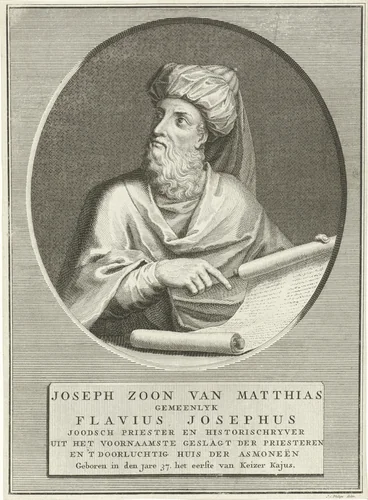
Jan Caspar Philips (1690-1775) was a German engraver whose career flourished following his relocation to Amsterdam, where he became an active and influential figure in the city’s robust printmaking tradition. Though active primarily over a defined period, 1727 to 1736, his comparatively small output of around fifteen known prints secured him a lasting position in major international collections, including the Rijksmuseum and the Metropolitan Museum of Art. His importance rests less on sheer volume and more on his focused engagement with rare ethnographic and historical subject matter.
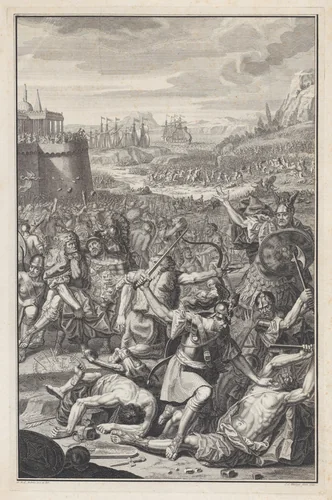
Philips’s technical mastery lay in etching and engraving, producing precise images that were critical for disseminating knowledge and visual records across Europe. While he produced typical 18th-century subjects, such as the dramatic Battle scene with a man about to be stabbed with a sword at lower right, his most compelling and historically challenging works center on the indigenous Khoikhoi people of Southern Africa.
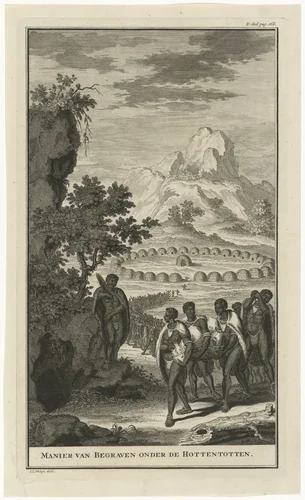
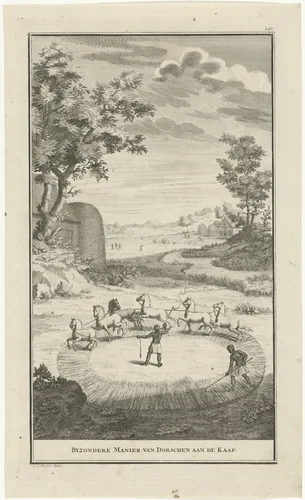
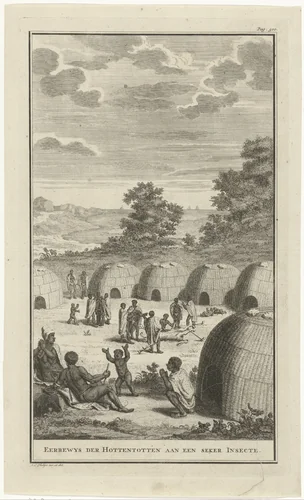
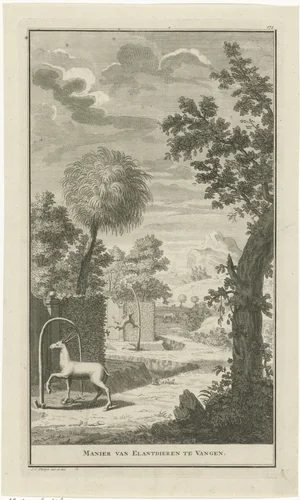
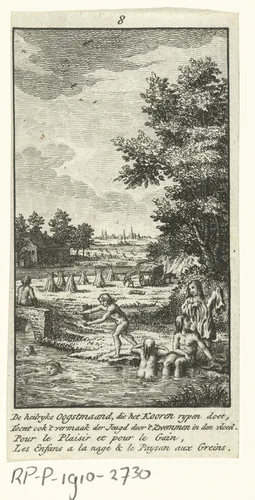
These prints function as early visual documents concerning non-European cultures, often commissioned during a pivotal moment in Dutch colonial expansion. Works like Begrafenis van een Khoikhoi, Khoikhoi aan het dorsen, and Khoikhoi die een insect vereren exhibit a meticulous, almost scientific attention to local customs, dress, and environment. Philips’s views on the Khoikhoi, sometimes contextualized by large format scenes such as Landschap met Khoikhoi die jagen op elanden, walk a precarious line between observational reportage and the romanticized exoticism inherent in much 18th-century visual communication. It is a fascinating historical footnote that a German artist based in the Netherlands became one of the primary visual chroniclers of indigenous African life for a European audience.
Given the historical significance and the technical clarity of Jan Caspar Philips prints, his work remains highly valued by scholars and collectors. Today, many of these museum-quality engravings are available as high-quality prints, having passed into the public domain, allowing researchers and the public alike to study these foundational instances of global visual documentation.
Source: Wikipedia · CC BY-SA 4.0