James Wells Champney
James Wells Champney was a prolific American artist whose career spanned the second half of the nineteenth century, distinguishing himself through his work as a genre painter, portraitist, and highly sought-after illustrator. The continued presence of his works, including detailed drawings, photographs, and prints, in major American institutions such as the Metropolitan Museum of Art, the Museum of Modern Art, and the National Gallery of Art confirms his lasting impact on American visual culture.
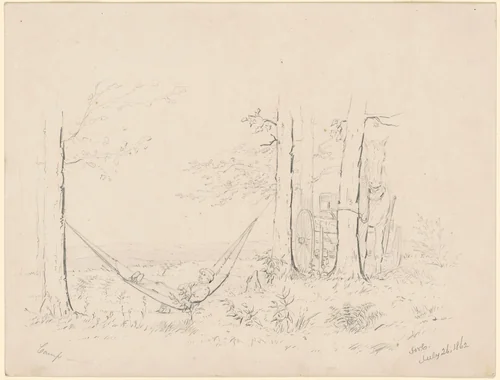
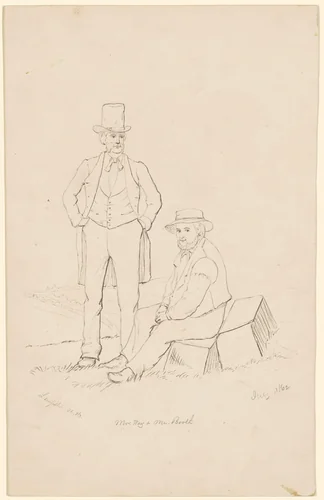
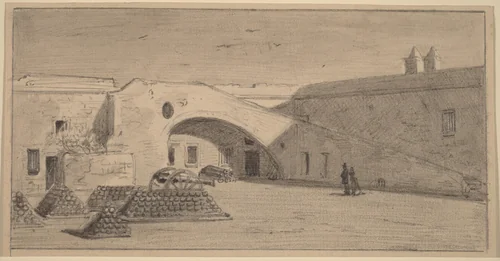
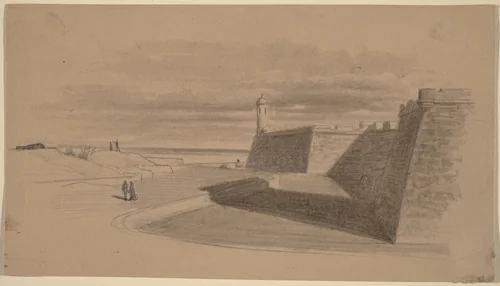
Trained in the exacting discipline of illustration, Champney brought a narrative clarity and technical precision to his easel works. While recognized for sensitive society portraiture, his lasting legacy is built upon his genre scenes and atmospheric landscapes. These works often captured the duality of contemporary American life: both the structured domesticity and professional connections implied by scenes like Mr. Way and Mr. Booth, and the rugged, topographical documentation exemplified by pieces such as Camp or the historic clarity seen in Fort Marion, Florida. His breadth of subject matter, moving easily between interiors and expansive vistas, reflects the restless curiosity characteristic of the post-Civil War American art scene.
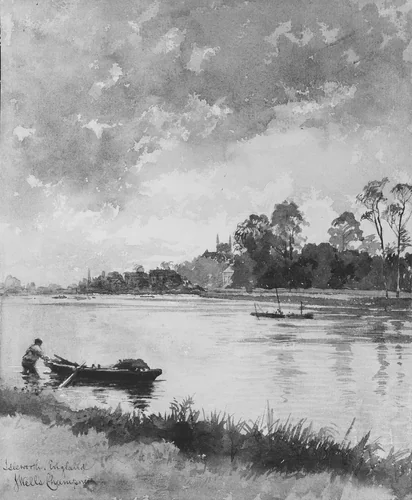
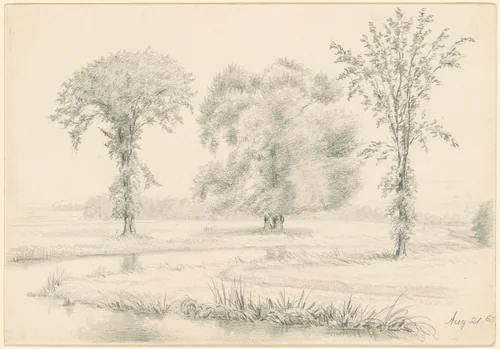
Champney was notably active from 1843 until his death in 1901, a remarkable period of sustained production. His versatility allowed him to pivot successfully between detailed sketches of European locales, such as the evocative River Scene in England, and the more exotic subjects termed "oriental scenes." While many of his contemporaries traveled abroad purely for romantic inspiration, Champney’s foundation as a factual illustrator often lent his international subjects a rare ethnographic groundedness, suggesting that for him, the ‘exotic’ was simply another subject requiring documentary precision. This commitment to meticulous observation is visible even in simpler compositions, such as Landscape with Three Trees.
Today, James Wells Champney paintings and detailed preliminary drawings remain highly valued for the insight they offer into 19th-century customs and geography. Given the timeline of his activity, many of his key works now reside in the public domain, offering contemporary researchers and enthusiasts royalty-free access. The clarity and technique found in these original works make them excellent candidates for high-quality prints and downloadable artwork, ensuring that the careful observations of this multifaceted American artist continue to be studied and appreciated globally.
Source: Wikipedia · CC BY-SA 4.0