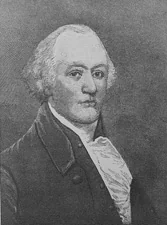
James Watson
James Dewey Watson, an American molecular biologist, geneticist, and zoologist, achieved one of the most definitive structural discoveries of the modern era. In 1953, the scientific community, and indeed the world, was transformed by the publication of an academic paper co-authored by Watson and Francis Crick in the prestigious journal Nature. This work detailed the now-iconic double helix structure of the deoxyribonucleic acid (DNA) molecule.
This proposal represented more than mere theory; it was a profound act of conceptualization, translating complex chemical and X-ray diffraction data into a universally recognizable form. Building directly upon the crucial antecedent research of Rosalind Franklin and Raymond Gosling, Watson and Crick provided the visual key that unlocked the mechanism of heredity. The elegance of the resulting structure, an interconnected, spiraling ladder, instantaneously became the defining symbol of genetics and a benchmark of scientific beauty.
The impact of this visual and conceptual clarity was immediate and lasting. The diagrams and structural models of the double helix are arguably the most reproduced scientific schematics in history, utilized extensively in educational materials and public outreach. The structure itself possesses a museum-quality precision, transcending its chemical origins to stand as a definitive, high-quality representation of life’s fundamental code.
The groundbreaking nature of the discovery was formally recognized in 1962. Watson, Crick, and their colleague Maurice Wilkins were jointly awarded the Nobel Prize in Physiology or Medicine "for their discoveries concerning the molecular structure of nucleic acids and its significance for information transfer in living material."
While he worked outside the traditional studios of painting or sculpture, Watson’s intellectual achievement was the creation of a visual framework that defines our physical existence. The double helix model, which acts as the ultimate biological blueprint, confirms the rather amusing notion that the most essential truths in nature invariably possess the most refined structural integrity. Though the paper itself is protected, the core informational diagrams are now disseminated globally as fundamental knowledge, effectively serving as royalty-free conceptual artwork for all future generations of scientists and thinkers.
Source: Wikipedia · CC BY-SA 4.0