James Wallace Black
James Wallace Black (1825-1896), known professionally as J.W. Black, stands as a pivotal figure in the transitional decades of American photography. Active between 1854 and 1870, his career was defined by rigorous technical experimentation and a determined drive for innovation, placing him at the vanguard of the medium’s adoption in the United States. His commitment to pushing the technical boundaries of early photographic processes firmly established the aesthetic potential of the young medium.
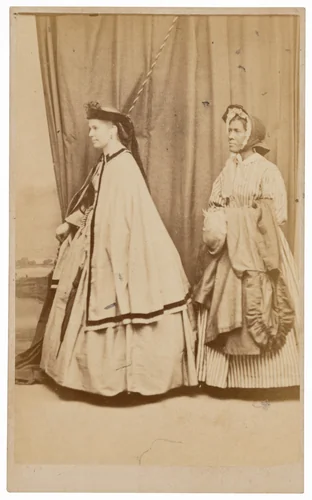
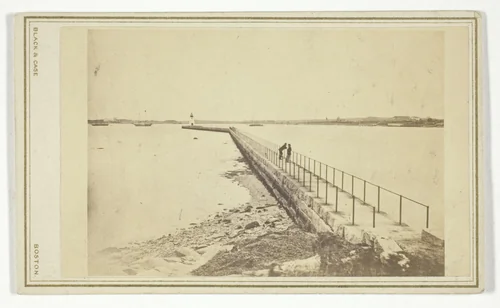
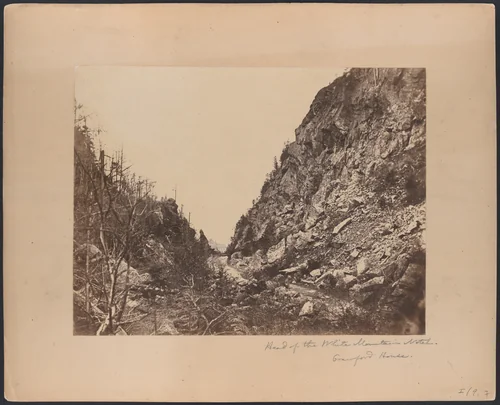
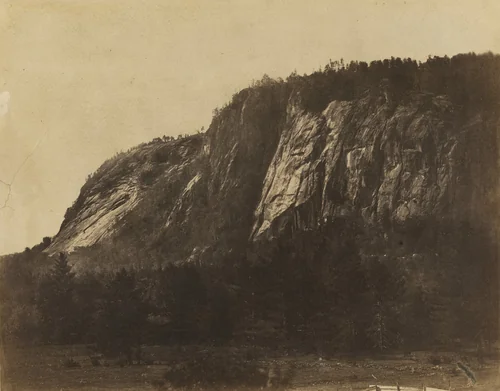
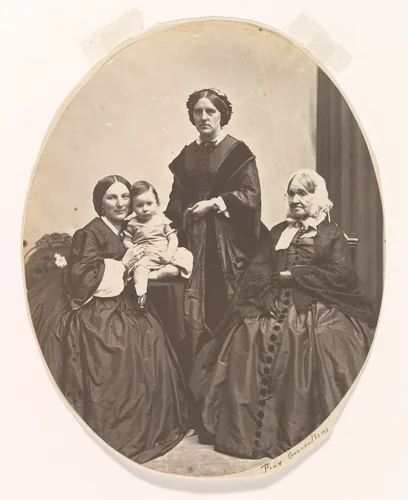
Black excelled across several photographic genres, from meticulous urban documentation to evocative New England scenery and intimate portraiture. His records of the built environment, such as Washington Street, Boston, capture the dynamic urbanity of the mid-nineteenth century with startling clarity. Simultaneously, works focused on the natural world, including the atmospheric Head of the White Mountain Notch, Crawford House and The Ledges, North Conway, demonstrate an early, sophisticated engagement with the American sublime, foreshadowing later photographic movements dedicated to landscape preservation. His mastery of composition extended to personal studies, exemplified by the layered genealogical portrait Four Generations.
Beyond terrestrial work, Black was an early, aggressive adopter of nascent technologies. His willingness to literally elevate the photographic perspective characterizes his approach: in 1860, he executed what is often recognized as one of the world's earliest successful aerial photographs, capturing Boston from the basket of a hot air balloon. This willingness to demand physical bravery alongside technical skill illustrates his view of photography, not merely as replication, but as a vehicle for wholly new visual experiences.
Black’s pioneering efforts ensured his work remains highly visible today. Institutions including the Museum of Modern Art, the National Gallery of Art, and the Metropolitan Museum of Art hold original prints, testifying to their enduring quality and historical importance. The clarity and historical depth of these photographs make them desirable museum-quality artifacts. Because much of his historic oeuvre falls into the public domain, those interested in the history of the medium can readily access high-quality prints and downloadable artwork of these James Wallace Black prints for study and enjoyment.
Source: Wikipedia · CC BY-SA 4.0
![[Victorian House] by James Wallace Black, photograph, 1855-1865](https://img.artbee.org/8865e21b-46f5-4dfa-b73d-f4453e5c178b/small.webp)
![[Washington Street, Boston] by James Wallace Black, photograph, 1855-1865](https://img.artbee.org/676ff891-bb4e-4590-b424-29b6ca0681db/small.webp)
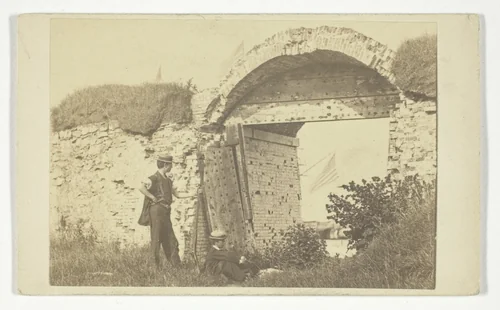
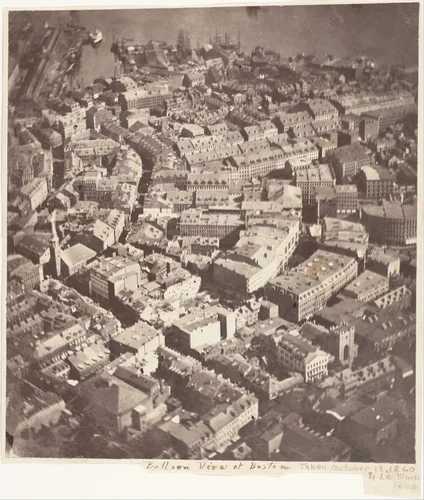
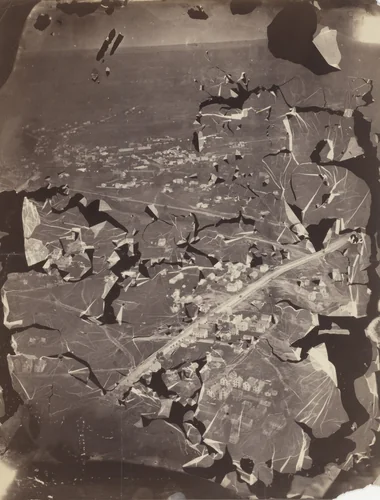
![[Boston from a Hot-Air Balloon] by James Wallace Black, photograph, 1860-1869](https://img.artbee.org/59abb74d-9712-48f7-b9e4-a2d2844caa32/small.webp)
![[Edward Everett Hale and Son] by James Wallace Black, photograph, 1863-1867](https://img.artbee.org/ae95960d-85bb-4e0b-8572-c43d6760640e/small.webp)