James Tissot
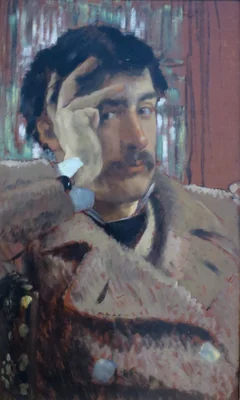
Jacques Joseph Tissot, better known as James Tissot (1836-1902), was a French painter, illustrator, and caricaturist renowned for his sophisticated visual chronicling of 19th-century high society. Born in Nantes and trained in Paris, Tissot rapidly developed a technical style that synthesized the polished draughtsmanship of academic art with the nascent realism and early visual concepts of Impressionism.
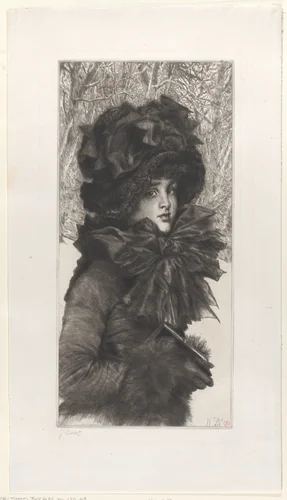
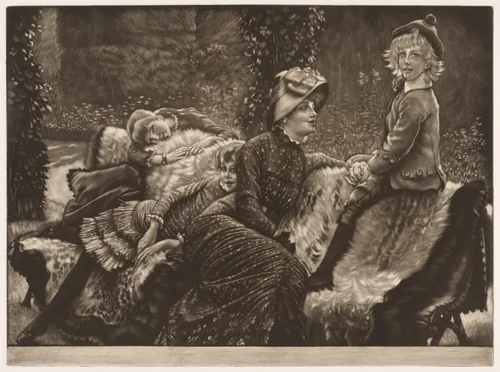
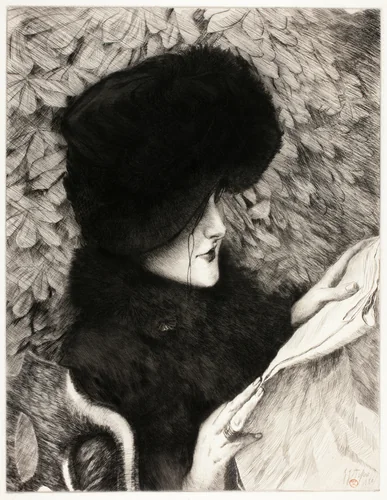
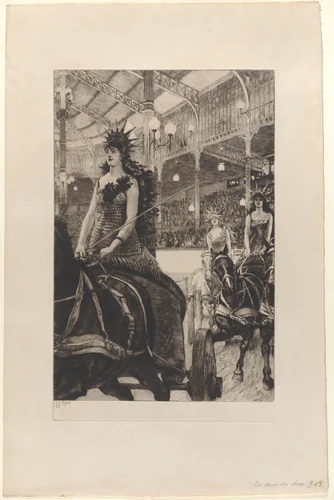
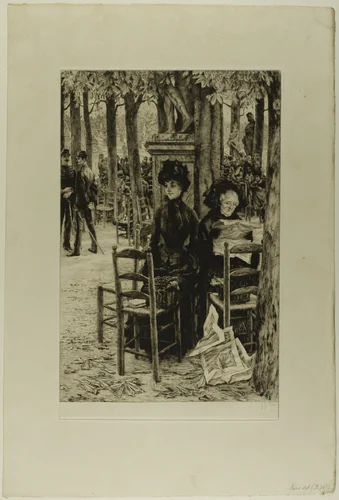
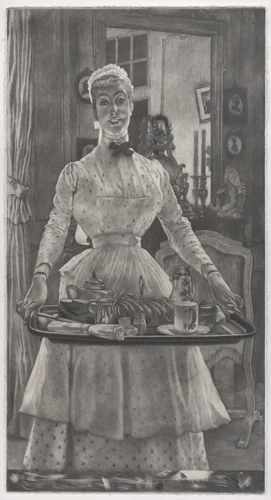
The pinnacle of Tissot’s artistic career was dedicated to capturing the social theater of the Belle Époque and Victorian London. His extensive output of genre paintings focused intently on the people and, crucially, the elaborate fashion of wealthy women, positioning him as a highly desirable observer for the era's cosmopolitan clientele. Tissot recorded the gestures, settings, and minute details of this elite milieu with an almost documentary precision, often resulting in evocative pieces like Renée Mauperin: Henri Mauperin Wounded after the Duel with Boisjorand de Villacourt.
While celebrated for these contemporary scenes, Tissot possessed a remarkable versatility. Throughout his life, he explored diverse subjects, embracing medieval themes, the influence of Japonisme (seen in numerous compositions), and, later, large-scale biblical narratives. This early commitment to both classical technique and modern observation extended to his parallel professional life as a satirist. Working under the pseudonym Coïdé, he contributed sharp, political, and social caricatures to influential publications such as Vanity Fair, including prints like Vanity Fair: Sovereigns, No. 1 "Le regime parlementaire".
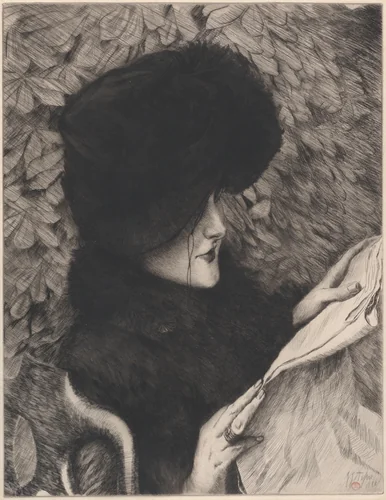
Tissot was an artist keenly attuned to prevailing aesthetic trends, yet he always maintained a distinct, highly finished style, distinguishing him from his Impressionist contemporaries. Today, his meticulous James Tissot paintings and James Tissot prints, frequently seen as museum-quality reproductions, are highly valued for their insight into the period. Works such as The Departure of the Prodigal Son and related studies are housed in significant collections globally, including the Rijksmuseum and the Metropolitan Museum of Art, ensuring his legacy as a foremost depicter of modern elegance endures.
Source: Wikipedia · CC BY-SA 4.0