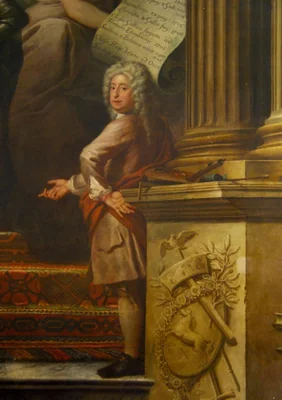
James Thornhill
Sir James Thornhill was the preeminent English painter of historical subjects in the early eighteenth century, working extensively within the established Italian Baroque tradition. Responsible for schemes of colossal size and complexity, Thornhill effectively defined the high visual culture of the Georgian era through monumental civic and state commissions.
His most famous accomplishment is the decorative scheme for the Painted Hall at the Royal Hospital, Greenwich, a masterpiece of architectural painting that established his reputation for handling vast mythological and historical narratives with confident dexterity. Equally significant was his work at St Paul’s Cathedral, where he executed the grisaille paintings illustrating the life of the Apostle Paul across the interior of the dome, a highly visible testament to his skill in illusionistic rendering. Further commissions, including major paintings at Chatsworth House and Wimpole Hall, cemented his status as the leading artist capable of competing with imported continental masters.
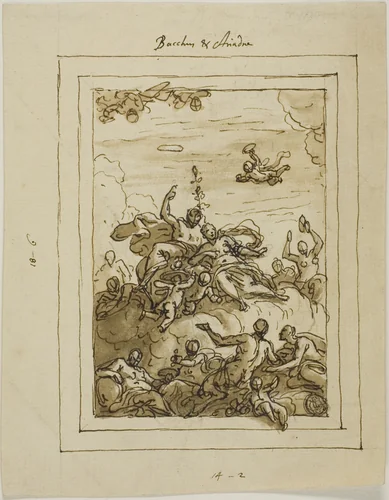
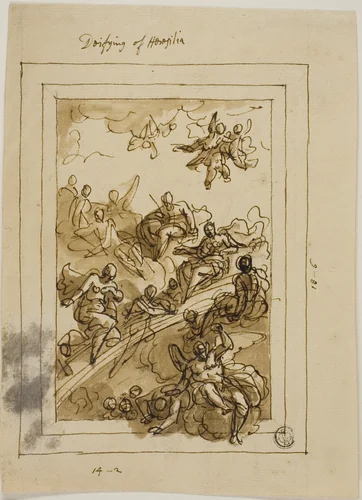
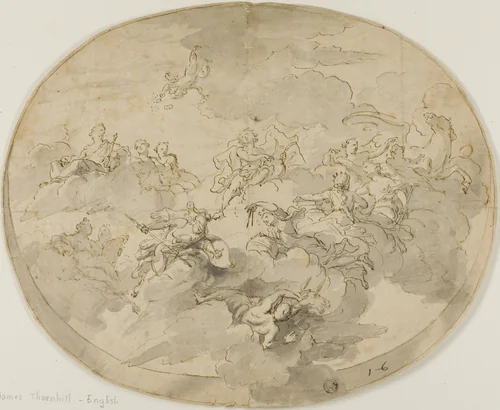
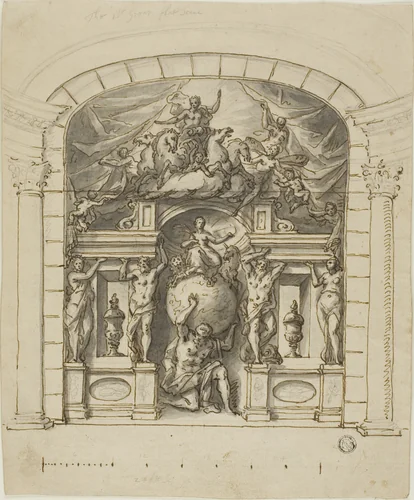
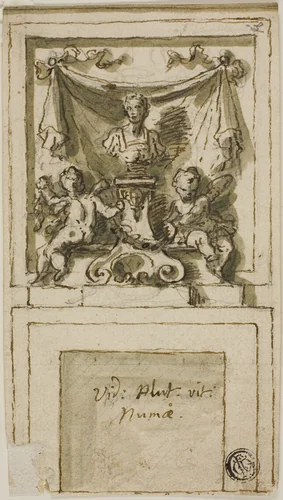
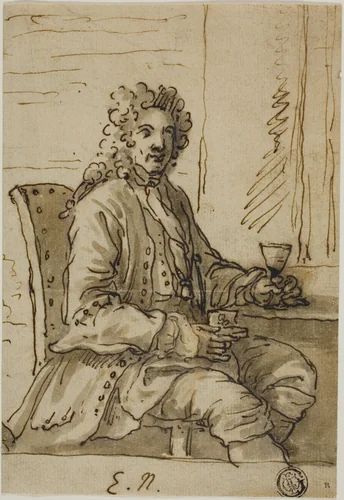
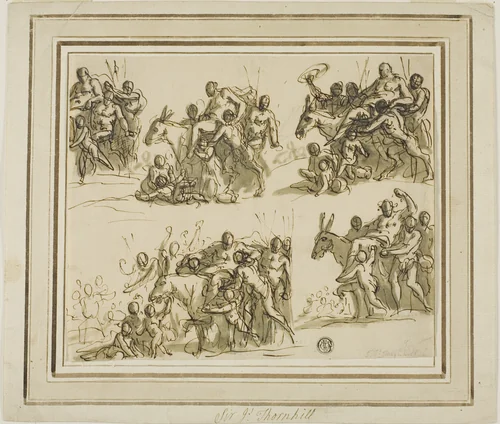
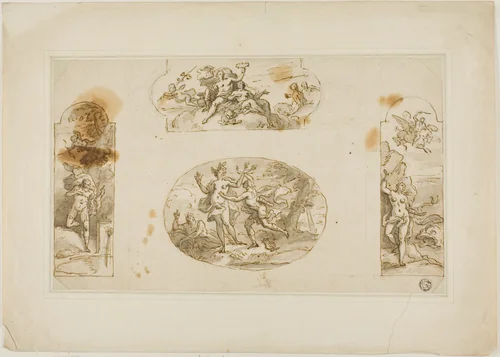
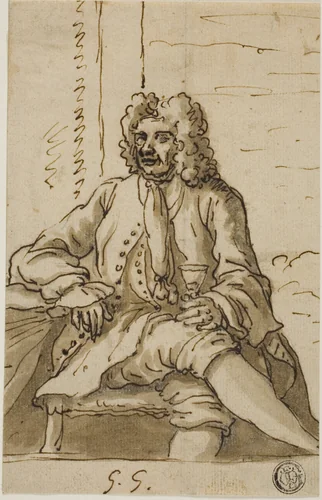
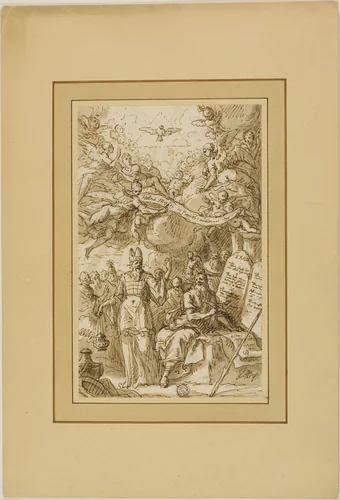
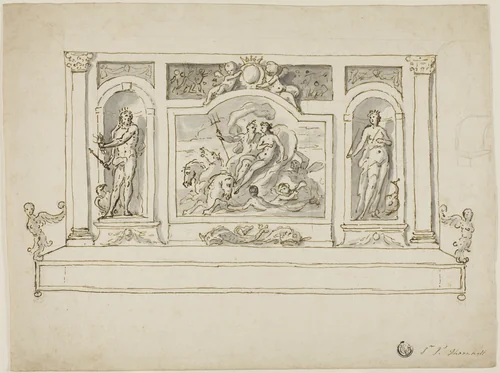
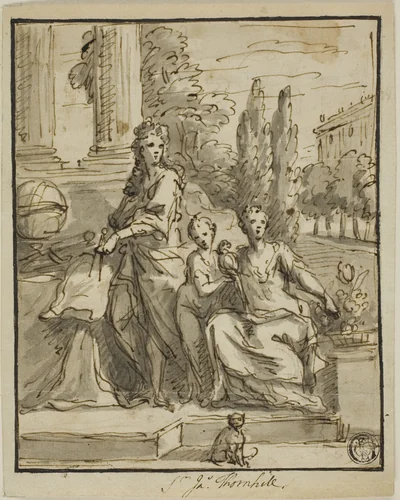
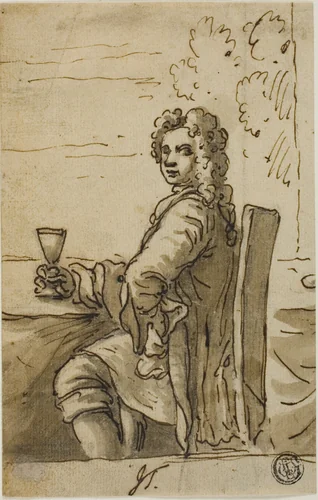
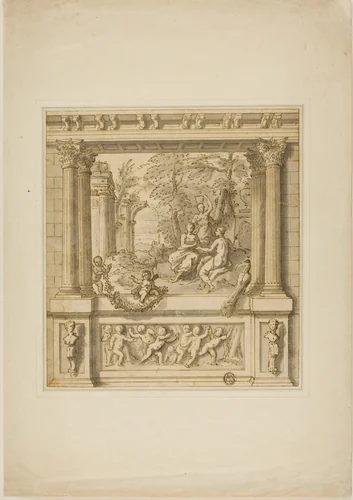
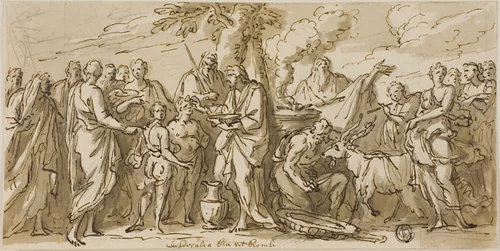
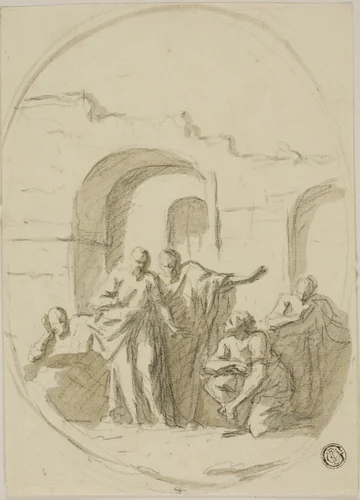
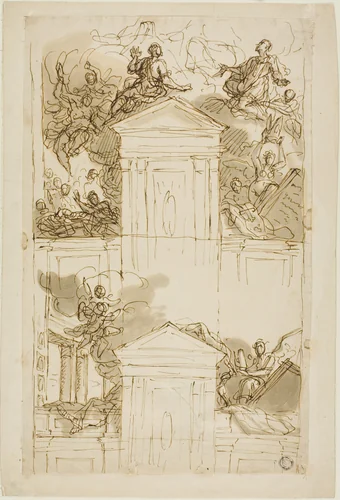
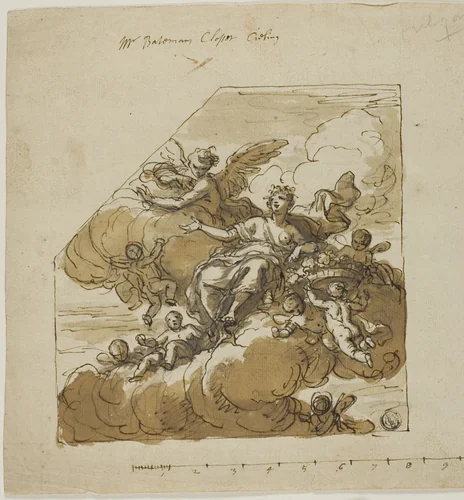
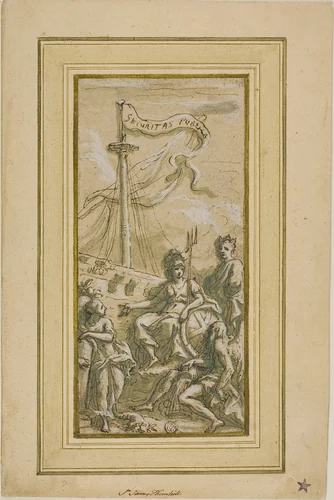
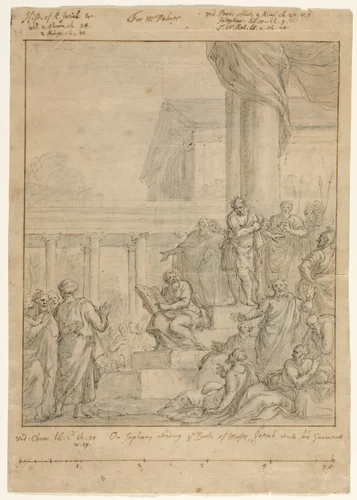
Thornhill’s creative process, balancing continental grandeur with native precision, is perhaps best revealed through his surviving preparatory sketches. The Art Institute of Chicago, for instance, holds fifteen documented drawings active during the period 1695-1702. These works illustrate the rigorous planning required for his architectural assignments, encompassing everything from theatrical stage designs, such as the Design for Stage Scenery (Hampton Court) with Mythological Figures, to detailed figurative studies like Bacchus and Ariadne. His detailed rendering of figures and settings, evident in works such as Design for Ceiling Fresco: Apollo and the Muses with Minerva Destroying Ignorance, demonstrates his command over disegno and composition.
Unlike many of his contemporaries, whose primary work was confined to easel paintings, Thornhill specialized in integrated architectural decoration, often working with architects like Sir Christopher Wren to create environments that blurred the line between structure and spectacle. This dedication to large-scale public art led to a subtle but significant historical achievement: Thornhill was the first native English artist to be knighted for his services in painting, an honor bestowed in 1720. Today, the foundational studies for these monumental projects, sometimes available as James Thornhill prints, are frequently digitized, enabling high-quality prints and downloadable artwork to be studied globally through public domain repositories.
Source: Wikipedia · CC BY-SA 4.0