James Smillie
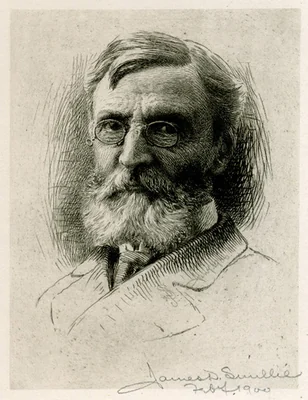
James Smillie (c. 1807-1885) holds a pivotal position among the nineteenth-century artists responsible for disseminating the ideals of American Romantic landscape painting. Active between 1840 and 1866, Smillie distinguished himself not as a painter, but as a master engraver, whose proficiency in steel and copper plate reproduction served as the crucial bridge between elite studio production and public consumption. His works are today housed in prestigious collections, including the Metropolitan Museum of Art, the National Gallery of Art, and the Cleveland Museum of Art, confirming his essential role in the visual history of the era.
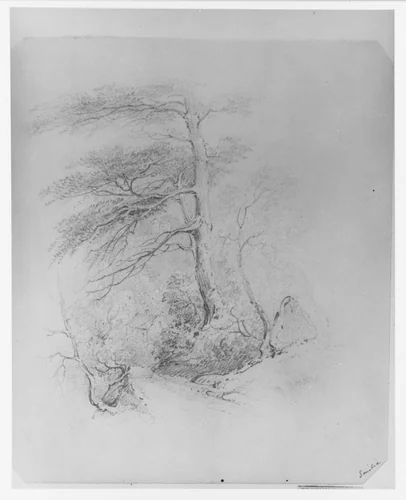
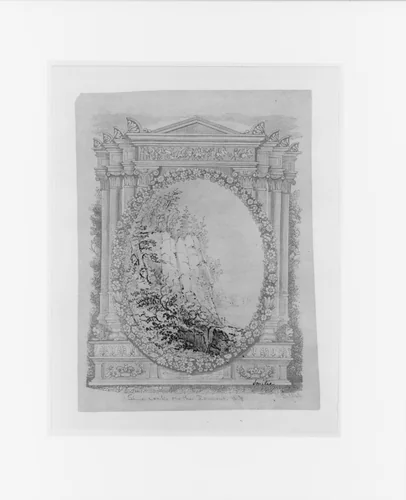
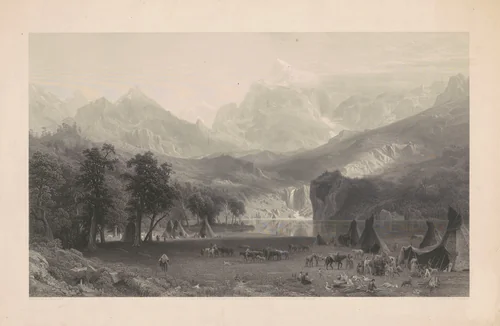
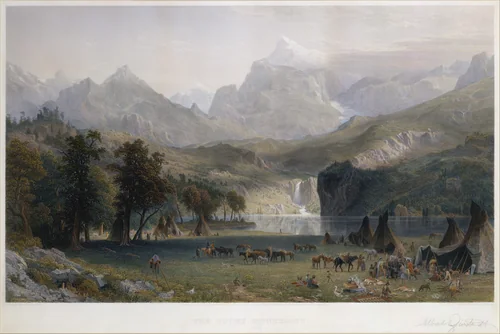
Smillie’s career paralleled the rise of the Hudson River School, whose expansive visions he translated into detailed, reproducible prints. His technical facility allowed for remarkable accuracy in capturing topographical detail and atmospheric effects, evident in early works such as Landscape (from McGuire Scrapbook) and the precise view, Lime Rock on the Rondout, New York (from McGuire Scrapbook). He possessed a rare ability to translate complex tonal values into the linear language of engraving, making him the preferred collaborator for artists seeking mass distribution of their designs.
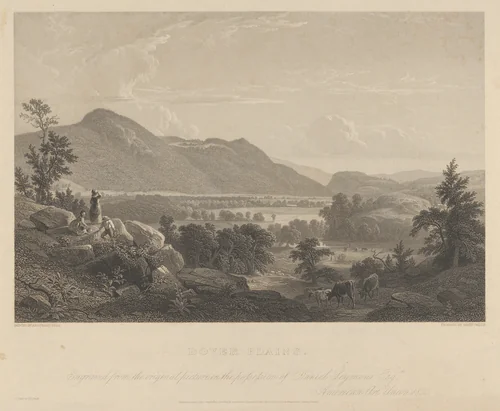
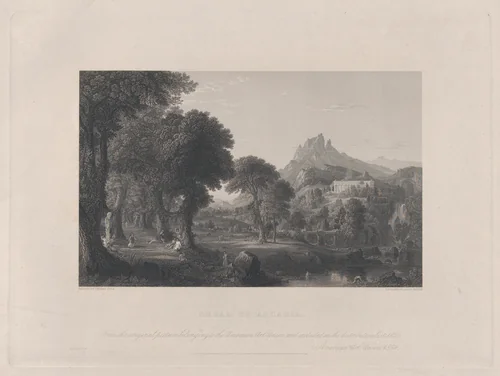
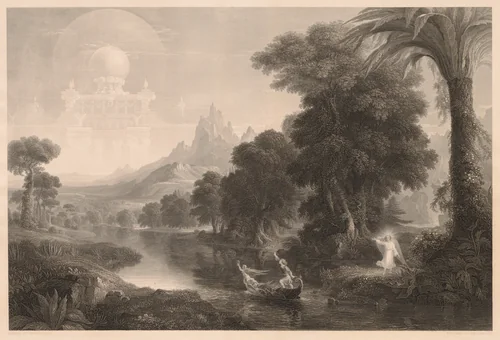
His most historically significant contributions centered on large-scale allegorical scenes. Smillie’s engraving of Thomas Cole’s ambitious composition, notably The Voyage of Life: Youth, cemented his standing as the foremost interpreter of Romantic landscapes rife with moralizing narrative. Similarly, works like Dover Plains and the idyllic Dream of Arcadia ensured that these evocative scenes of the American interior became staple fixtures in middle-class homes long before photography offered a viable alternative for reproductive art.
Smillie, unlike many of the original painters he interpreted, enjoyed a comfortable, practical longevity born not of revolutionary artistic vision, but of consistently excellent craftsmanship. His engravings were instrumental in defining and standardizing the aesthetic of the American Sublime for the general population. Today, the legacy of James Smillie prints ensures that these historical visualizations remain accessible; the fact that many of his key works are now in the public domain allows scholars and enthusiasts alike to access high-quality prints and downloadable artwork, furthering the widespread appreciation he originally sought.
Source: Wikipedia · CC BY-SA 4.0