James Robertson
The work attributed to James Robertson, encompassing a concise yet critically important output primarily consisting of photography and supported by a singular known drawing, holds a significant place in the nascent history of architectural documentation. Active between approximately 1815 and 1850, Robertson’s images are distinguished by their early technique and exceptionally focused subject matter, earning immediate inclusion in major institutions such as the Metropolitan Museum of Art, the Cleveland Museum of Art, and the Art Institute of Chicago.
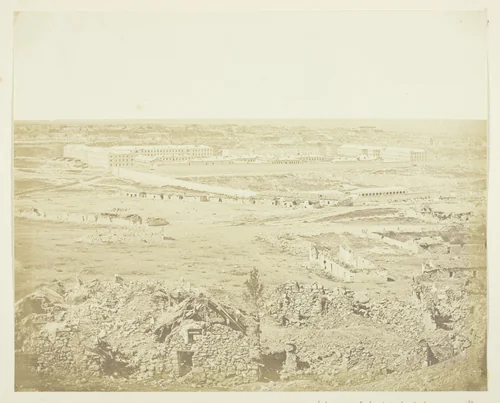
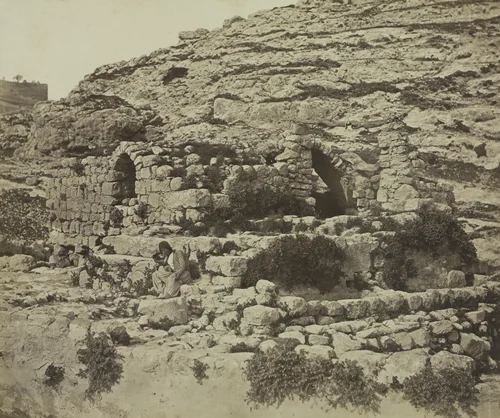
Robertson specialized in meticulously recording classical sites, particularly documenting the crumbling majesty of Athenian antiquity during a period of intense Western European interest in the Hellenic world. His fifteen extant works, which include the pastoral study Cottage and Ruined Tower near Stream and the dramatic documentation of the Temple of Jupiter Olympius, reveal a strong adherence to balanced composition and atmospheric light that elevates them beyond mere topographical record. These photographic studies were essential in shaping the European imagination of Greece’s antique past.
A defining feature of his photographic oeuvre is the repeated, near-forensic documentation of the Acropolis in Athens, captured across multiple plates and perspectives. This persistent focus suggests either an extended sojourn in Greece or a highly specialized commission. One might observe that his devotion to the Parthenon in its contemporary state verged on obsession, providing future historians with a uniquely thorough visual record of the site before extensive modern restoration efforts.
While specific biographical details remain subjects of archival study, the sharpness and depth visible in his fourteen extant photographs confirm a sophisticated understanding of early processes within the 1815-1850 period. The precision of these compositions establishes them firmly as museum-quality works. Today, the historical significance of these images ensures their continued relevance, and because many are now in the public domain, they have become foundational resources for scholarly work. Researchers frequently seek downloadable artwork derived from these plates, ensuring the widespread dissemination of James Robertson prints far beyond the institutions that preserve the original negatives. These high-quality prints continue to define the visual representation of 19th-century Athenian monuments.
Source: Wikipedia · CC BY-SA 4.0