James Neagle
James Neagle (c. 1760–1822) was a foundational figure in the late eighteenth-century British print world, known primarily as a prolific and meticulous line engraver whose technical skill democratized the visions of his more famous contemporaries. Active from the 1760s into the early 1800s, Neagle specialized almost exclusively in producing copperplate illustrations for publication, playing a vital role in making fine art available to the burgeoning British reading public.
He effectively served as the primary vehicle through which the public consumed the imaginations of leading artists of the era. Neagle’s technical mastery allowed him to successfully translate complex drawings by history painters such as Henry Fuseli and Gavin Hamilton, as well as popular academic designers like Thomas Stothard and Robert Smirke. His dedication to translating the detailed designs of these popular artists meant his work reached an enormous readership, making him crucial to the dissemination of neoclassical and early romantic visual culture throughout Great Britain.
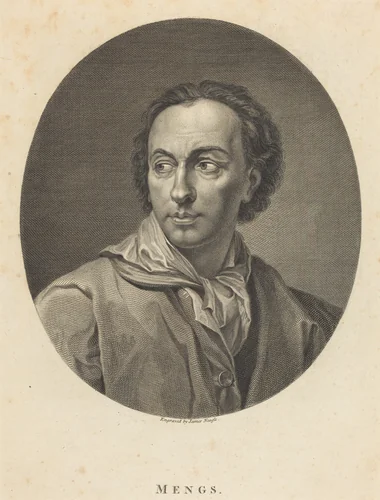
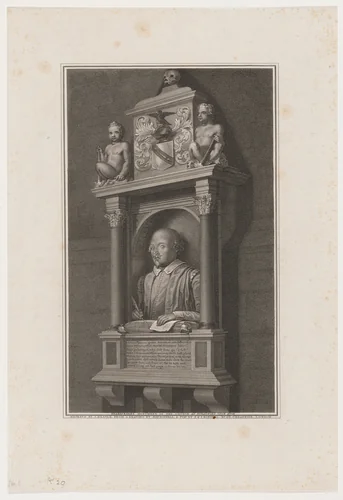
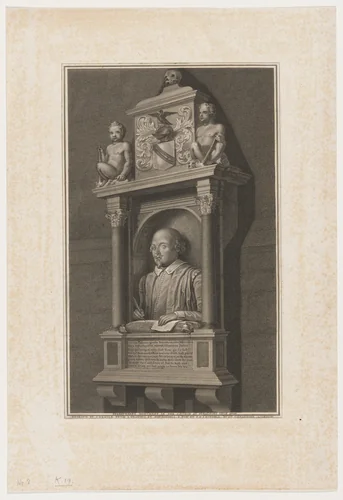
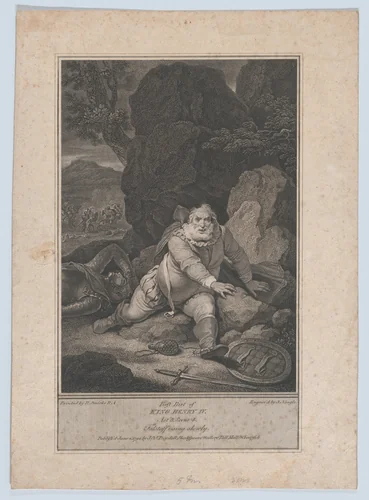
Neagle’s surviving output, now housed in major institutions including the Metropolitan Museum of Art and the National Gallery of Art, confirms his extensive range. His works include historical portraiture, such as his precise depiction of Anton Raphael Mengs, and complex architectural records, evident in his engravings of the Shakespeare Monument in Church at Stratford-on-Avon. Neagle’s consistent engagement with literary subjects is further highlighted by the dramatic character study Falstaff Rising Slowly from First Part of King Henry IV, prints that confirm his ability to capture both theatrical moment and nuanced expression.
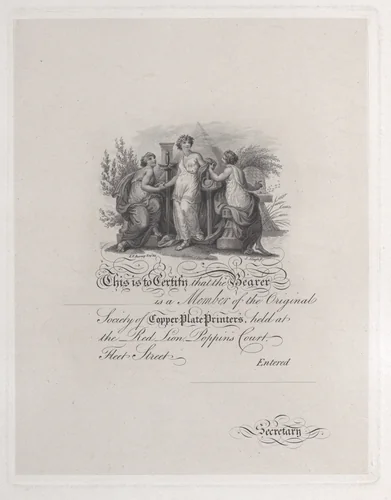
Beyond reproducing fine art, Neagle was a committed professional of the trade. Uniquely, his documented output includes the Certificate of Membership for the Society of Copper Plate Printers, confirming his active involvement in the professional guild that regulated the craft. While many of the original James Neagle prints are held exclusively in private or institutional collections, his enduring significance lies in his commitment to accessibility, a mission continued today as many of his high-quality prints are now available in the public domain. Neagle’s legacy is that of a true printer’s printer, whose enduring craft brought high artistic achievement to the masses.
Source: Wikipedia · CC BY-SA 4.0