James Montgomery Flagg
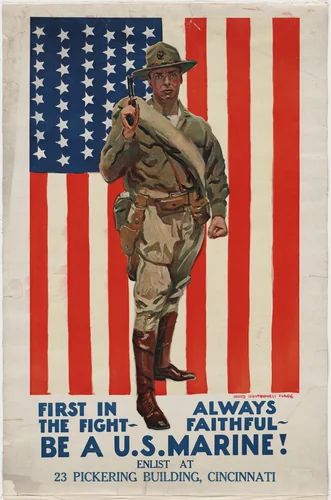
James Montgomery Flagg (1877-1960) holds a singular place in the history of American visual culture, best known for translating the high demands of conflict directly into the accessible vernacular of illustration. Working across a remarkable range of media, from traditional fine art painting to detailed cartooning, Flagg became an indispensable voice during the critical years of the First World War. His designs, characterized by bold clarity and psychological directness, ensured his permanent association with the national narrative of the era.
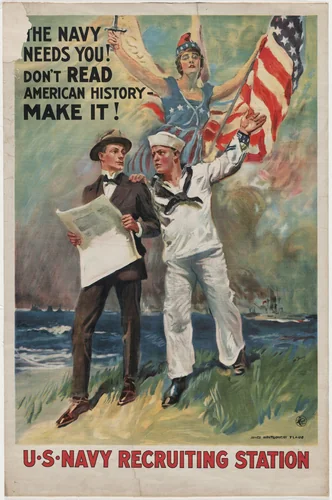
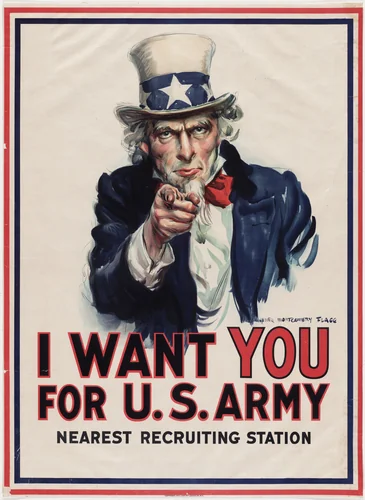
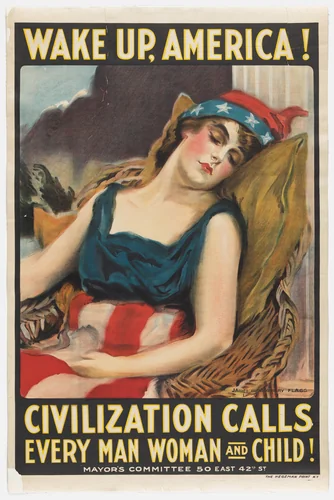
Flagg’s active period in wartime propaganda, specifically 1914 to 1918, cemented his legacy, producing five designs that remain iconic touchstones of mobilization. Foremost among these is his 1917 design, I Want You for the U.S. Army. This work instantly revolutionized recruitment visual standards, portraying a stern, accusatory figure of Uncle Sam based on Flagg’s own self-portrait, demanding immediate action from the viewer. The image was a masterpiece of efficient communication, bypassing subtlety for an unforgettable, personalized command. Its immediate success led to other potent calls to action, including The Navy Needs You! Don't Read American History - Make It! and the urgent national appeal, Wake up America! Civilization Calls Every Man, Woman and Child!
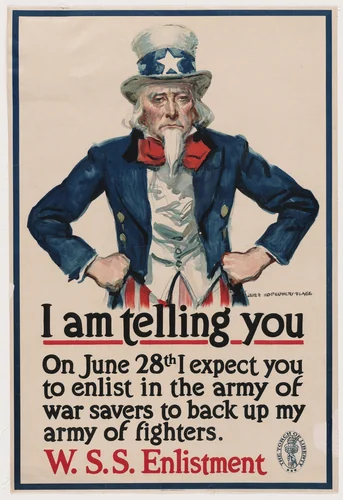
Beyond recruitment, Flagg channeled the same authoritative energy into financial drives, notably with I am Telling You On June 28th I Expect You to Enlist in the Army of War Savers to Back Up My Army of Fighters, W.S.S. Enlistment, encouraging the domestic funding of the war machine. His ability to synthesize complex political needs into compelling visual shorthand places him within the upper echelon of American illustrators.
His works are today held in major institutions, including the Museum of Modern Art, reflecting their continuing relevance both as historical documents and examples of high-quality prints. Though initially conceived for mass circulation, the sheer artistic force of Flagg’s posters ensures their enduring appeal. Today, many of his impactful wartime works are found in the public domain, allowing institutions and enthusiasts access to these transformative designs for downloadable artwork, ensuring that the legacy of his powerful visual rhetoric continues to be studied and appreciated.
Source: Wikipedia · CC BY-SA 4.0