James Jacques Joseph Tissot
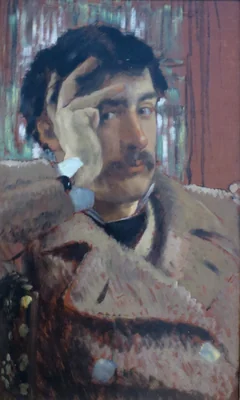
James Jacques Joseph Tissot (born Jacques Joseph Tissot, 1836-1902) was a highly successful French painter, illustrator, and graphic artist whose meticulously rendered genre scenes became the quintessential visual record of the Belle Époque and Victorian London. Born in Nantes to a drapery merchant and a milliner, Tissot developed an early and specialized fascination with the intricacies of fabric and contemporary style, elements that would define his professional output.
Educated within academic traditions, Tissot’s artistic approach was a unique synthesis, incorporating the precise detailing of realism with the atmospheric sensibilities of early Impressionism. He rapidly gained prominence by specializing in large-scale genre paintings dedicated to contemporary European high society. Unlike many of his established contemporaries who favored historical or mythological narratives, Tissot consciously positioned himself as an essential chronicler of modern life, particularly focusing on the fashion, leisure activities, and shifting social dynamics of affluent women. His works function as insightful documentation of class and elegance, capturing the subtleties of posture, place, and relationship in an era of rapidly changing aesthetic values.
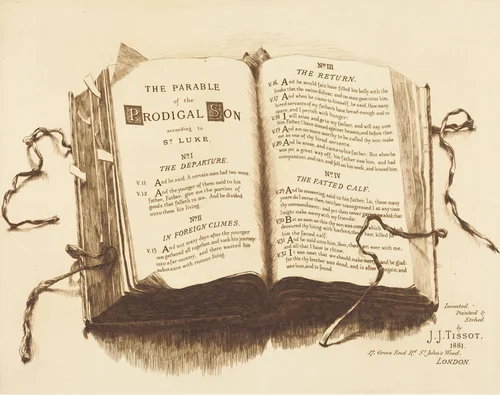
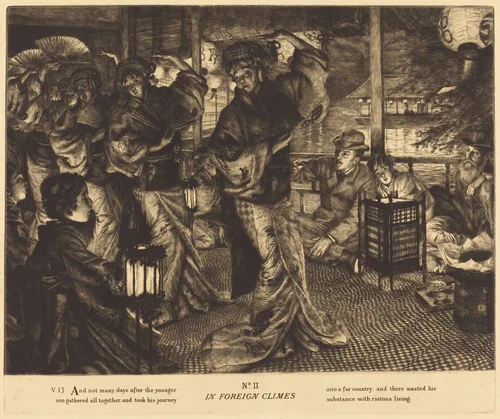
While Tissot is best known for these society paintings, his extensive creative range also encompassed explorations of medieval, biblical, and Japoniste subjects. His training ensured skill across multiple mediums, and his experience as a professional observer sharpened his ability to capture character: for a period, he contributed detailed caricatures to the British periodical Vanity Fair under the curious pseudonym Coïdé, a fascinating counterpoint to his polished fine art career.
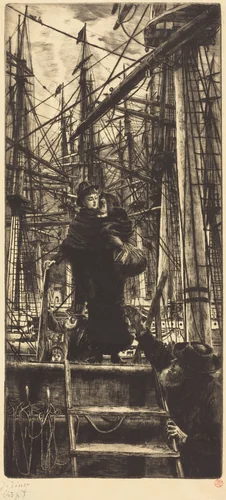
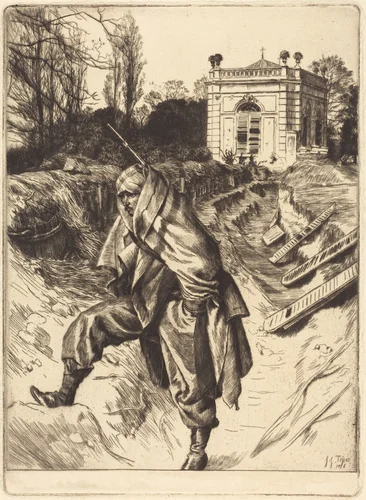
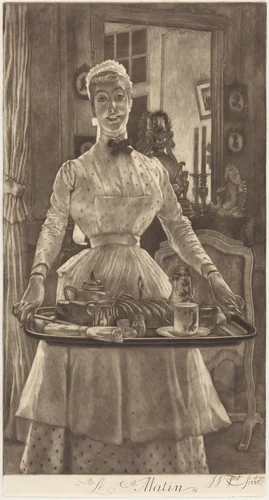
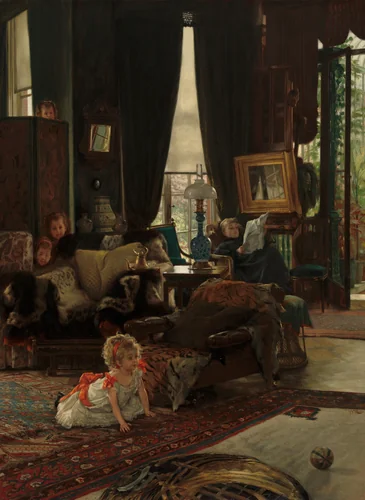
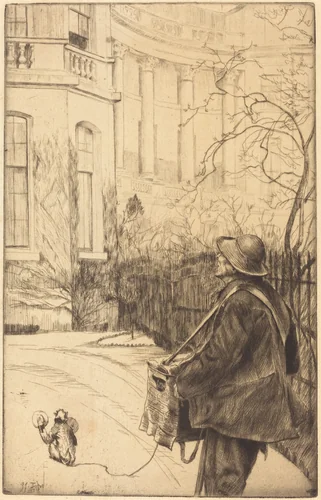
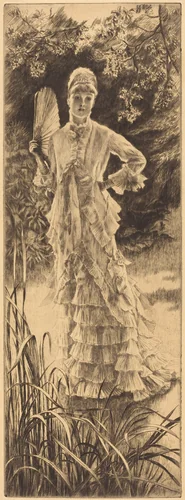
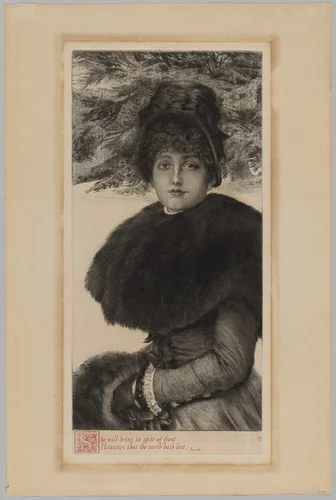
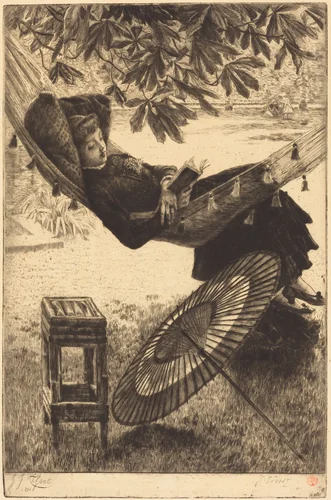
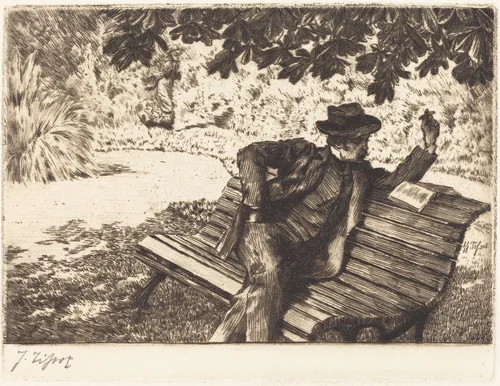
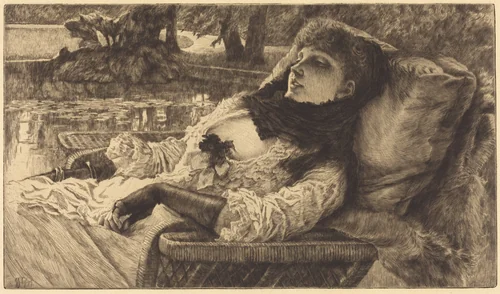
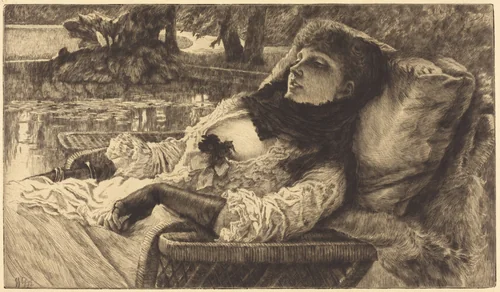
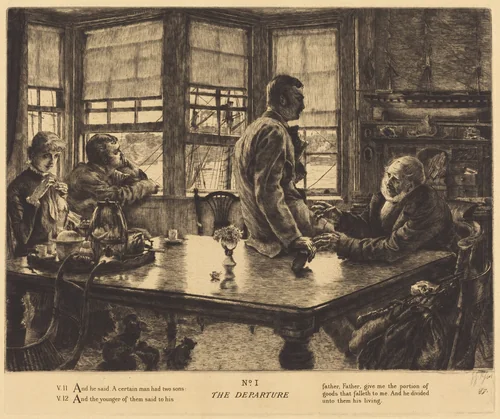
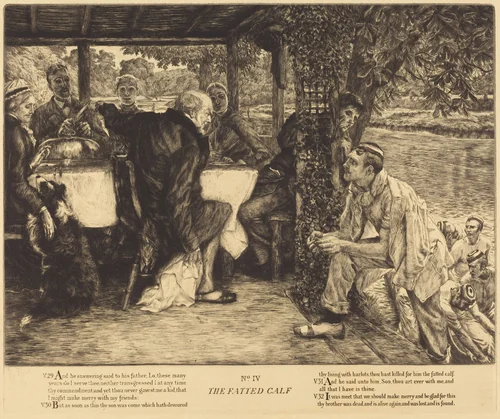
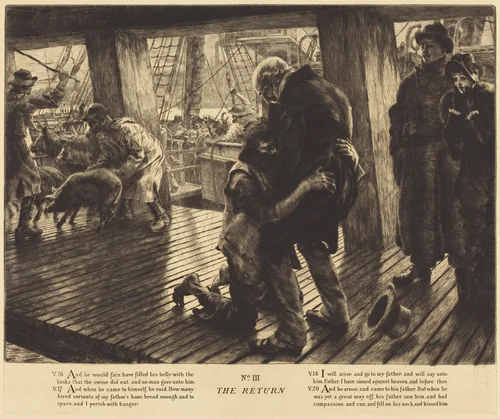
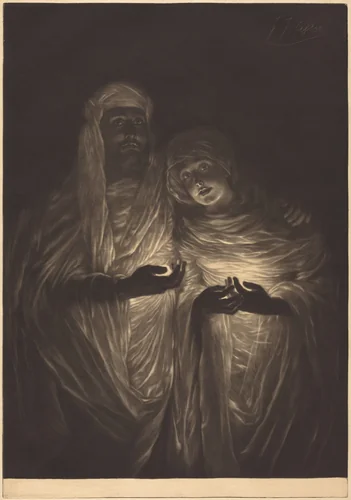
Tissot’s mastery across oil and graphic mediums is exemplified by works such as the wartime study Grand Garde (Souvenir du siège de Paris) and the society observation Hide and Seek. His skill as a printmaker resulted in a substantial catalogue of etchings and mezzotints, ensuring that James Jacques Joseph Tissot paintings and high-quality prints remain widely recognized today. Many of his significant illustrations and prints, held in collections like the National Gallery of Art, are now in the public domain, allowing institutions to offer downloadable artwork for scholarly study.
Source: Wikipedia · CC BY-SA 4.0