James Goodwyn Clonney
James Goodwyn Clonney (1812-1867) established himself during a relatively brief but productive career as one of America’s most insightful practitioners of genre painting and lithography in the antebellum period. Though English-born, his artistic identity was firmly rooted in the New York art scene, where he specialized in depicting quotidian life. Active professionally between 1825 and 1836, Clonney’s output was distinctively scaled, often favoring small formats and miniatures over the expansive historical canvases popular at the time.
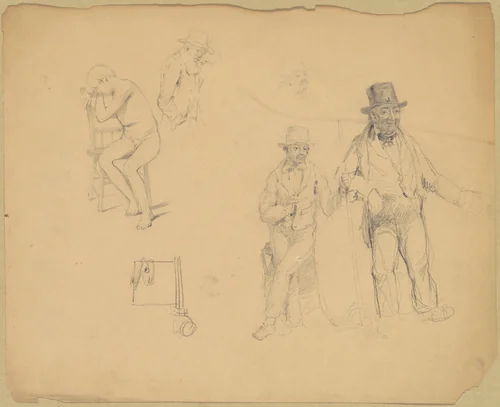
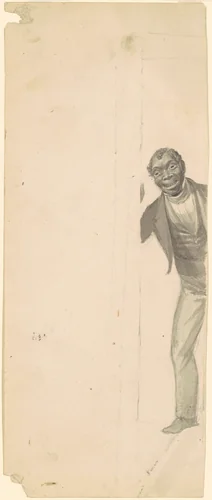
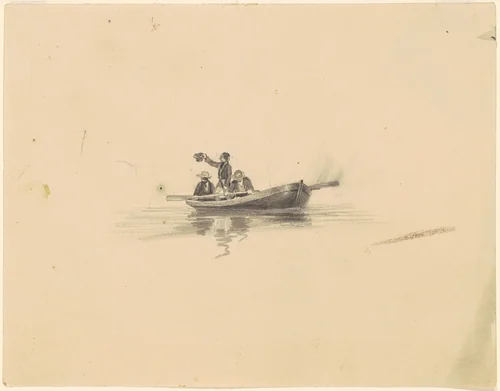
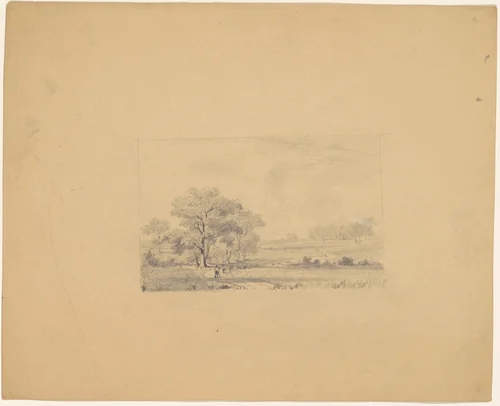
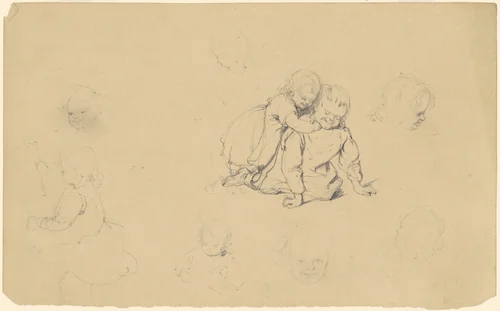
Clonney’s primary focus lay in rural and domestic subjects, capturing moments of tranquility or light activity as seen in compositions like Boys with a Boat and Figures by the Shore. His technical proficiency, particularly in draftsmanship, is evidenced by surviving studies held in major collections, including the detailed academic exercise Seated Male Nude [recto] and the topographical observation Tree Near the Shore. The small scale of his finished works often belied a high degree of detail and observational acuity. In a period marked by rapid social change, Clonney chose to concentrate on the immediate, observable world rather than historical narrative.
The enduring relevance of Clonney’s contribution stems not merely from his technical skill but from his employment of the genre form as a vehicle for subtle political and social commentary. Working in the volatile decades leading up to the Civil War, many of his compositions offered nuanced observations on class and social interaction. Most notably, Clonney produced works that depicted white and black men interacting on terms of apparent equality and friendship, a quiet but profound counter-narrative to the prevailing visual rhetoric of the time. This intentional placement of progressive ideals within approachable, popular forms is perhaps his defining achievement; he was a utopian dreamer working in paint, anticipating connections that society was determined to delay.
Although his active painting career was comparatively short, Clonney's contribution to early American realism remains significant, with representative works held in the National Gallery of Art and other major collections. Today, the integrity and observational quality of his compositions ensure that James Goodwyn Clonney paintings and drawings retain their appeal. Through institutional archiving, high-quality prints of his works, now in the public domain, are increasingly accessible to contemporary viewers, preserving his specific and valuable contribution to 19th-century American art.
Source: Wikipedia · CC BY-SA 4.0
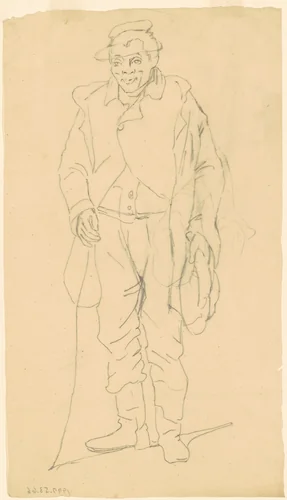
![Studies of Dogs and Men [verso] by James Goodwyn Clonney, drawing, 1840-1850](https://img.artbee.org/560546e6-0c27-445c-929f-aeac2e809337/small.webp)
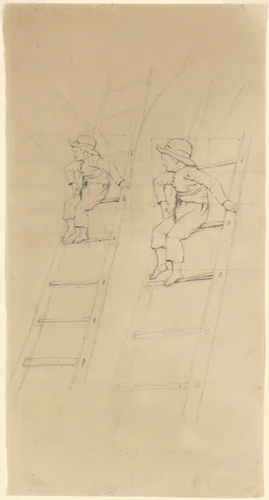
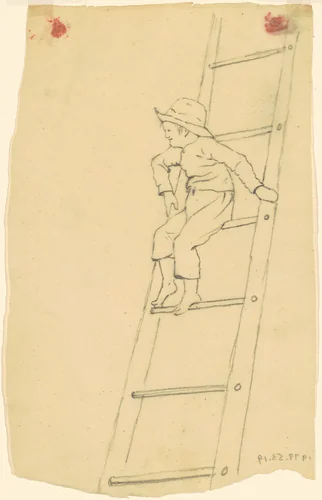
![Studies of Dogs and a Seated Boy [recto] by James Goodwyn Clonney, drawing, 1840-1850](https://img.artbee.org/74d028c8-af13-43f6-acbf-eb050c1073a1/small.webp)