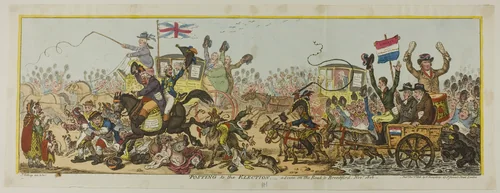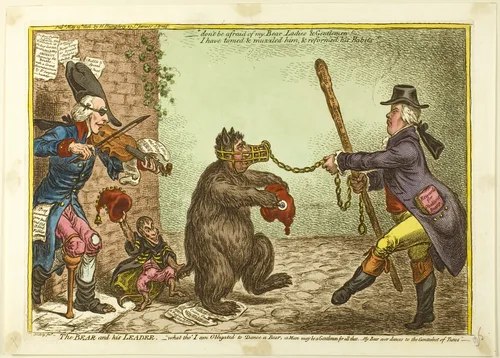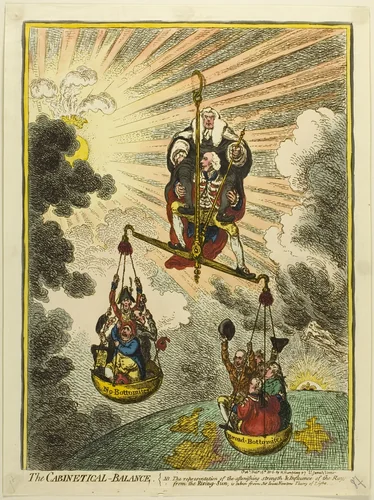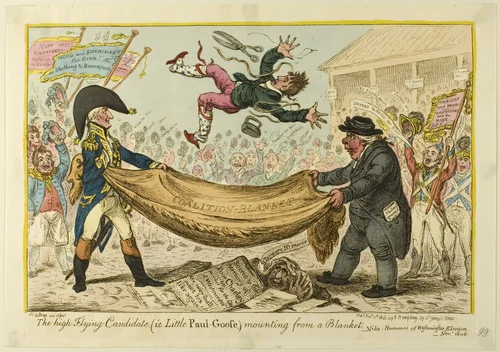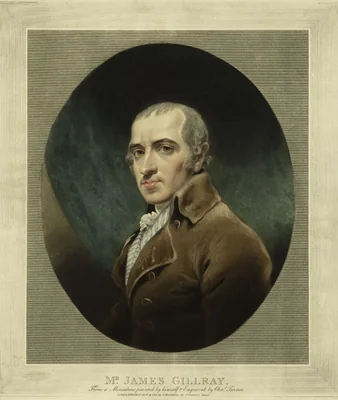
James Gillray
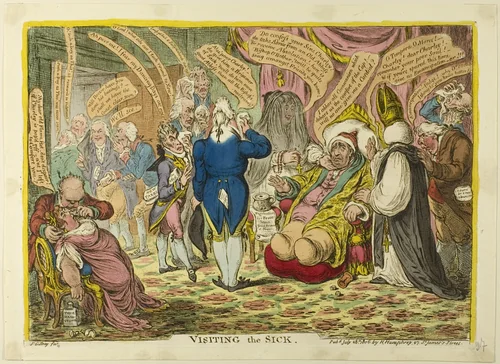
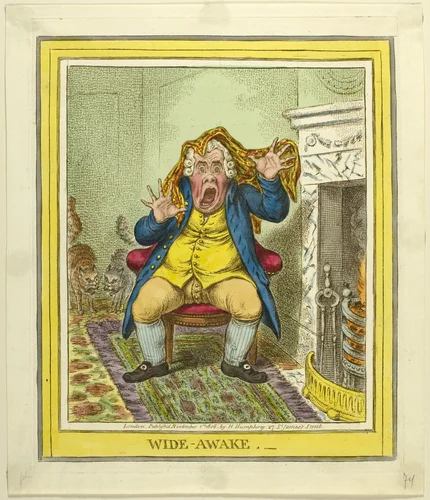
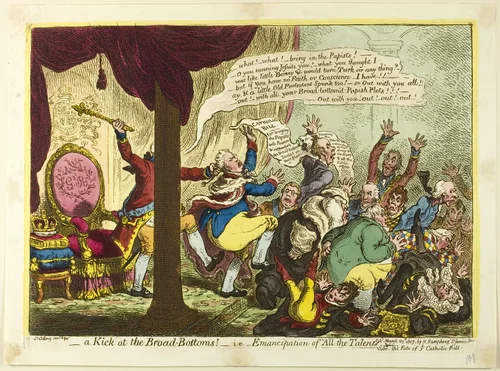
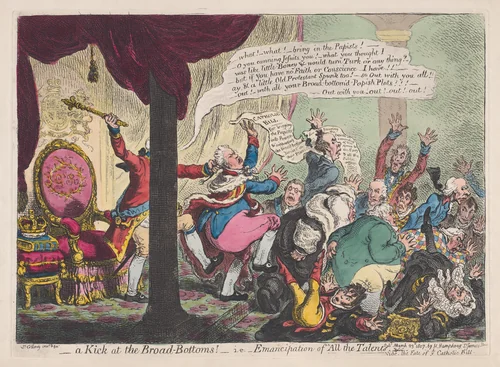
James Gillray (1756–1815) stands as the preeminent master of British political and social caricature during the late Georgian era. Operating almost exclusively as an etcher and printmaker, his prodigious output defined the visual critique of a historically momentous period, spanning the revolutions in France and America and the early stages of the Napoleonic Wars. Although he began producing prints as early as 1777, his most sophisticated and influential satires were published predominantly between 1792 and 1810.
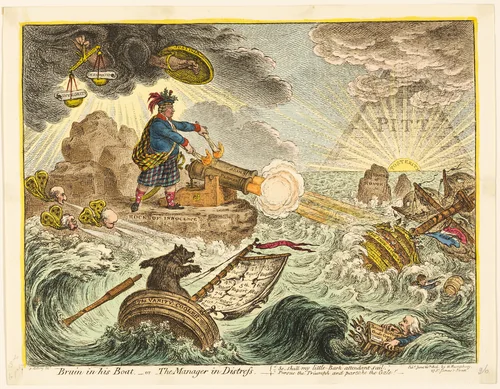
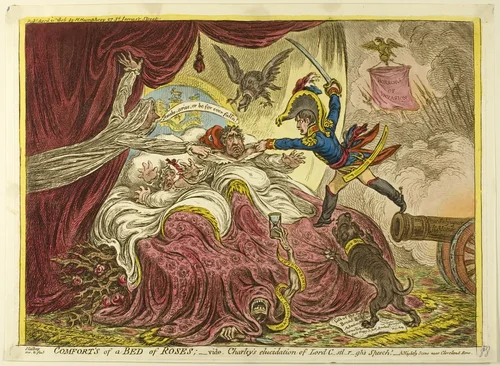
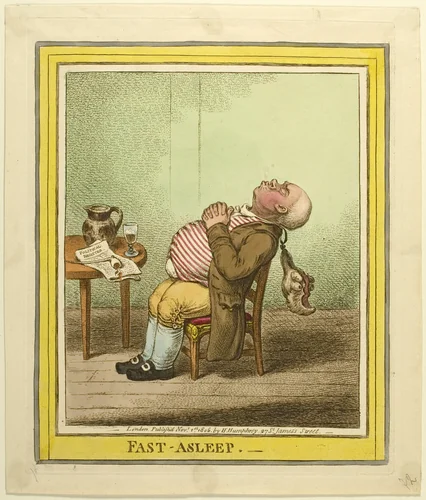
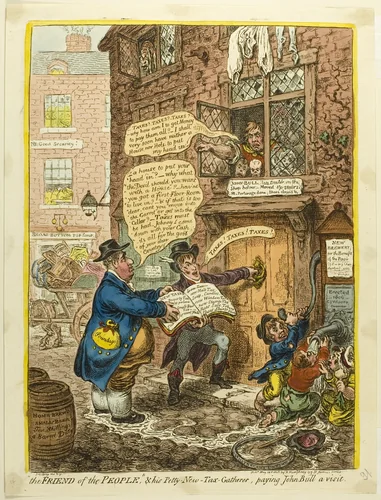
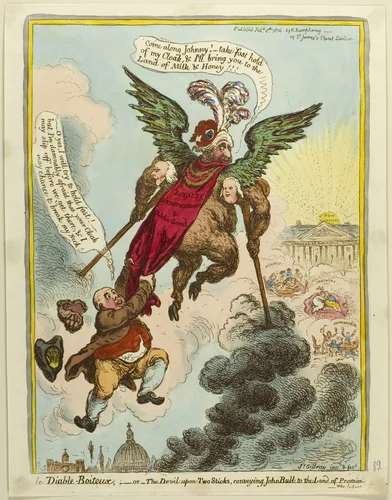
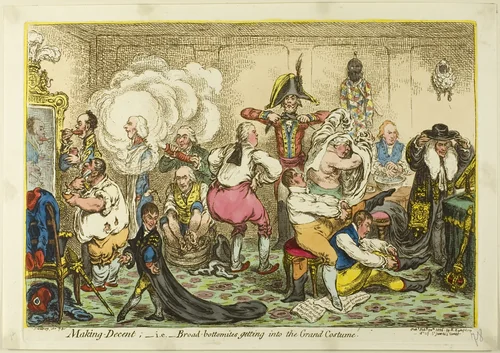
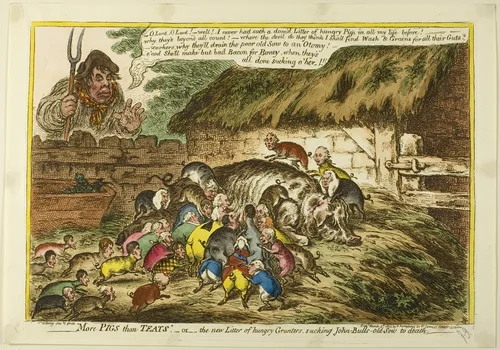
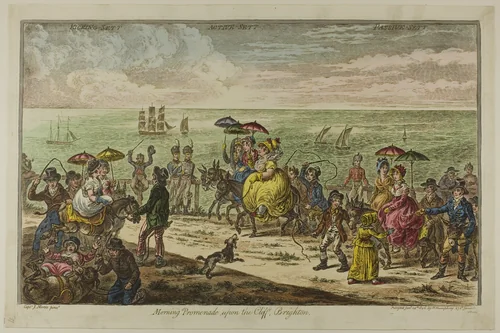
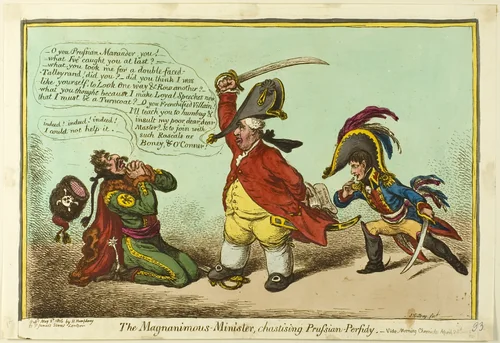
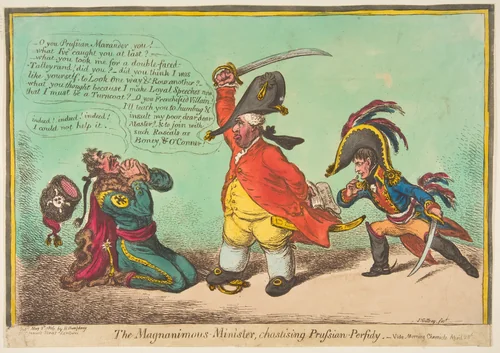
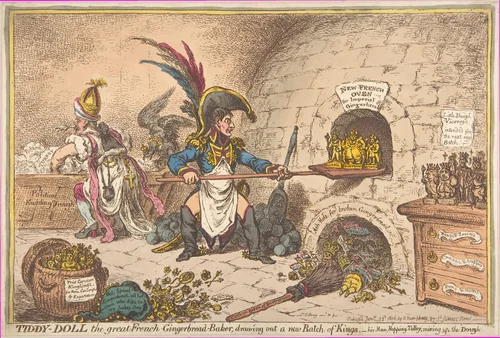
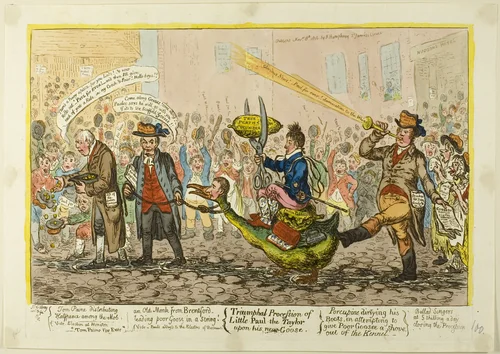
Gillray fundamentally elevated the art of the political cartoon. He transformed what had been a modest format of visual insult into complex, layered narratives, employing detailed cross-hatching and masterful composition to dissect the flaws of public figures. His subjects ranged from the social excesses of London to the international machinations of Westminster, targeting the ruling elite, including King George III, and the fierce parliamentary rivalry between William Pitt the Younger and Charles James Fox. Works such as Hyder Ally and The American Rattle Snake demonstrate his swift engagement with foreign policy crises, while domestic prints like Politeness offered sharp commentary on the shifting social customs of the British populace.
The effectiveness of Gillray lay not only in his sharp visual humor but also in his technical brilliance. His ability to render instantly recognizable likenesses, even while distorting them into grotesque allegorical figures, remains a hallmark of his genius. He often demanded a sophisticated political literacy from his audience, rewarding them with an unparalleled depth of satirical detail. It is perhaps indicative of his influence that certain physical exaggerations he popularized became permanent visual shorthand for key figures of the period, influencing the style of all who followed.
His prolific catalogue established a powerful standard for visual commentary that shaped subsequent generations of satirists. Today, Gillray’s work is recognized as essential documentation of the period, collected by major international institutions including the National Gallery of Art, the Metropolitan Museum of Art, and the National Portrait Gallery in London. Since many of these historical works are now in the public domain, art enthusiasts can readily access high-quality prints and study this essential body of downloadable artwork, ensuring the survival of his acerbic wit.
Source: Wikipedia · CC BY-SA 4.0