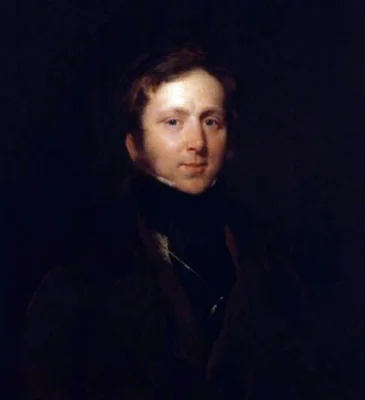
James Duffield Harding
James Duffield Harding (1798-1859) occupies a significant, and often overlooked, position in the history of British Romantic landscape painting and technical instruction. Active in the critical period between 1818 and 1829 as a prolific printmaker, Harding excelled equally as a painter, a highly skilled lithographer, and a systematic author of widely influential drawing manuals.
His most crucial artistic innovation lay in fundamentally altering the accepted practice of watercolor painting. Where earlier British traditions favored the delicate transparency of simple washes, Harding pioneered a bolder, more textured approach. He advocated rigorously for the use of tinted papers and the strategic application of opaque pigments, or bodycolour, often referred to today as gouache. This technical shift allowed for richer tonal depth and increased saturation, challenging the established hierarchy that placed oil painting above watercolor. Harding’s mastery of these complex effects provided landscape artists with a dramatically expanded visual vocabulary, an innovation that proved profoundly influential among his contemporaries and successors across the Victorian era.
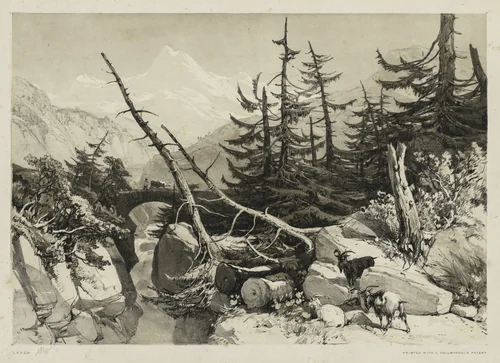
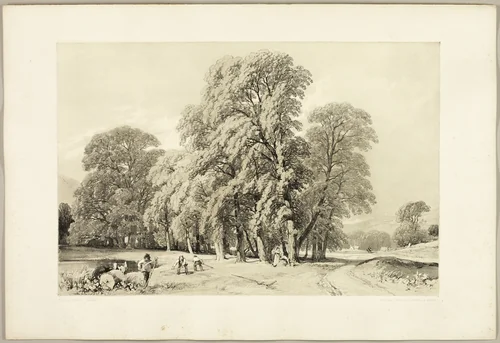
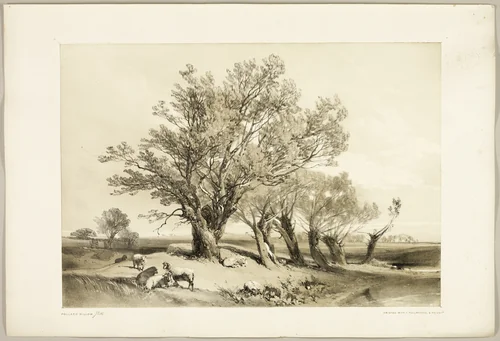
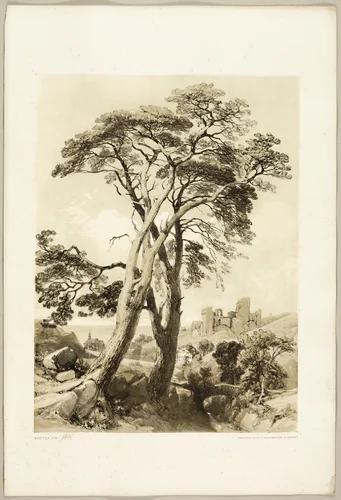
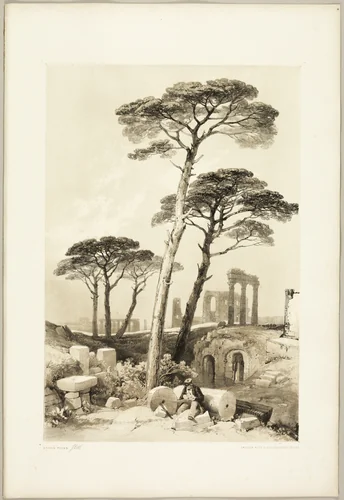
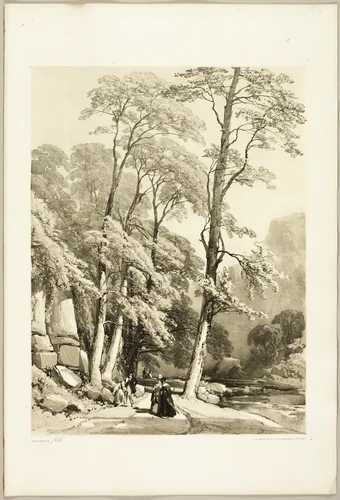
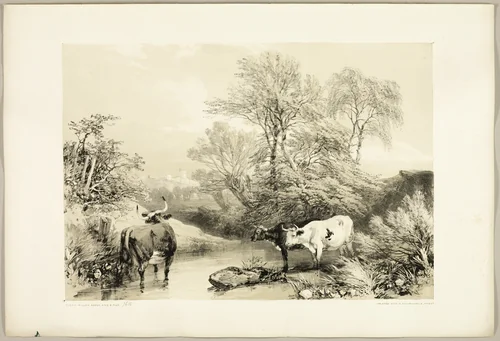
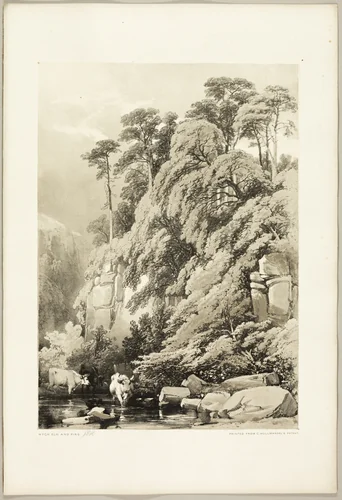
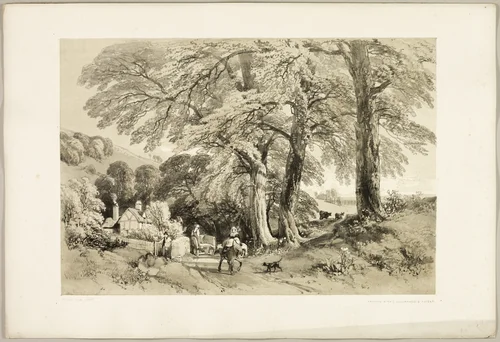
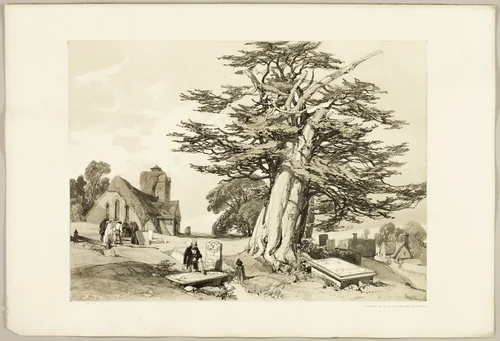
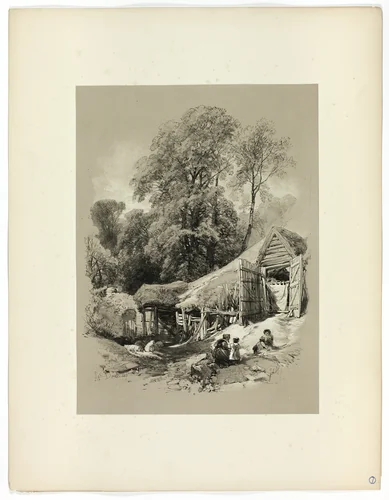
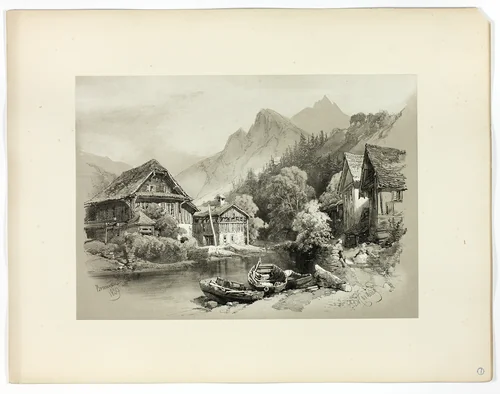
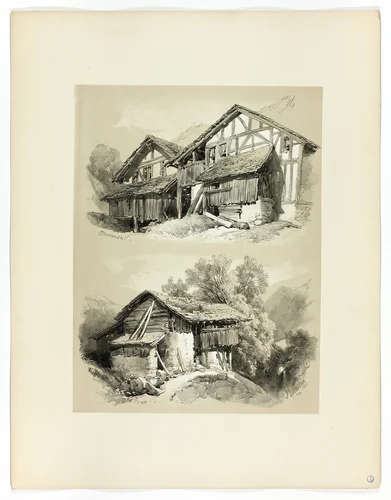
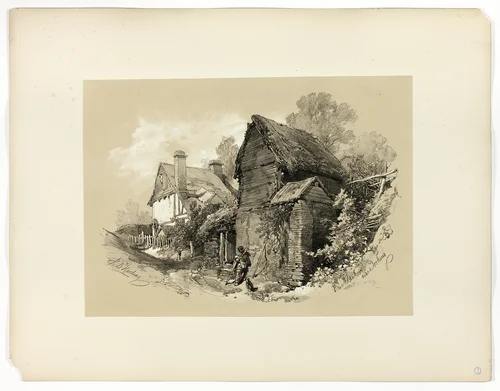
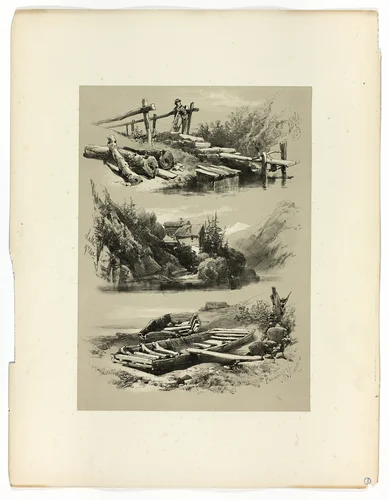
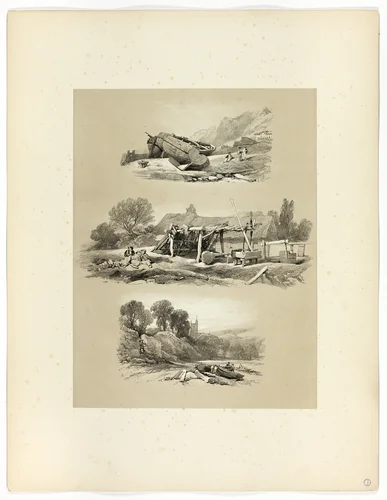
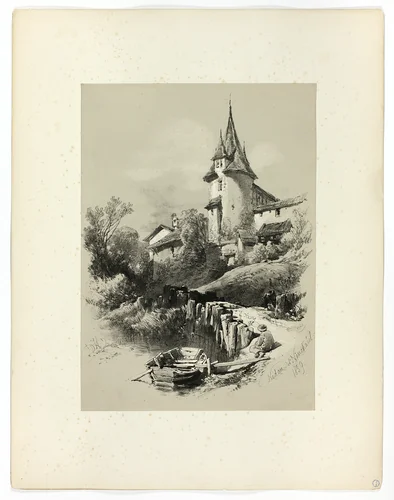
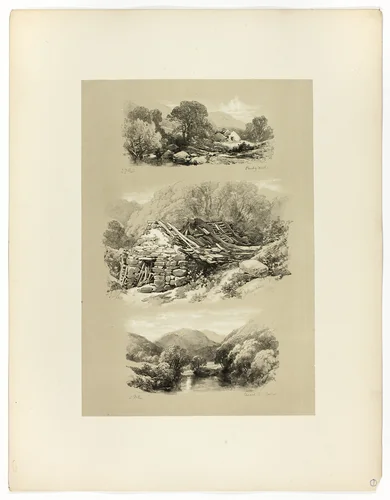
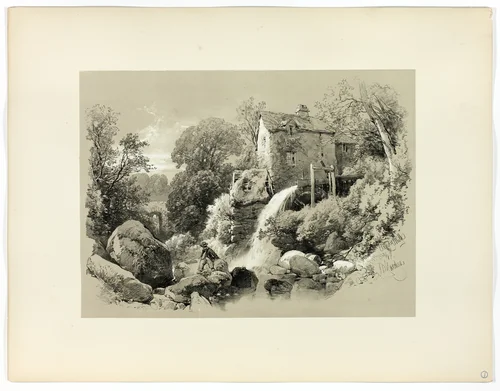
The influence of Harding was amplified through his prodigious output in graphic media. Working extensively as a lithographer, he translated his topographical sketches of picturesque and historical locations, such as Fishing Boats Near Cliffs and The Palace of Holyrood, into accessible, high-quality prints. These detailed images served not only as fine art but also as educational models.
Indeed, his role as an educator was central to his legacy. Harding specialized in codifying sophisticated techniques into practical, reproducible steps. If one were to argue for an artist who successfully democratized the skills necessary for polished landscape drawing in the nineteenth century, Harding would certainly be a leading candidate. He removed the mystique, replacing it with measurable methodology. Today, the foundational rigor of his work is appreciated in major collections globally, including the Cleveland Museum of Art and the Art Institute of Chicago. While the physical ownership of his work requires museum-quality resources, many James Duffield Harding prints and studies have fortunately entered the public domain, ensuring that this influential body of downloadable artwork remains accessible for contemporary study and enjoyment.
Source: Wikipedia · CC BY-SA 4.0