Jacques Saly
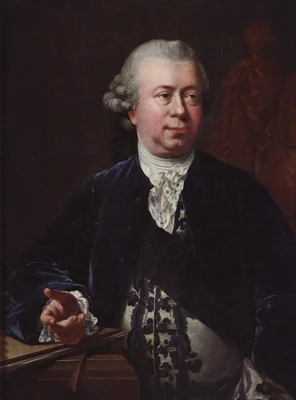
Jacques François Joseph Saly (1717-1776) was an exceptionally itinerant French sculptor whose career successfully bridged the great artistic capitals of Europe, laying important groundwork for the rise of Neoclassicism in Scandinavia. Born in France, Saly honed his craft through significant periods of study and work in Italy and Malta before dedicating the most influential phase of his life to Denmark. His contributions mark him as one of the pivotal foreign talents responsible for shaping eighteenth-century Nordic sculptural practice.
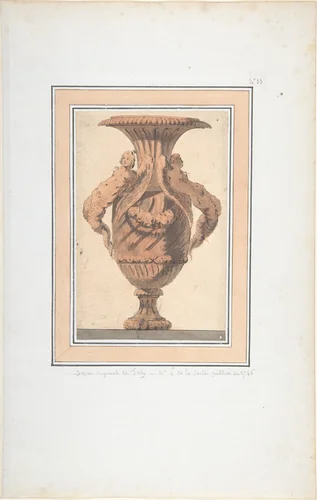
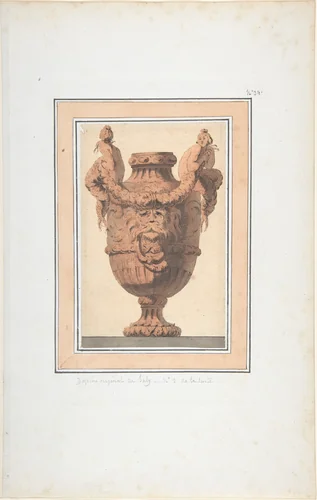
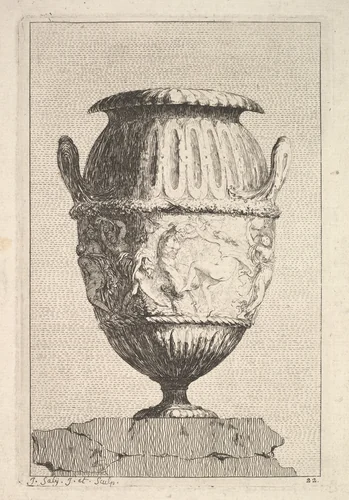
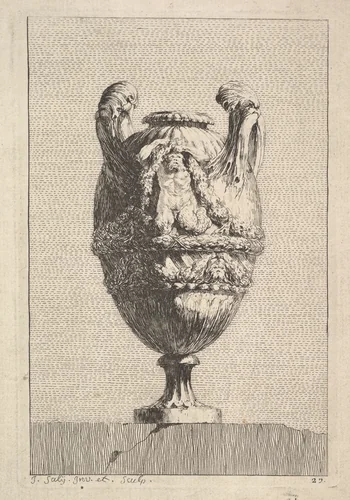
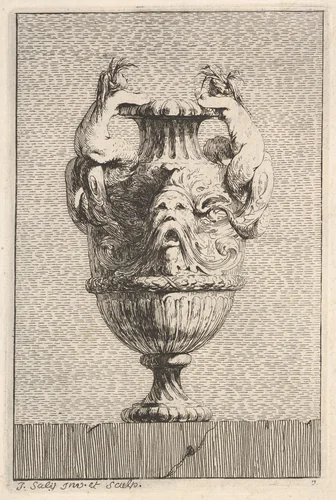
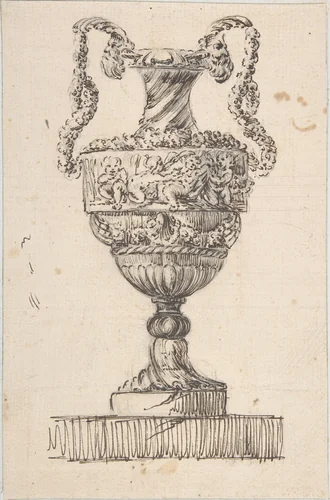
Saly’s early focus encompassed both the monumental and the decorative. His detailed studies for neoclassical designs, often disseminated widely as influential publications like Vases, are still accessible today. Works like the Design for a Vase with a Bacchic Frieze or the intricately rendered print Vase with a Male Siren holding up a Garland demonstrate an elegant mastery of ancient motifs, subtly infused with contemporary sensibility. These designs, held in collections such as the Metropolitan Museum of Art, confirm Saly’s deep engagement with classical form, ensuring that high-quality prints and drawings remain foundational documents for the study of the period.
The climax of Saly’s career began in 1754 when he accepted the appointment as Director of the Royal Danish Academy of Art in Copenhagen. Serving until 1771, he was instrumental in restructuring the institution and guiding the artistic trajectory of the nation toward classical rigor, away from the lighter excesses of the Rococo.
His most celebrated and enduring commission is the colossal bronze equestrian statue of Frederik V on Horseback, placed at the heart of the Amalienborg Palace Square. The statue is a definitive example of royal patronage and a cornerstone of Copenhagen’s public art. It took over sixteen years to complete, a testament not just to the engineering complexity of the undertaking, but perhaps also to Saly’s exacting standards. The availability of Jacques Saly prints and preparatory sketches today allows for continued study of this crucial transitional artist whose influence stretched across the continent, firmly embedding classical French aesthetics into Northern European tradition.
Source: Wikipedia · CC BY-SA 4.0