Jacques Courtois
Jacques Courtois, or Giacomo Cortese, frequently identified by the sobriquets il Borgognone or le Bourguignon, stands as the defining master of the Baroque battle scene. Operating primarily within the artistic centers of Rome and Florence during the seventeenth century, this Franche-Comtois-Italian painter, draughtsman, and etcher achieved unparalleled recognition as the preeminent visual chronicler of contemporary military engagements.
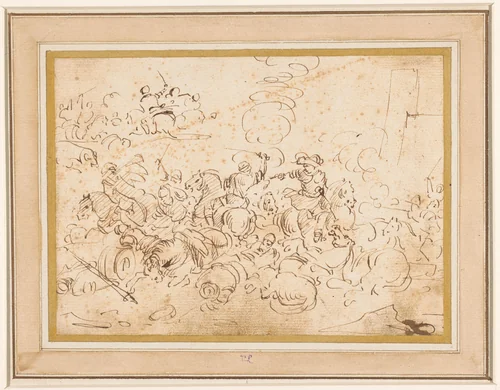
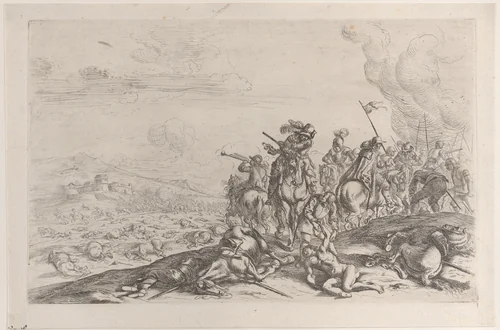
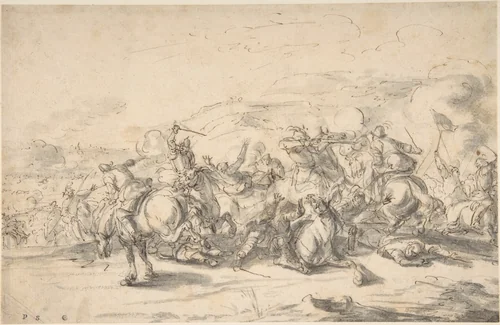
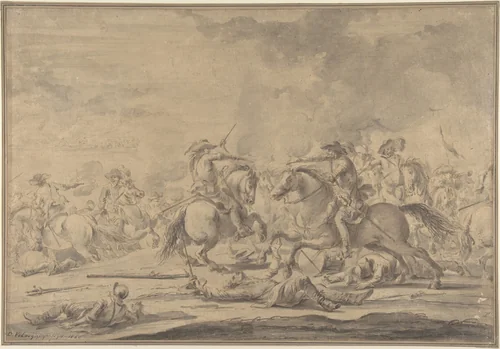
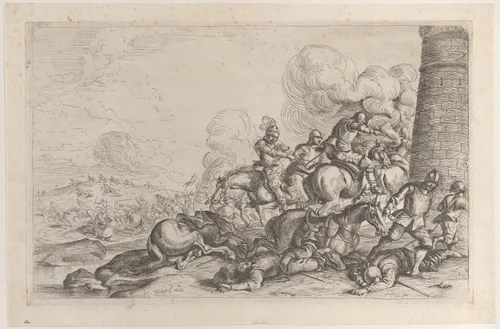
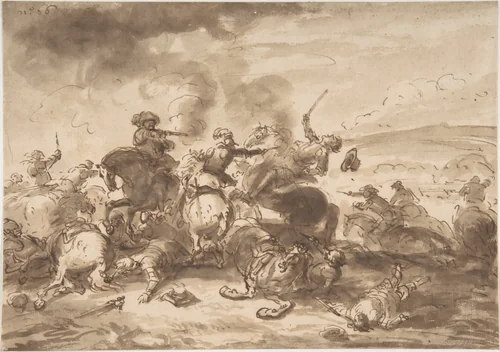
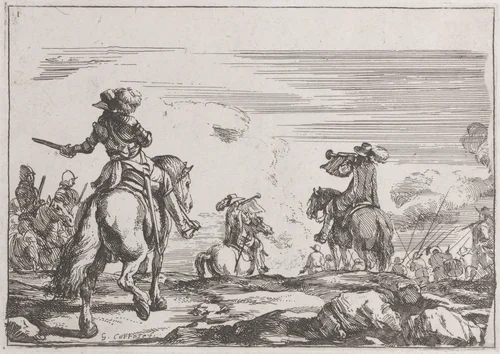
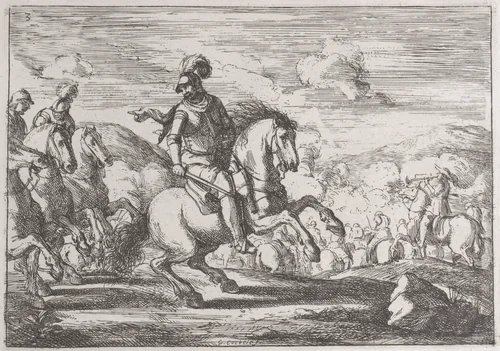
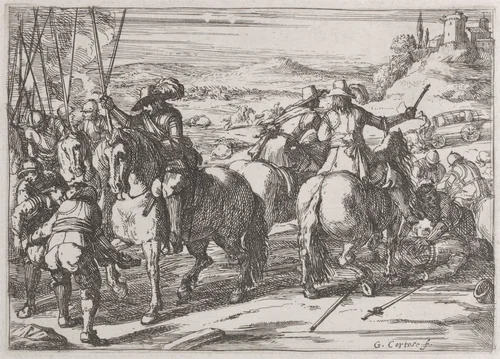
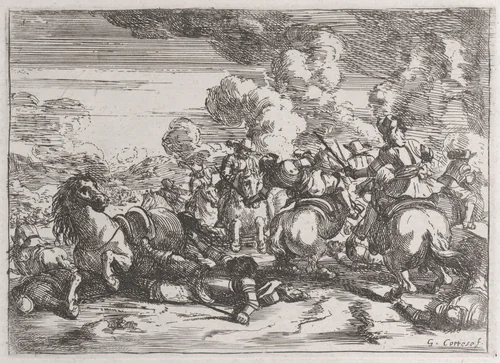
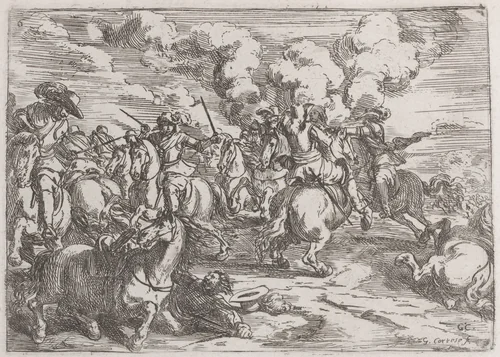
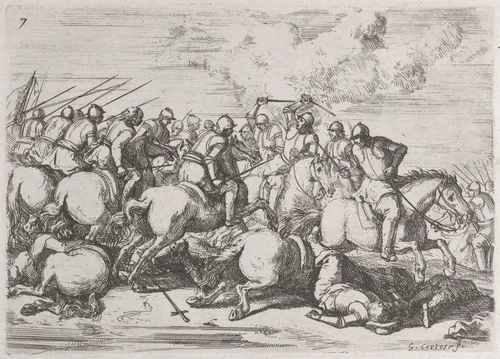
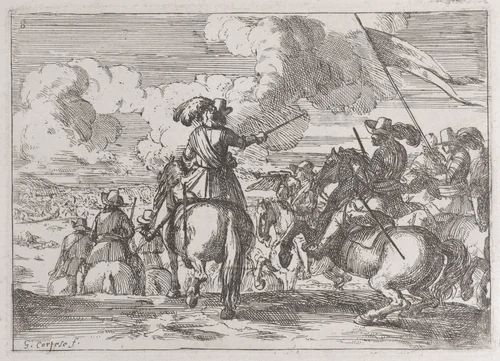
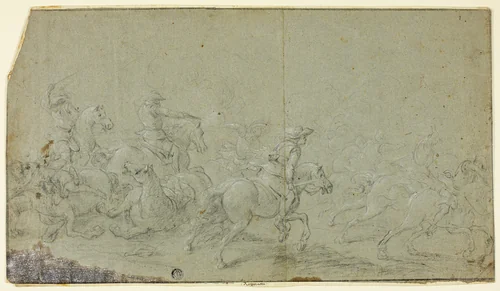
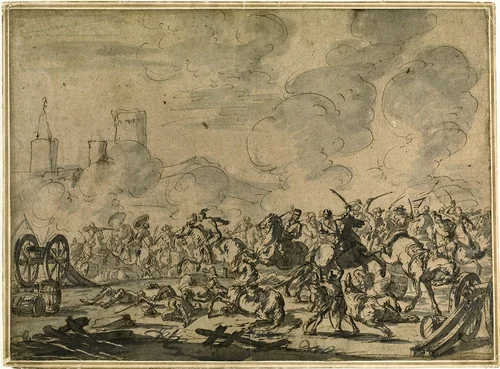
Courtois’s distinction lies in his ability to imbue conventional military action with a raw, almost cinematic energy. Unlike many predecessors who focused on static formations or idealized heroism, Courtois specialized in the visceral immediacy of cavalry charges. Works such as Ruitergevecht and Cavalry Battle eschew precise historical narrative in favor of atmospheric drama, emphasizing the swirling dust, the desperate intensity of close-quarters combat, and the dynamic interplay between light and shadow on strained horses and figures. This emphasis on movement and chaos shifted the trajectory of the battle genre, defining the standard for later generations of artists seeking to capture the furia of war.
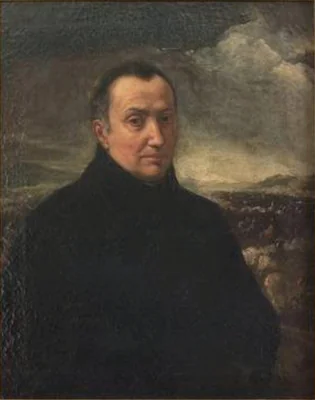
While his fame rests squarely on his dynamic canvases of conflict, Courtois possessed a wider stylistic range. He was also a proficient creator of history paintings and portraits, demonstrating a nuanced compositional skill often overlooked by the dominance of his military subjects. Occasionally, his focus softened to capture the aftermath of the fray, visible in works like Aiding the wounded after a battle, revealing a capacity for depicting the human cost underlying the spectacular violence he otherwise explored.
One of the more intriguing aspects of his biography is the later-life conversion. Courtois entered the Jesuit order, an unusual commitment for an artist whose reputation was built on scenes of earthly violence, yet he maintained his artistic practice. This dedication allowed the prolific creation of new works even as he pursued spiritual devotion. Today, institutions including the Rijksmuseum, the Metropolitan Museum of Art, and the Art Institute of Chicago hold important collections of Jacques Courtois prints and paintings. Many of these historically significant works are now accessible in the public domain, allowing enthusiasts worldwide to study his genius through high-quality prints and downloadable artwork.
Source: Wikipedia · CC BY-SA 4.0