Jacques-André-Joseph Aved
Jacques-André-Joseph Aved stands as a prominent figure among the great French Rococo portraitists flourishing in Paris during the reign of King Louis XV. Known alternately as le Camelot (The Peddler) and Avet le Batave (The Batavian Aved), these descriptive monikers perhaps hint at the artist's commercial acumen and Dutch origins, differentiating him quickly within the competitive milieu of the Academy. Active primarily between 1738 and 1751, Aved mastered the subtle intimacy and psychological depth required of high-status portraiture, creating likenesses that captured the sophisticated elegance of the ancien régime while retaining a palpable sense of individual presence.
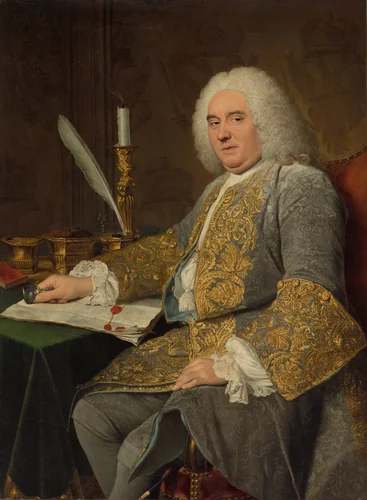
Aved’s significance extends beyond the French court; his clientele included some of the most influential political figures of his day, often facilitating delicate cross-cultural communication through official portraiture. A particularly celebrated commission was the 1742 depiction of Yirmisekizzade Mehmed Said Efendi, the Ottoman Empire ambassador to France. This work, capturing a key diplomatic figure in highly detailed, exotic dress, underscores Aved’s technical virtuosity in rendering diverse textures and materials, establishing him as an astute observer of European diplomacy. His works, such as the compelling Portrait of Jean-Gabriel du Theil at the Signing of the Treaty of Vienna, exemplify his ability to integrate narrative detail into formal compositions, transforming standard portraiture into historical record. The sheer number of existing Jacques-André-Joseph Aved paintings focusing on key diplomatic milestones suggests he was the preferred visual chronicler of treaty negotiations and high-stakes alliances.
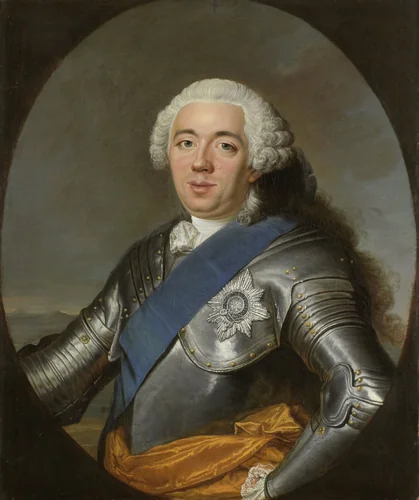
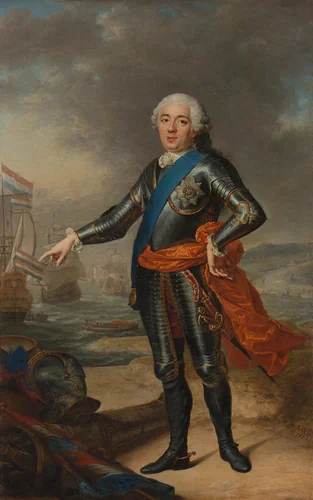
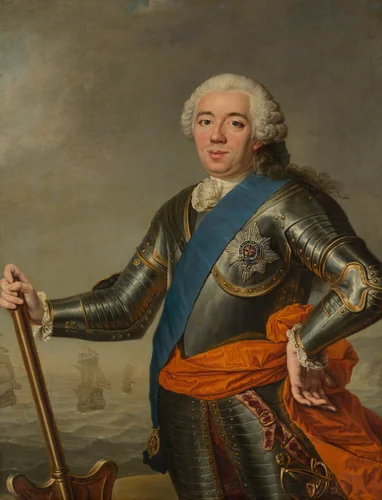
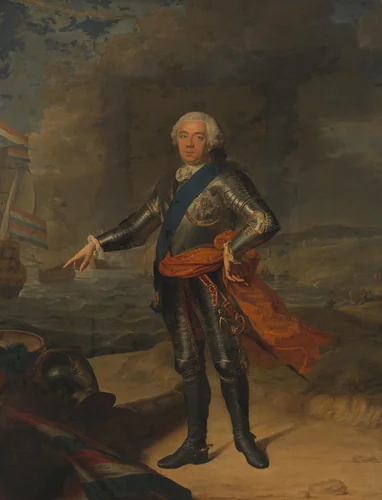
The core of Aved’s output featured vital state commissions for foreign dignitaries, most notably a critical series of portraits dedicated to Willem IV, Prince of Orange-Nassau. These include the stately Willem IV (1711-1751), Prince of Orange-Nassau and its subsequent variations, including a poignant Posthumous Portrait of William IV (1711-1751), establishing Aved’s long-standing relationship with the Dutch House of Orange. Today, Aved’s surviving works reside in major international institutions, including the Mauritshuis, the Rijksmuseum, and the Cleveland Museum of Art, preserving their museum-quality finish for contemporary viewing. Through these public collections, many of his masterful portraits are available as downloadable artwork and high-quality prints, furthering the appreciation of this essential 18th-century master.
Source: Wikipedia · CC BY-SA 4.0