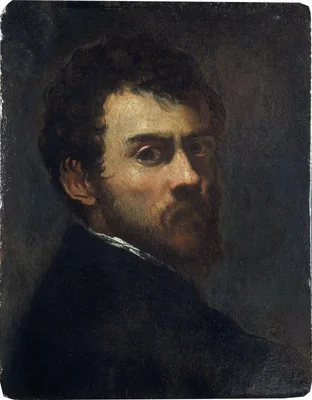
Jacopo Robusti
Jacopo Robusti (1518-1594), universally known by his adopted diminutive, Tintoretto, stands as one of the definitive and most dynamic figures of the Venetian school during the latter half of the Renaissance. Active for over six decades, Robusti’s prolific output and radical technical innovations positioned him as a crucial transitional artist, driving painting toward the intense psychological drama that defined the late century and hinted strongly at the coming Baroque aesthetic.
Robusti’s artistic approach was immediately polarizing. While contemporaries admired the sheer vigor of his output, they frequently criticized the breakneck velocity of his execution, a speed which earned him the famous moniker il Furioso (The Furious). He weaponized this rapidity, achieving an unprecedented boldness of brushwork that deliberately eschewed the polished, smooth finish favored by earlier Renaissance masters. Instead, he preferred rapid, visible strokes that imbued his vast compositions with powerful, kinetic energy.
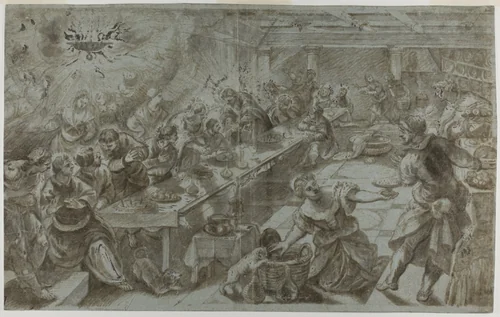
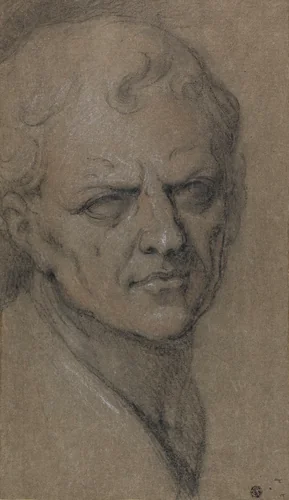
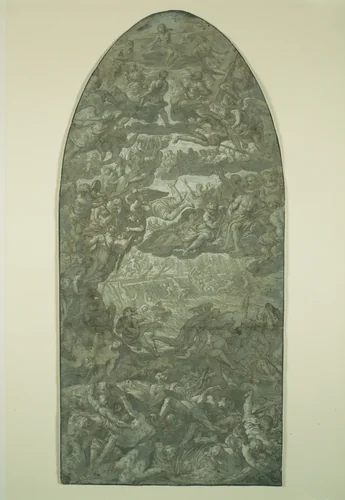
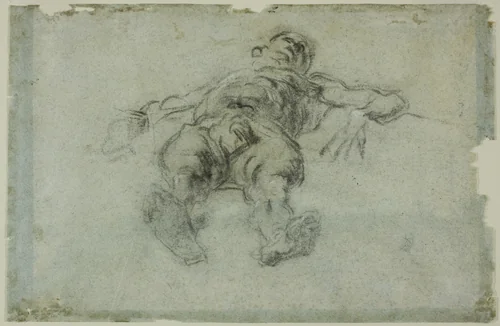
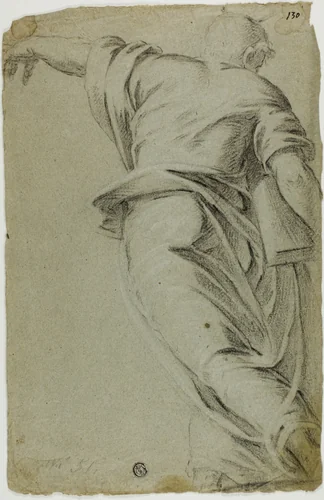
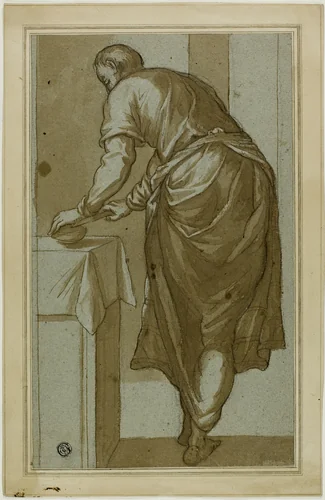
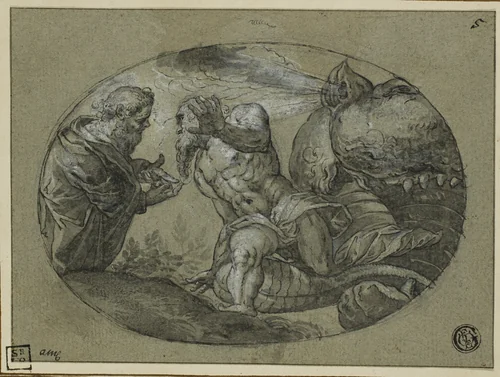
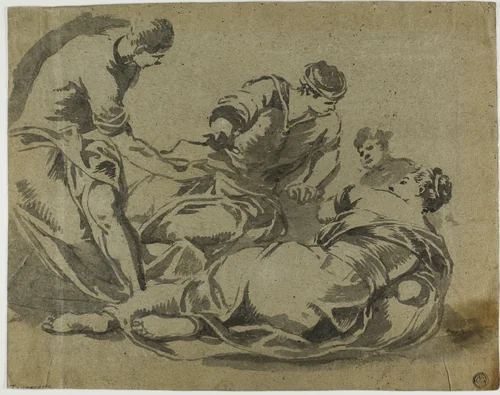
Stylistically, his work is firmly situated within Mannerism, characterized by highly muscular, often elongated figures, extreme dramatic gestures, and a masterful, frequently audacious use of bold perspective and dramatic foreshortening. This demanding approach is powerfully evident in figures studies such as Reclining Male Nude, Foreshortened and the overwhelming religious narratives like The Last Judgment. Robusti successfully fused the sculptural grandeur often seen in classical and Roman prototypes, evidenced even in his preparatory sketch work like Roman Portrait Bust and Moses Striding to the Left, Pointing with Left Hand, with the distinctive, luminous colorism inherent to the established Venetian tradition.
Interestingly, Robusti’s seeming impulsivity was tempered by preparation; he was known to utilize detailed miniature models of his compositions in his studio, which allowed him to rapidly test figure arrangements and dramatic lighting before committing them to monumental canvases. This methodical planning effectively belied the critical assumption of complete spontaneous action implied by his nickname. The enduring dynamism of Jacopo Robusti paintings continues to be studied globally, with many of his defining works residing in major collections, including the Art Institute of Chicago. For scholars and enthusiasts, much of the artist’s seminal output now rests within the public domain, granting widespread access to museum-quality resources and high-quality prints for personal study.
Source: Wikipedia · CC BY-SA 4.0