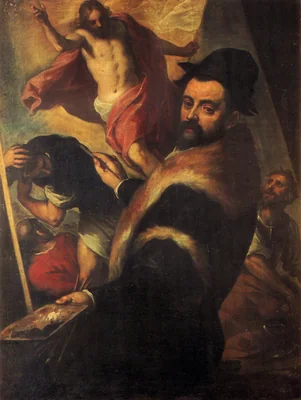
Jacopo Palma il Giovane
Iacopo Negretti, best known as Jacopo Palma il Giovane or simply Palma Giovane, stands as a critical, transitional figure within the Venetian school of painting. Operating through the latter half of the sixteenth century and beyond, Palma Giovane served as the key artistic link between the monumental scale of the High Renaissance masters and the expressive energies of the Baroque. He emerged as the de facto successor to Titian and Tintoretto, inheriting their grand manner while establishing a distinctly fluid and energetic approach.
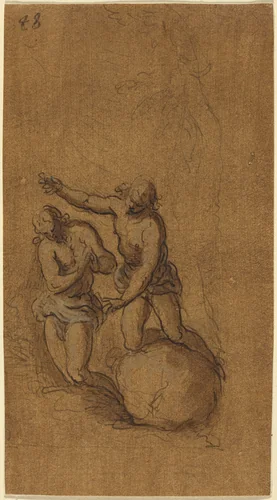
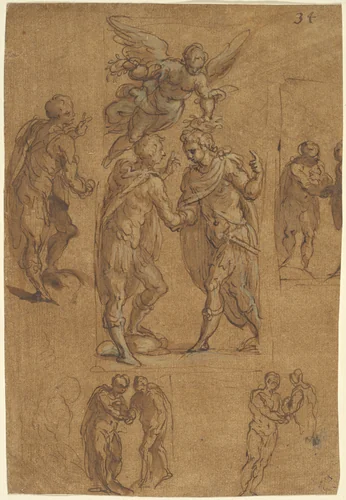
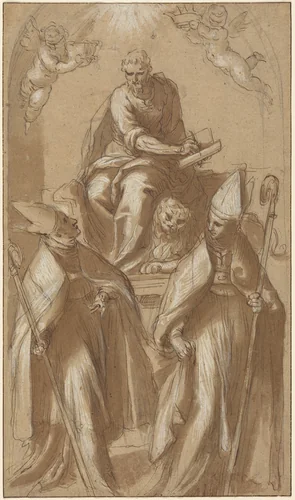
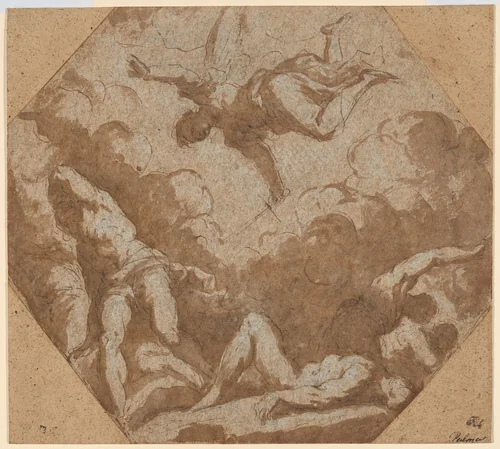
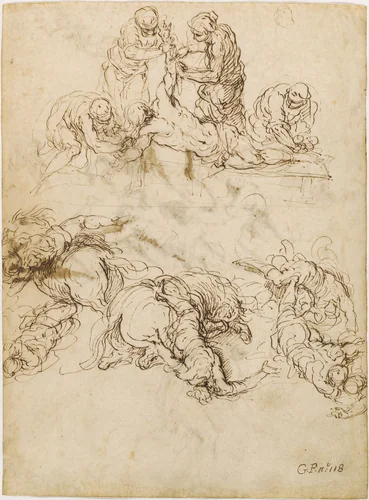
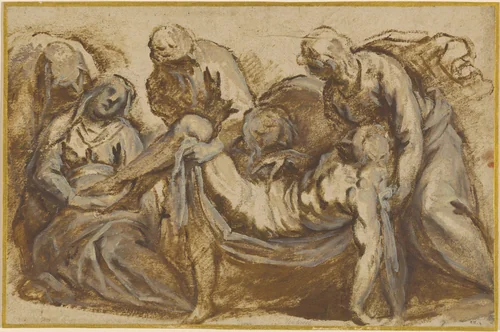
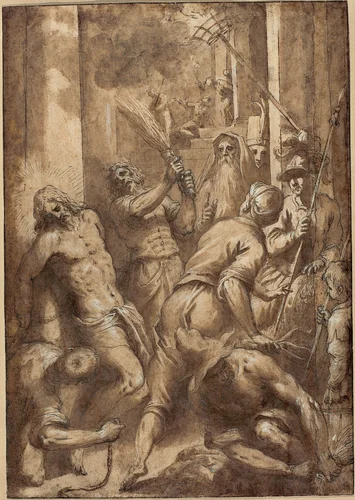
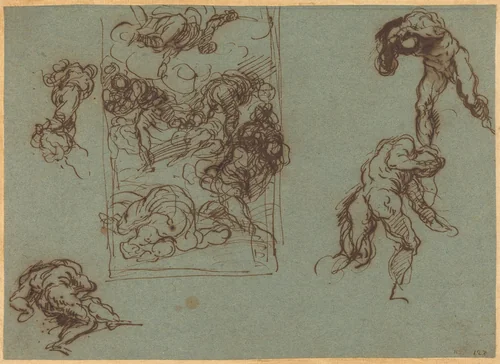
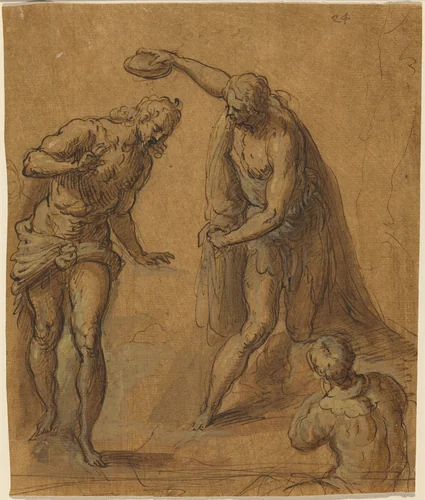
As an exponent of late-Renaissance Venice, Palma Giovane was remarkable not only for the sheer volume of his commissions but for the consistency of his rapid production. He possessed an incredible facility for narrative painting, documented through preparatory studies like The Flagellation of Christ and the instructional drawing Figure Studies. This prolific output allowed him to virtually dominate the Venetian market during a period of intense religious and civic architectural renovation. Palma Giovane’s ability to assimilate and adapt the styles of his predecessors while maintaining a commercially viable, rapid pace sometimes prompts the understated observation that he was arguably the busiest professional painter in Europe at the turn of the century.
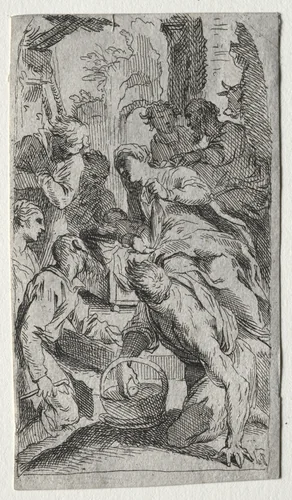
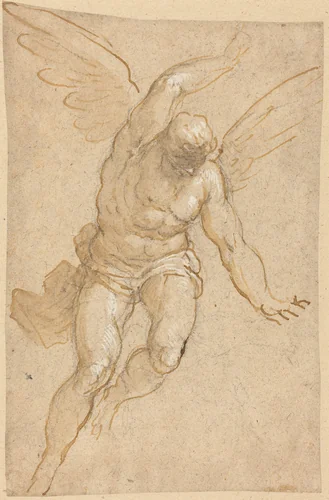
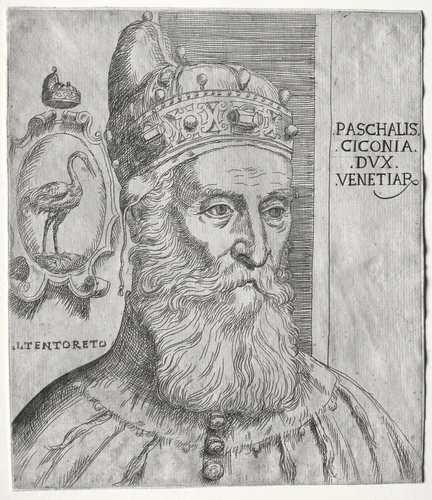
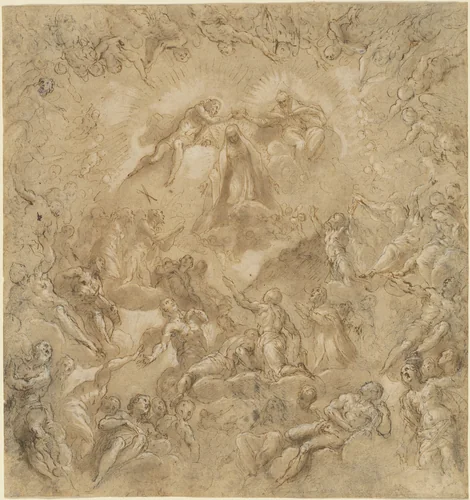
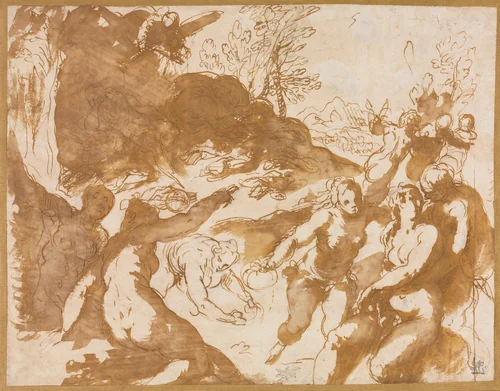
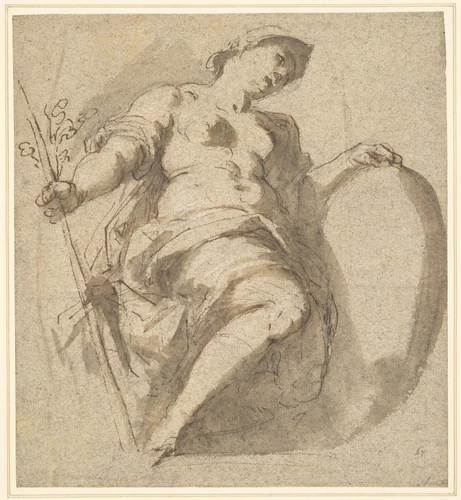
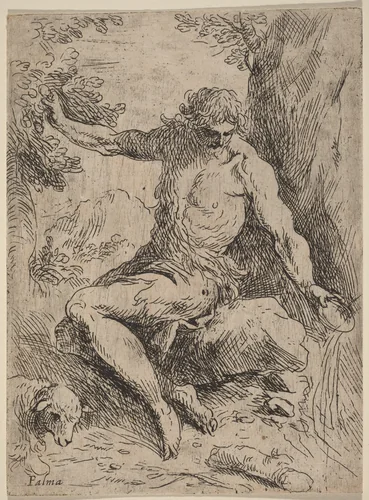
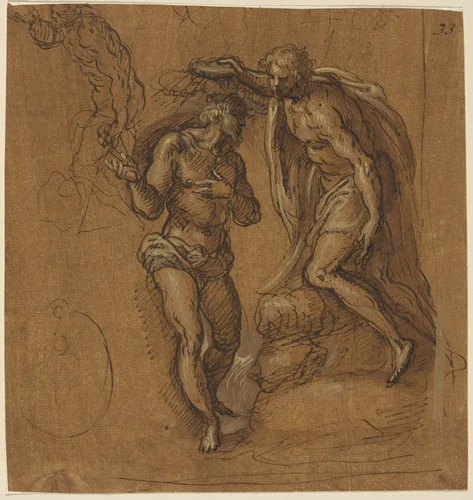
The enduring interest in Palma Giovane resides significantly in his graphic work. He left behind a substantial corpus of drawings and prints, revealing the technical intricacies behind his larger Jacopo Palma il Giovane paintings. These smaller works, such as Minerva Holding a Shield and Branch and the functional sketch Nude Man Seen from Behind [verso], are highly valued studies of anatomy and composition, collected today by institutions globally, including the National Gallery of Art and the Cleveland Museum of Art. Because many of these high-quality prints and studies are now in the public domain, they remain accessible as downloadable artwork, providing modern scholars direct insight into the working methods of a master who ensured the continuation of the Venetian grand tradition well into the seventeenth century.
Source: Wikipedia · CC BY-SA 4.0
![Nude Man Seen from Behind [verso] by Jacopo Palma il Giovane, drawing, 1548-1628](https://img.artbee.org/bf2fe609-1f0e-40e0-939d-70fd1fab7e7b/small.webp)
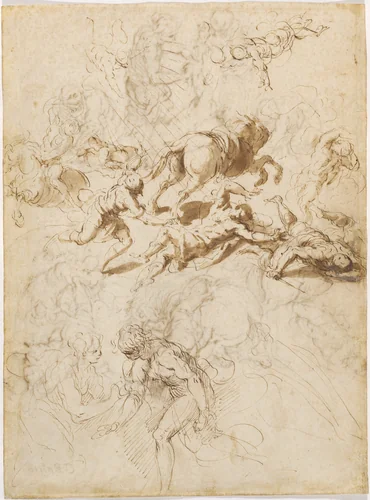
![Studies for an Annunciation [recto] by Jacopo Palma il Giovane, drawing, 1548-1628](https://img.artbee.org/e3703046-6f59-401b-a7d5-87b64c5cdd18/small.webp)