Jacopo Palma
Jacopo Palma, known universally as Palma Vecchio (the Elder), was a defining figure in the Venetian school of painting during the Italian High Renaissance. Active roughly between 1500 and 1570, Palma holds a distinct place, contributing significantly to the era's signature blend of rich colorism and idealized, sensual figuration. The necessity of formally referring to him as Palma il Vecchio speaks volumes: his fame was so substantial and lasting that posterity required a permanent distinction from the later work of his great-nephew, Palma il Giovane.
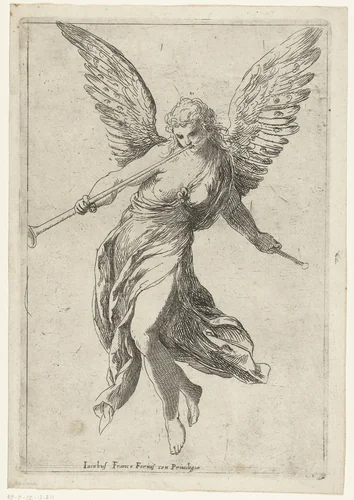
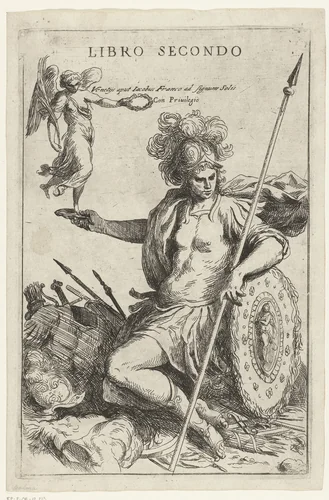
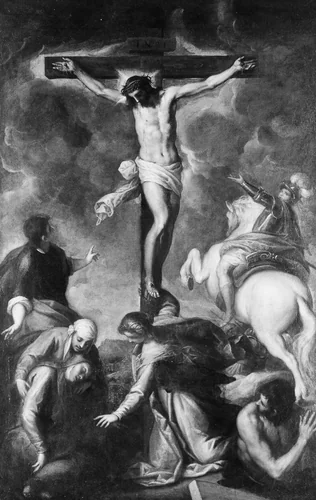
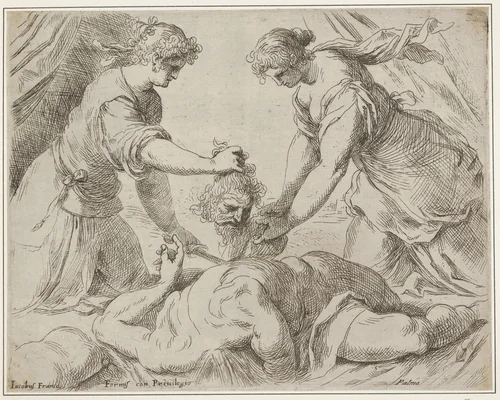
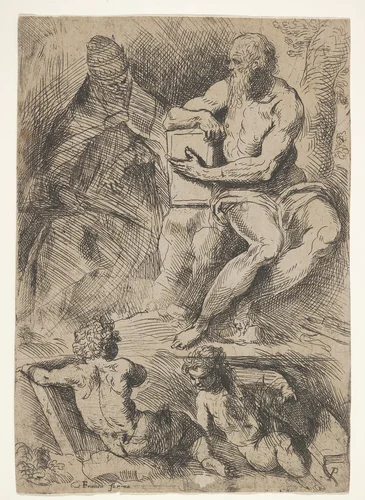
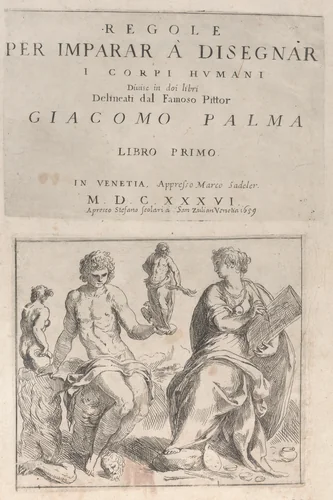
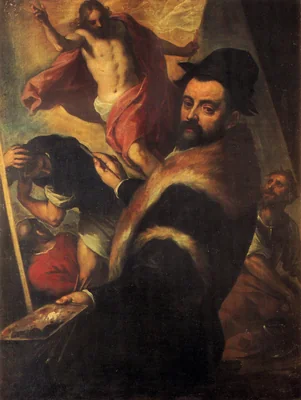
Palma was highly celebrated for his large altarpieces, portraits, and mythological Jacopo Palma paintings, particularly those now held in prestigious institutions like the Metropolitan Museum of Art and the Rijksmuseum. Yet, his enduring reputation is equally bolstered by his extensive commitment to preparatory drawing and the technical rigor evident in his subtle Jacopo Palma prints.
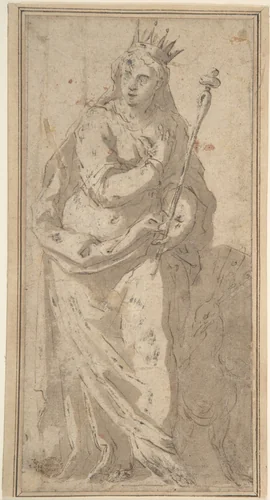
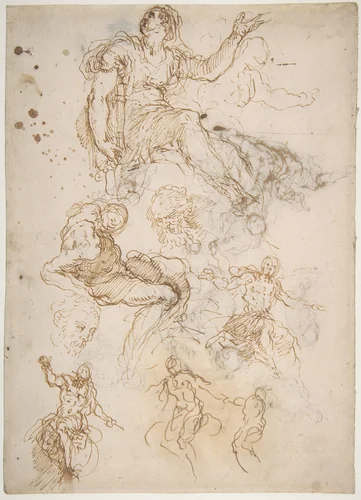
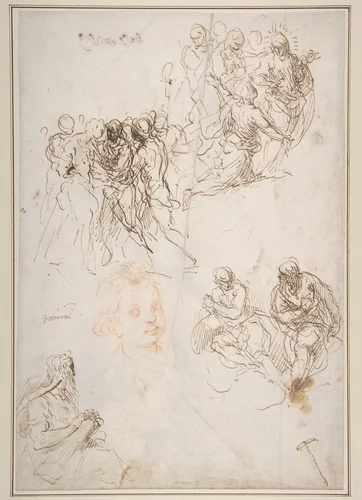
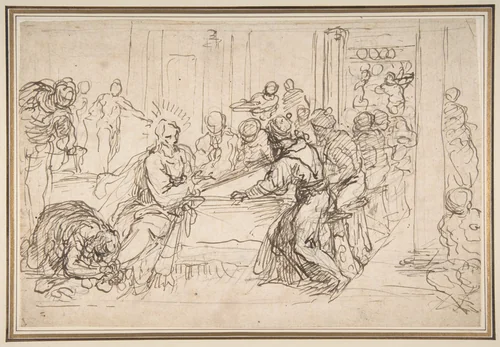
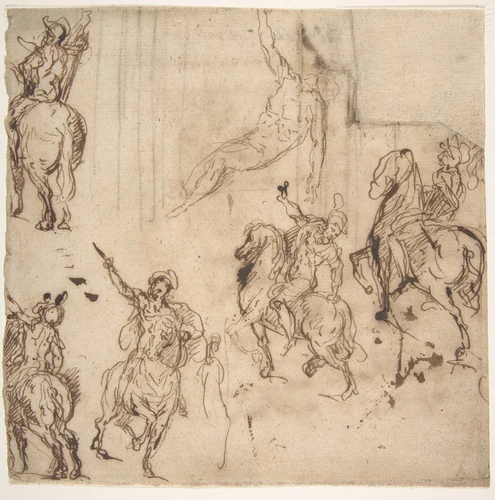
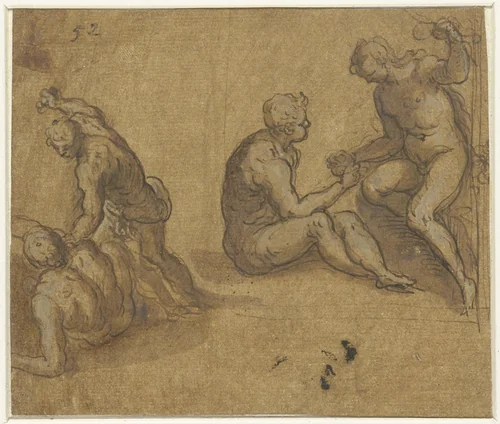
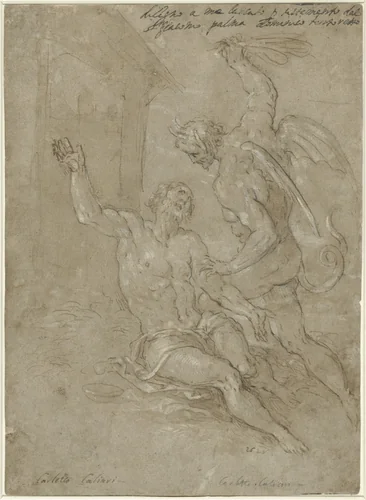
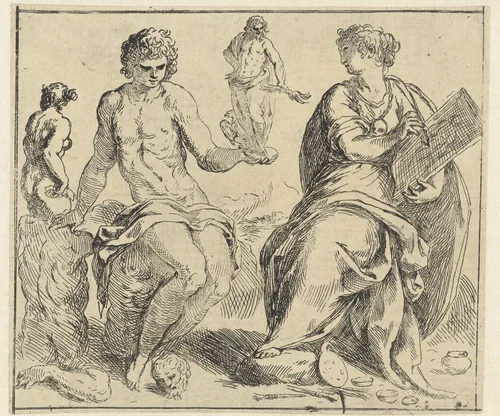
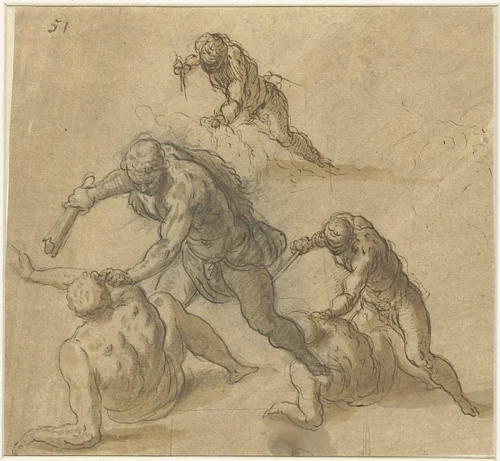
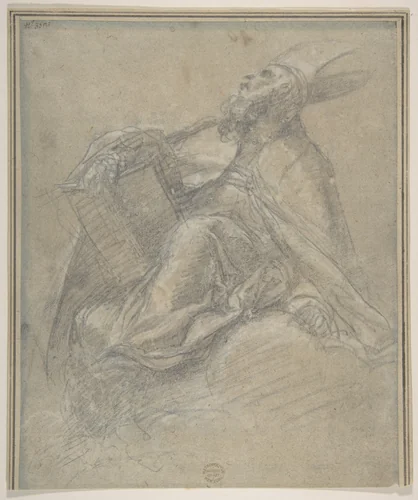
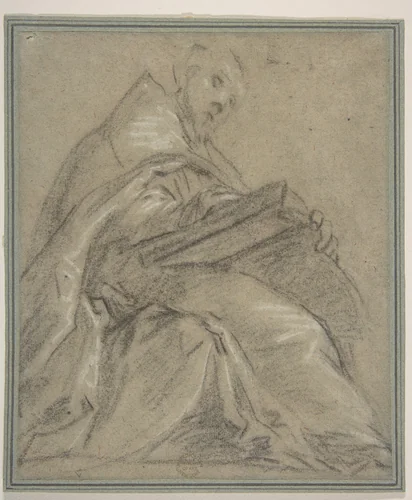
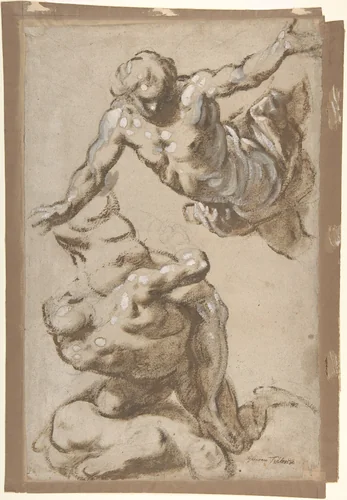
His surviving corpus of studies, often detailing preliminary work for compositions such as Juno or the complex multi-figure scene of the Penitent Woman Anointing the Feet of Christ at the Table of Simon the Pharisee, reveal a confident, rapid hand. Drawings such as Figure Studies: Seated Female Holding a Book and the compelling anatomical explorations in Studies of Horsemen and Study of a Figure for a Deposition illustrate Palma’s deliberate process, capturing fleeting ideas and transitioning figures from spontaneous sketches into finalized compositions.
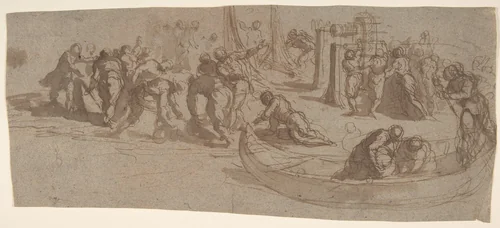
An intriguing element of Palma’s working method, visible in his surviving graphic output, is his pragmatic approach to materials. He consistently maximized the use of costly paper, frequently filling both the recto and verso of a sheet with unrelated but equally urgent ideas, from the precise preparatory work for The Arrest of Christ? on one side to mundane studies of an arm or the head of an old man on the reverse. This habit provides modern researchers with a fascinating, simultaneous view into the breadth of his commissions and rapid shifts in focus. Today, much of this foundational graphic work, providing essential insight into Venetian methods, is accessible to the public domain, offering students and enthusiasts high-quality prints and downloadable artwork for close study.
Source: Wikipedia · CC BY-SA 4.0