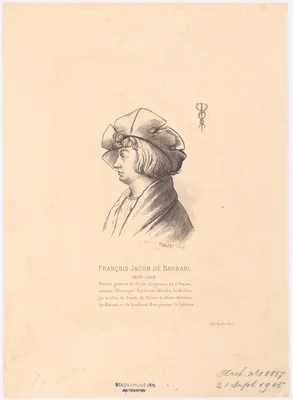
Jacopo de' Barbari
Jacopo de' Barbari (active circa 1460-1516) occupies a unique position in the history of the Northern Renaissance, acting as a critical vector for transmitting the innovations of Italian humanism and spatial representation across the Alps. A master painter, miniaturist, and prolific printmaker from Venice, de' Barbari cultivated a highly individual and refined style recognized immediately for its intellectual rigor. His career is distinguished by a momentous geographical shift: in 1500, he left Venice for Germany, becoming the first Italian Renaissance artist of stature to work extensively in Northern Europe.
This relocation fundamentally impacted the artistic development of both regions, allowing him to directly influence prominent Northern masters, most notably Albrecht Dürer. De' Barbari’s surviving body of work, though relatively small, highlights his inventive approach to visual representation. Among his few remaining paintings, he is credited with producing the first known example of trompe-l'œil since antiquity, demonstrating a playful yet serious intellectual engagement with the viewer's perception of reality.
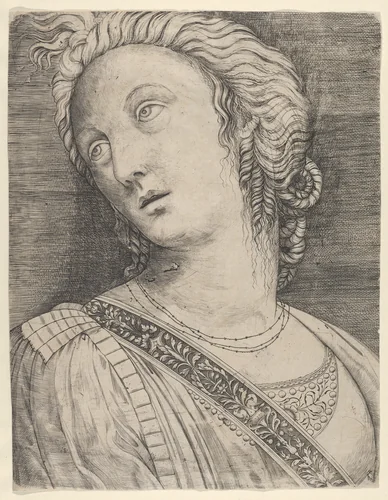
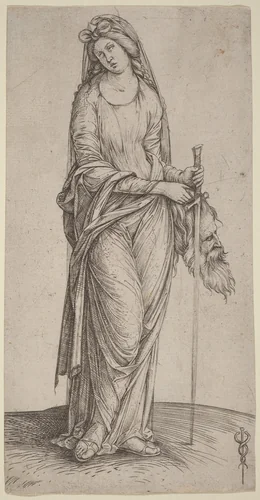
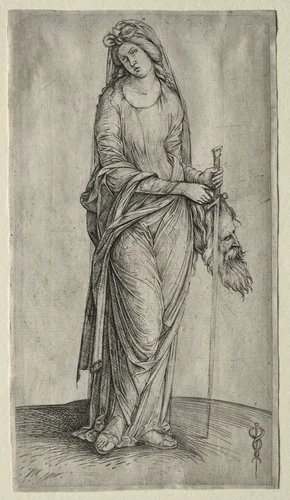
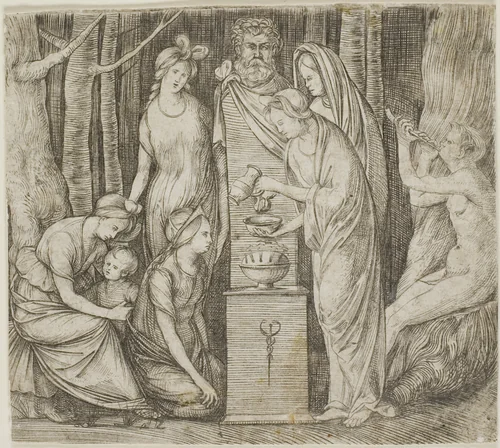
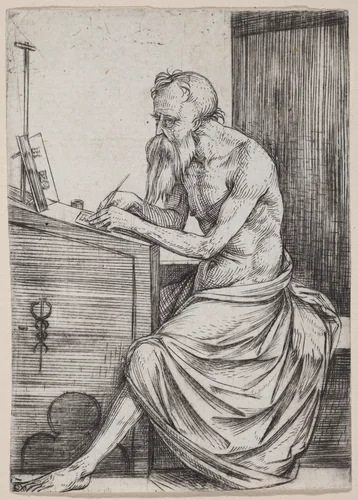
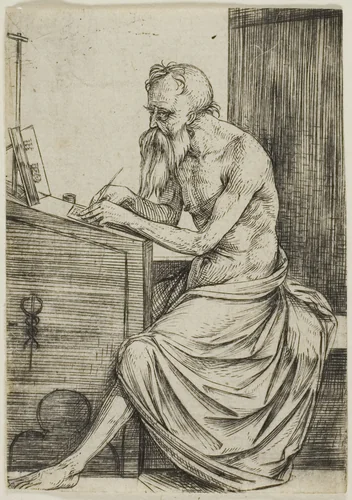
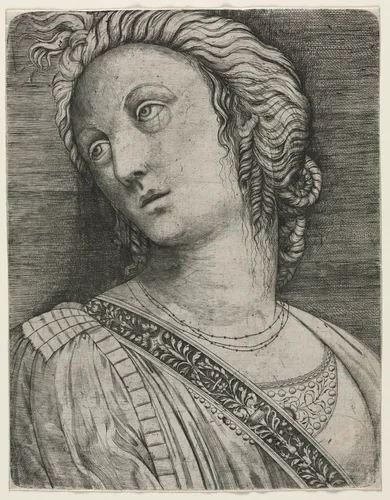
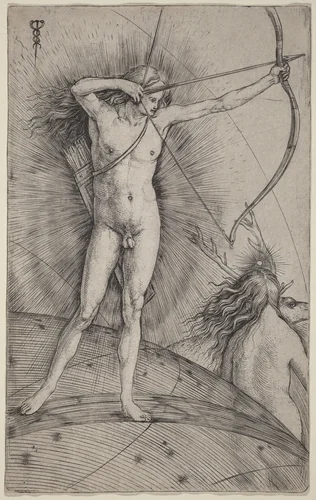
It is through his influential graphic output that de’ Barbari’s legacy remains most firmly cemented. His corpus includes twenty-nine sophisticated engravings and three exceptionally large woodcuts, all meticulously detailed and widely circulated. These prints explore complex mythological and allegorical subjects, setting a high bar for technical execution during the period. Key examples, such as The sacrifice to Priapus (the larger version) and the stark, elegant Judith Holding the Head of Holofernes, are foundational in the history of printmaking.
The consistent quality of his copperplate work has ensured their preservation and display in major international collections, including the Art Institute of Chicago and the Metropolitan Museum of Art. As essential pieces of early Renaissance graphic art, many of these highly influential images now reside in the public domain, serving as crucial educational resources and widely available as museum-quality prints. De’ Barbari’s profound command of line and shadow defines him as a quintessential transitional master, capable of translating the grandeur of Venice into the intimate precision of Northern print culture.
Source: Wikipedia · CC BY-SA 4.0
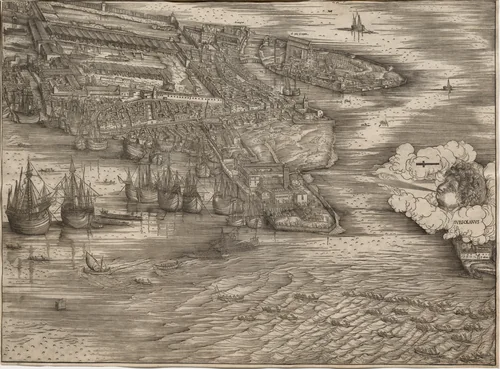
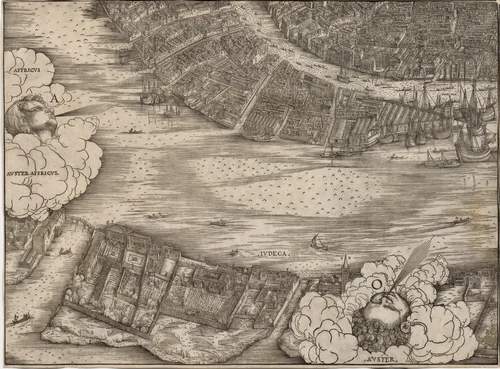
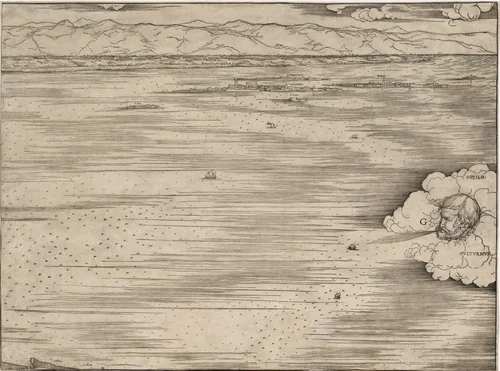
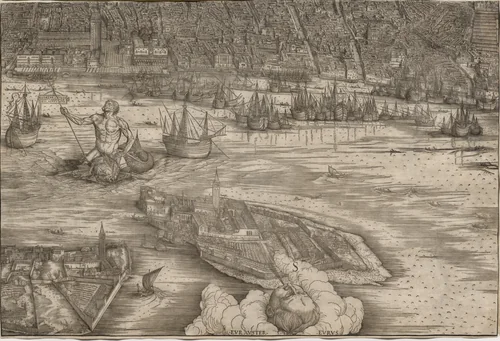
![View of Venice [lower center block] by Jacopo de' Barbari, print, 1500](https://img.artbee.org/e9fad7a5-0bb5-461b-be53-26d75ab2f6dd/small.webp)
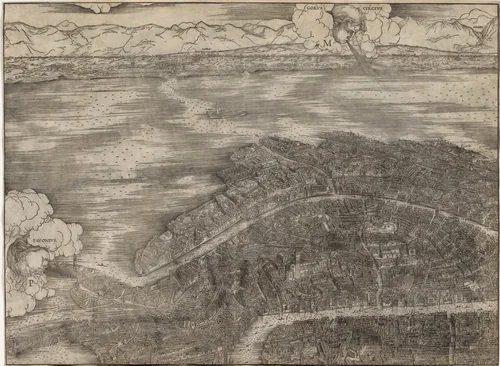
![View of Venice [lower left block] by Jacopo de' Barbari, print, 1500](https://img.artbee.org/54463a80-cd03-4e97-9dbe-cea3b19c5f2e/small.webp)
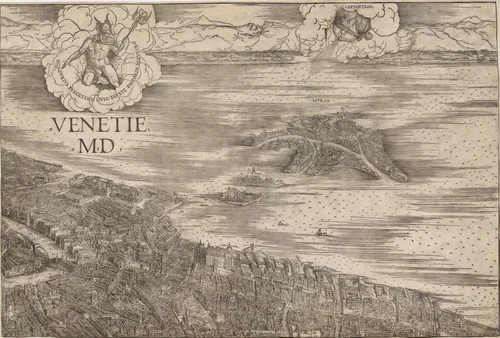
![View of Venice [lower right block] by Jacopo de' Barbari, print, 1500](https://img.artbee.org/9485b5be-13aa-483f-a42d-fae910213341/small.webp)
![View of Venice [upper center block] by Jacopo de' Barbari, print, 1500](https://img.artbee.org/04ca2b1b-a9a3-47f7-b784-4561cb9138f7/small.webp)
![View of Venice [upper left block] by Jacopo de' Barbari, print, 1500](https://img.artbee.org/47a1008e-ac5c-46a0-810f-c61259734ae0/small.webp)
![View of Venice [upper right block] by Jacopo de' Barbari, print, 1500](https://img.artbee.org/1534a9b3-6e49-4f7b-adad-a4f02c9623bd/small.webp)