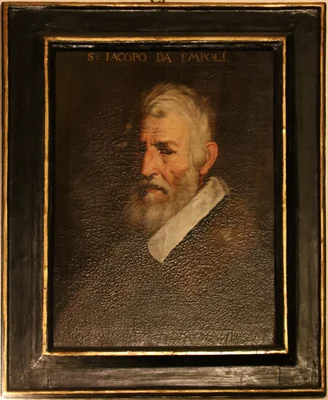
Jacopo da Empoli
Jacopo da Empoli (born Jacopo Chimenti, c. 1550-1640) was a pivotal figure within the movement of Italian Florentine Reformist painting. His prolific career spanned more than half a century, beginning in the late sixteenth century and extending well into the 1600s, placing him at the crucial juncture between late Mannerism and the burgeoning Baroque. A dedicated practitioner of his craft, Empoli’s longevity allowed him to absorb and synthesize the stylistic lessons of the previous generation while simultaneously training the next wave of Florentine masters.
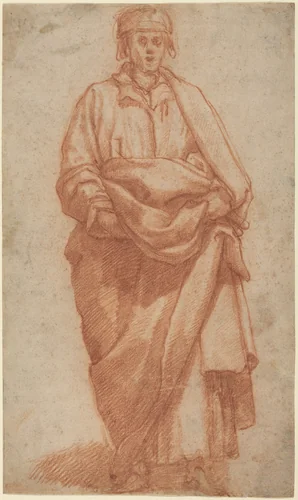
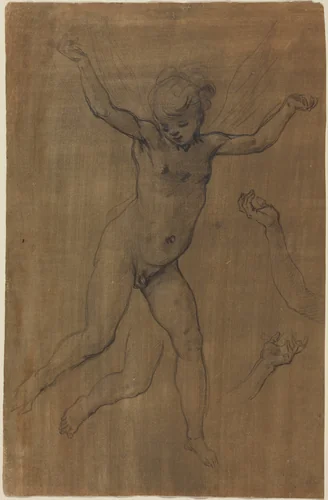
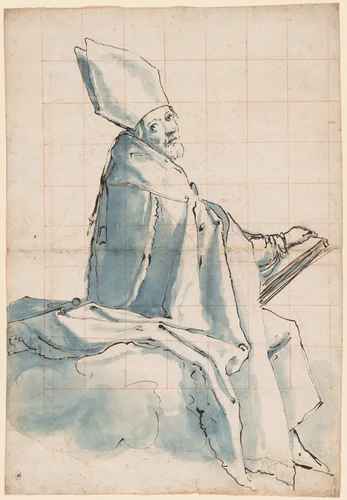
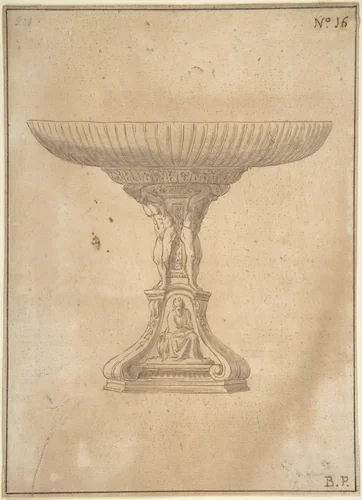
The Reformist impulse sought clarity, piety, and naturalism, rejecting the intellectual excesses often associated with high Mannerism. Empoli successfully channeled this demand for direct, legible narrative, creating religious compositions that were both technically refined and emotionally accessible. While known primarily as a painter, his surviving corpus suggests an extraordinary dedication to preparatory study and design. Major institutions, including the Rijksmuseum and the National Gallery of Art, hold significant collections of his detailed drawings, such as the focused figure studies like Standing Draped Man [recto] and the complex design, Design for a Cup Supported by Standing Nudes with Standard of Seated Figure with Book and Bird.
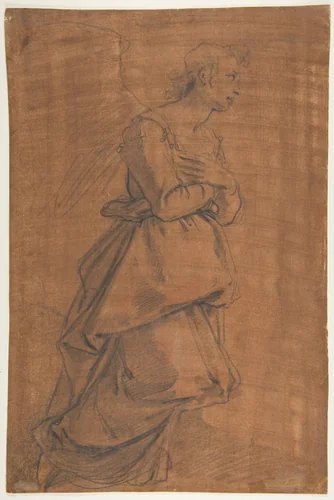
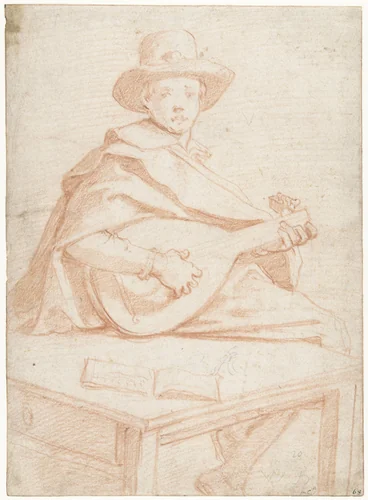
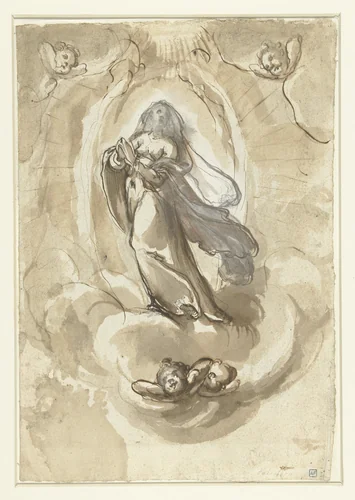
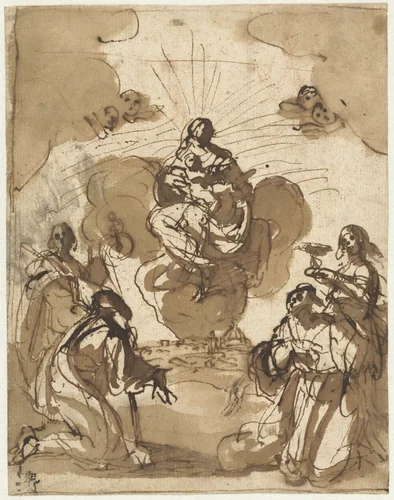
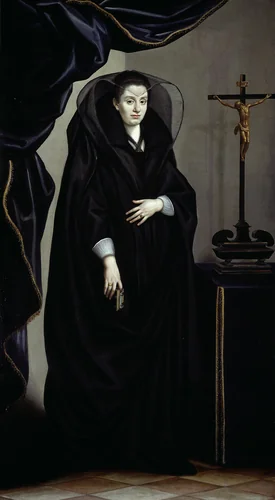
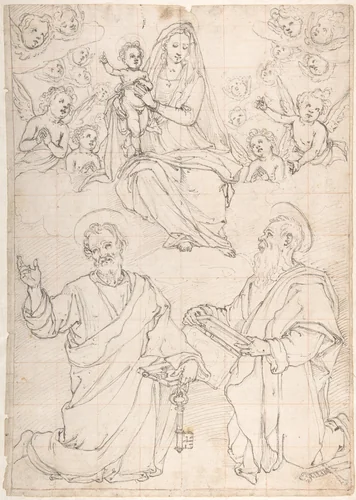
The precision evident in his extensive sketching makes his draftsmanship highly valued. It is perhaps telling that, despite working across a period defined by grand, dramatic commissions, the majority of the works attributed to him today are small, intimate studies; Empoli excelled at capturing the quiet weight of a folded drapery or the simple gravity of a pose. His single recorded painting in the database, Virgin and Child Appearing in a Glory of Angels to Saint Peter and Saint Paul, demonstrates his skill in oil, yet it is in his numerous drawings that his methodical workshop practice is truly revealed.
These exemplary preparatory studies, reflecting the meticulous artistic standards of the era, are increasingly accessible to scholars and enthusiasts. Many institutions have digitized their collections, making Jacopo da Empoli prints and other forms of downloadable artwork available. The circulation of these high-quality prints through public domain initiatives ensures that Empoli’s commitment to measured composition and precise drawing remains influential, securing his place among the indispensable masters of the Florentine school.
Source: Wikipedia · CC BY-SA 4.0
![Seated Draped Man [verso] by Jacopo da Empoli, drawing, 1554-1610](https://img.artbee.org/b27d4d12-bc61-49e3-a904-989739a1c652/small.webp)
![Standing Draped Man [recto] by Jacopo da Empoli, drawing, 1554-1610](https://img.artbee.org/f5aff4c7-b9ce-4034-a673-e3baa5a6f396/small.webp)