Jacob van Ruisdael
Jacob Isaackszoon van Ruisdael (1628-1682) holds an unchallenged position as the definitive landscape master of the Dutch Golden Age. Operating during a period of unparalleled national prosperity and artistic popularity, Ruisdael elevated the genre beyond mere topographical representation, transforming it into a vehicle for profound emotional and structural complexity. He is universally considered the pre-eminent landscape painter, draughtsman, and etcher of his era.
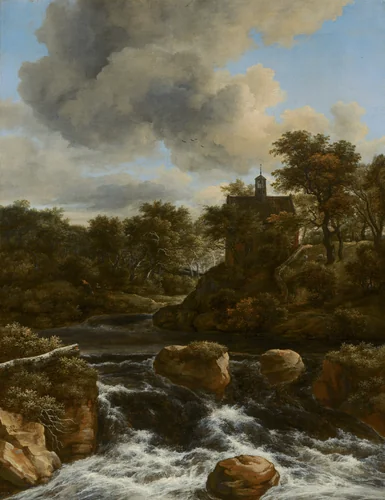
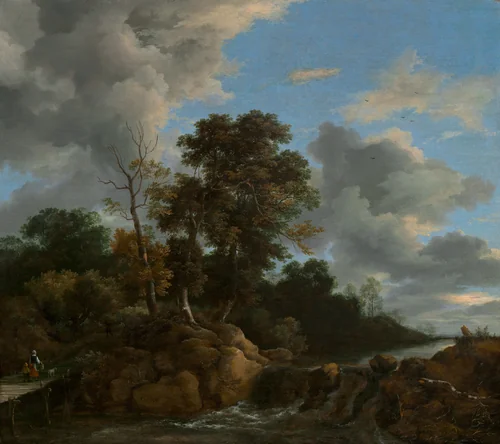
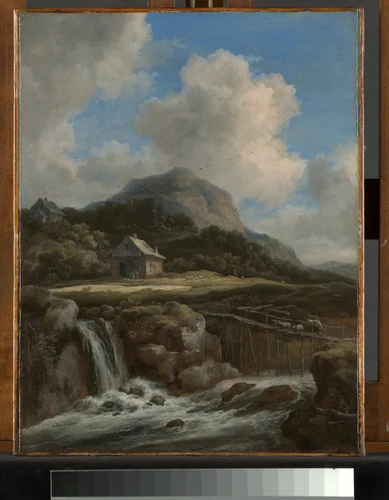
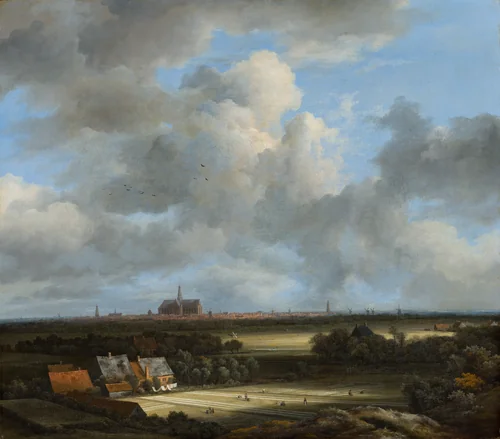
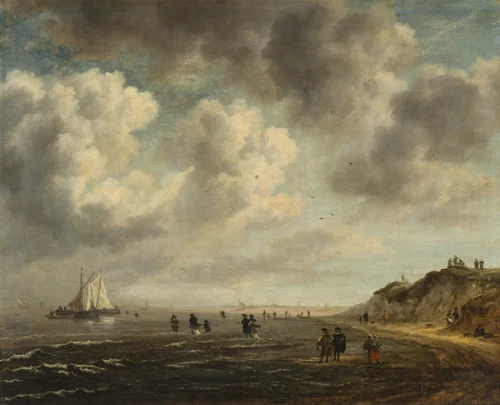
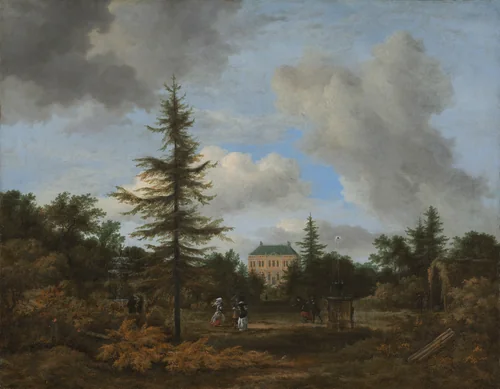
Ruisdael’s innovation lay in his decisive move away from the idealized, pastoral conventions common in earlier Dutch art toward a vision that embraced the monumental, the rugged, and the dramatic. His scenes are often dominated by powerful, heavy skies, dense foliage, and the visible presence of natural forces, establishing a deep sense of atmosphere that was highly influential. Unlike his contemporaries, who often focused on local, open views, Ruisdael synthesized elements of foreign, mountainous terrains with meticulously observed Dutch light, creating compositions that feel both authentically rendered and heroically conceived.
A prolific artist, Ruisdael worked with consistent technical mastery across mediums. While famous for his canvases, his legacy is supported by a smaller but crucial body of work including approximately four known drawings and eleven surviving prints. His dedication to capturing the specific, nuanced character of nature is remarkable; one suspects he spent more time observing the specific qualities of light and cloud movement than engaging in the social theater of the Hague or Haarlem.
His ability to render depth and texture is evident in works spanning his career, from intimate etchings like The Little Bridge (Le Petit Pont) to sweeping painted views such as Grain Field at the Edge of a Wood (Corn Field) and the immersive atmosphere of A Forest Marsh with Travelers on a Bank. His powerful synthesis of realism and dramatic composition established the groundwork for the later Romantic landscape tradition across Europe.
Ruisdael’s works are essential holdings in major international collections, including the Metropolitan Museum of Art and the National Gallery of Art. Today, much of his artistic output is now in the public domain, allowing institutions and enthusiasts to access high-quality prints and downloadable artwork, thereby ensuring his iconic Jacob van Ruisdael paintings remain central to the history of Western art.
Source: Wikipedia · CC BY-SA 4.0