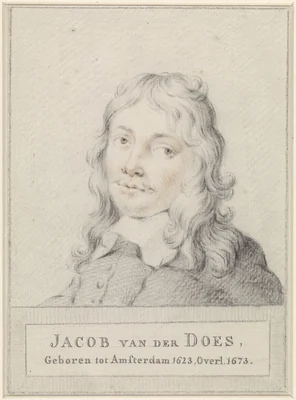
Jacob van der Does
Jacob van der Does (active 1623-1658) holds a distinct, if underappreciated, position among Dutch Golden Age landscape painters. Unlike contemporaries who favored dramatic Italianate ruins or turbulent seascapes, Van der Does focused acutely on the quiet intimacy of pastoral life, specializing almost exclusively in the depiction of livestock, particularly the common sheep. His activity during this commercially dynamic period establishes him as a specialized observer of the agricultural realities that sustained the Dutch Republic.
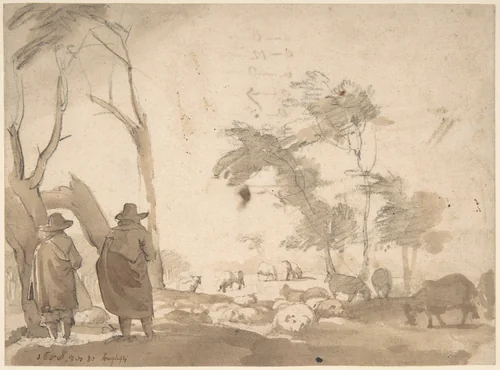
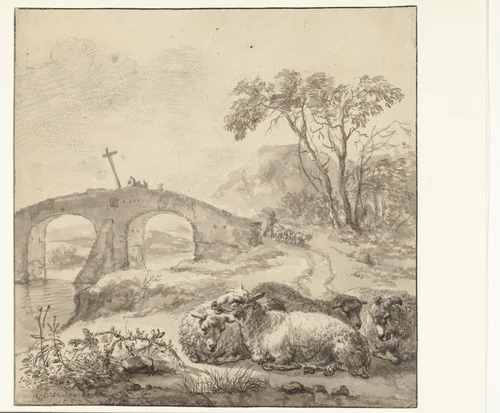
His surviving oeuvre, though modest, is defined by meticulous observation and a precise handling of graphite and ink, documented primarily through drawing and printmaking. Works such as Landscape with Sheep and Two Figures exemplify his command over composition, balancing expansive Dutch skies with remarkably detailed foreground action. These highly finished scenes, often featuring specific topographical elements like the stone bridge depicted in Landscape with Recumbent Sheep and a Stone Bridge, underscore his commitment to veracity.
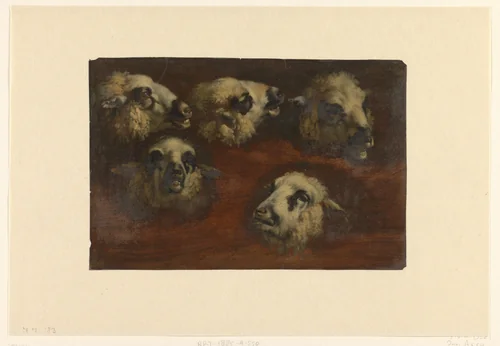
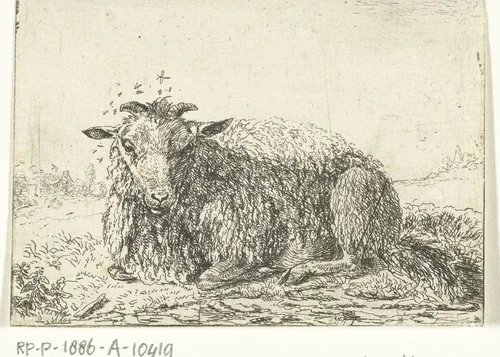
Van der Does’s most compelling achievements, however, often forgo the expansive panorama for pure focus. The group study Five Studies of the Head of a Sheep transforms the common barnyard animal into a profound, almost dignified, subject of academic scrutiny. It takes considerable nerve, or perhaps true humility, to dedicate such intense study to an animal traditionally considered the least dramatic subject in the landscape tradition. The single known print, Schaap met vliegen (Sheep with Flies), further indicates his engagement with reproductive media, suggesting his detailed studies were intended for a wider audience beyond the studio.
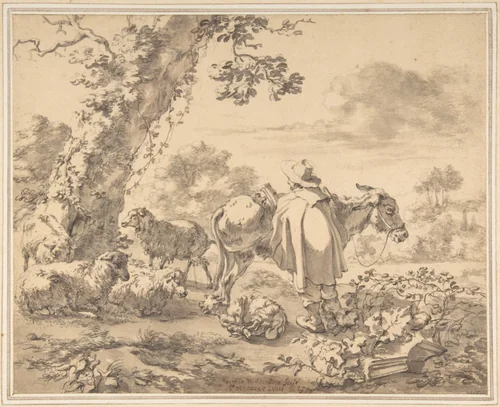
The concentration of his highly finished works, including the drawing A Herdsman with a Donkey, confirms his status as a key observer of 17th-century rural realities. His output, currently held in significant institutional collections such as the Rijksmuseum and the Metropolitan Museum of Art, ensures that these Jacob van der Does prints retain their status as museum-quality documents of the era. Today, as many of these works enter the public domain, the opportunity to study high-quality prints of Van der Does’s focused naturalism is widely available, allowing contemporary viewers worldwide to appreciate the quiet genius embedded in his specialized craft.
Source: Wikipedia · CC BY-SA 4.0