Jacob Lipkin
Jacob Lipkin (1909–1996) was an American sculptor whose definitive, though brief, period of documented activity centered on applied design and the meticulous recording of American functional aesthetics. Active primarily between 1938 and 1940, Lipkin contributed a crucial body of work to the Index of American Design, a monumental federal initiative established during the Depression era to preserve and categorize the nation’s heritage of material culture and craft. This focus placed his artistic practice squarely at the intersection of utility, drafting, and institutional documentation.
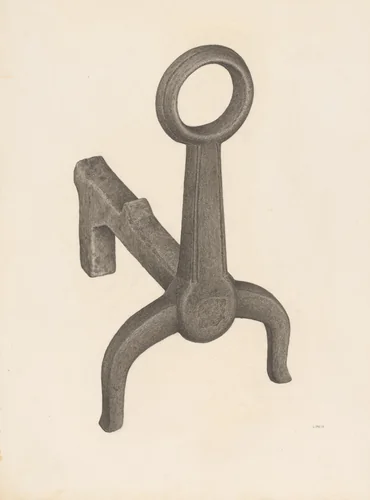
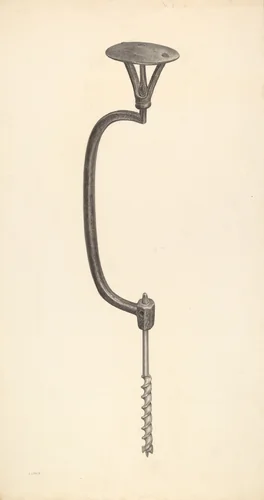
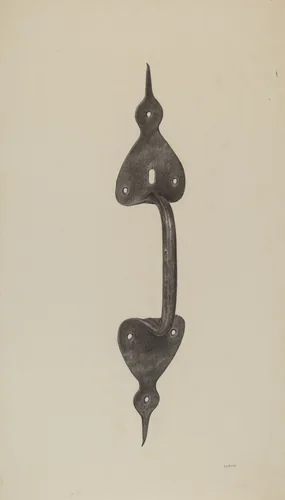
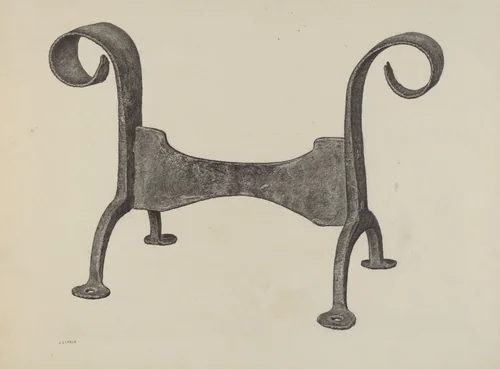
Unlike contemporaries concerned solely with gallery exhibitions, Lipkin directed his sculptural sensibilities toward industrial and domestic objects. His surviving contributions, now held in the permanent collection of the National Gallery of Art, function as precise visual inventories of utility and form. These works document objects designed for widespread use, transforming the common appliance or fixture into a subject worthy of serious aesthetic study. Pieces such as the Combination Wall and Standing Lamp and the highly detailed study for a Door Handle with Thumb Press reveal an underlying artistic commitment to ergonomic efficiency and structural clarity. They are records of objects that defined the modernist streamlining of American homes and businesses.
Lipkin’s selection of items suggests a fascinating, almost deadpan dedication to documenting the overlooked infrastructure of daily life. This precision is humorously evident in his repeated focus on one specific domestic necessity, as reflected in the database listings for three separate drawings titled Flat Iron Holder. This methodical approach ensures his legacy not just as a sculptor, but as a meticulous visual lexicographer of the era’s design output.
While Lipkin’s catalog of traditional sculpture remains limited, the integrity and detail of his Index renderings ensure his enduring significance to design historians. Today, these seminal works are widely accessible for scholarship; high-quality prints derived from the Index are frequently utilized by researchers, making Lipkin’s technical and visual contributions highly visible. Furthermore, because of their provenance within federal documentation projects, many of these influential Jacob Lipkin prints are now firmly within the public domain, guaranteeing that his valuable record of American design remains a royalty-free resource for future generations.
Source: Wikipedia · CC BY-SA 4.0