Jacob Hoefnagel
Jacob Hoefnagel (1573-c. 1630) was a complex figure of the late Mannerist period, whose professional roles spanned the seemingly disparate fields of painter, printmaker, diplomat, and merchant. He inherited a formidable artistic tradition from his father, Joris Hoefnagel, himself a court painter to the dukes of Bavaria and Emperor Rudolf II, and Jacob successfully utilized this pedigree to establish his own influential career across the European courts.
Hoefnagel’s technical proficiency and specialized subject matter ensured his high standing in intellectual circles. Following in his father’s footsteps, he served as court painter to Emperor Rudolf II in Prague, the Habsburg capital known for its fervent patronage of the sciences and the arts of the Wunderkammer. Later, his political and artistic mobility allowed him to secure patronage within the Swedish court, a rare feat testifying to his versatile appeal.
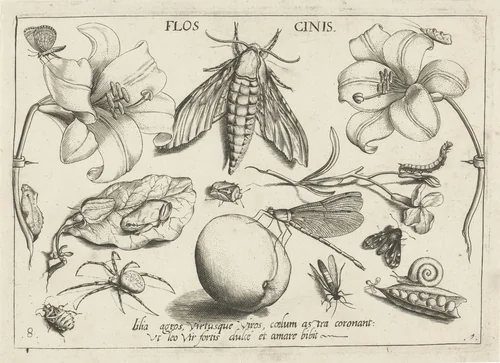
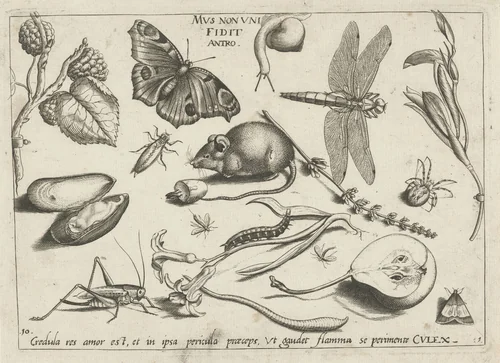
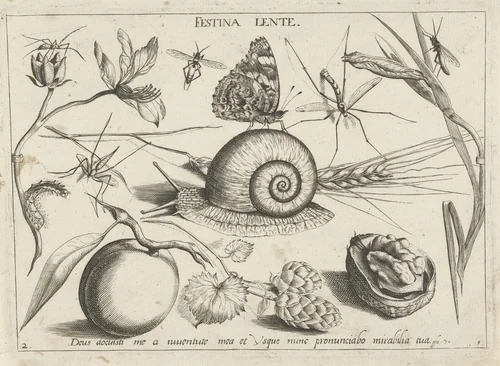
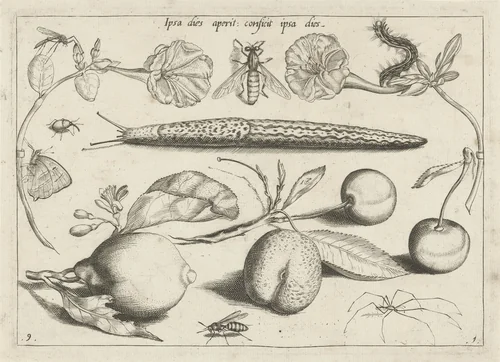
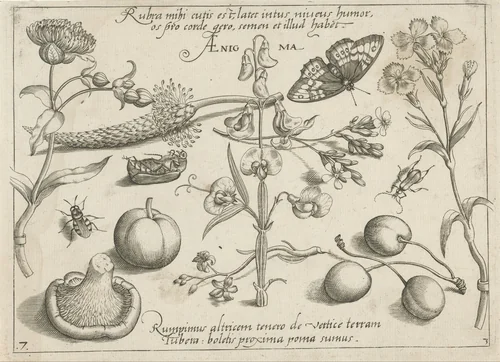
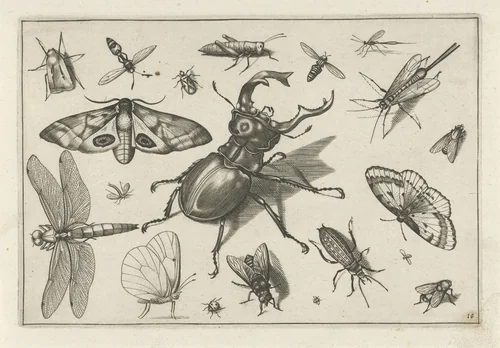
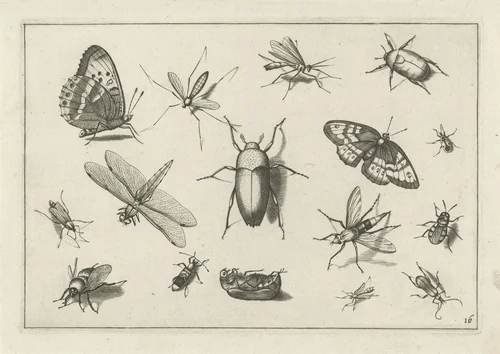
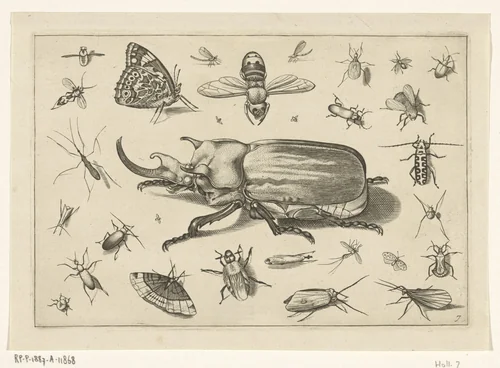
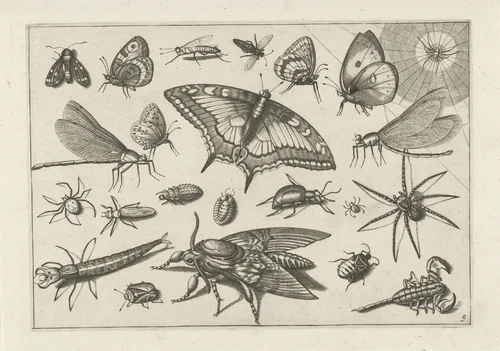
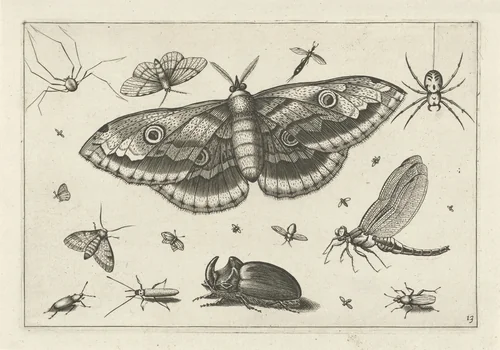
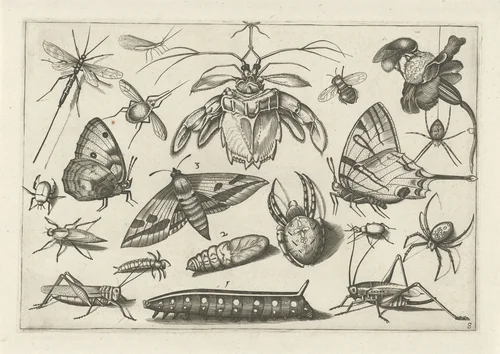
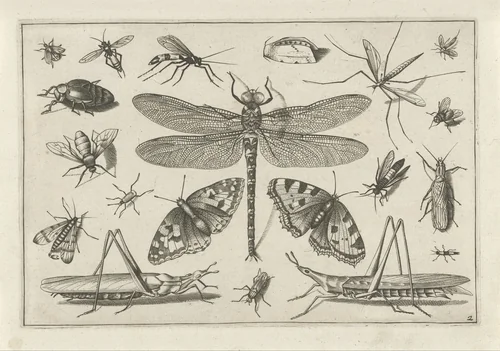
Although he worked across portraiture, mythological scenes, and topographical views, Hoefnagel is primarily celebrated today for his fastidious natural history illustrations. Continuing the late sixteenth-century obsession with meticulous renderings of the observable world, his works fuse scientific accuracy with ornate compositional arrangements. These highly detailed studies of flora and fauna, often executed for publication as prints, stand as critical documents of early modern entomology and botany.
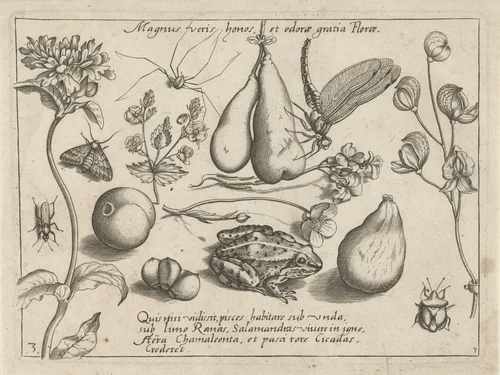
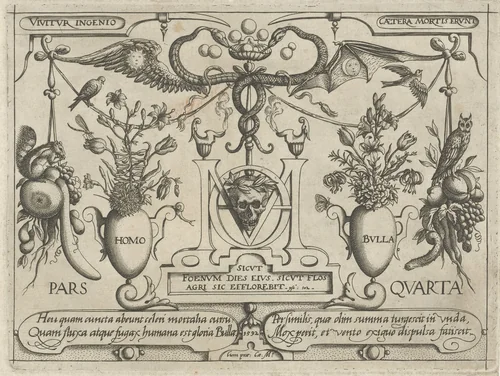
His most acclaimed works are the graphic natural studies which often frame a central motif or object with meticulously rendered specimens. Examples such as Dieren, bloemen en vruchten rond hangende peren and Dieren, planten en vruchten rond een slak demonstrate an almost microscopic focus. These compositions occasionally incorporate elements of vanitas, notably in Dieren, planten en vruchten rond een schedel en bellenblazende slangen, creating powerful symbolic resonance alongside the decorative precision.
It is worth noting that Hoefnagel’s professional duality, navigating both the esoteric demands of court art and the harsh realities of European diplomacy and trade, lends a pragmatic gravitas to his legacy. While he ensured the continuation of the family style, he simultaneously ensured his own financial and political stability. The enduring appeal of these finely executed nature studies means that works from his corpus, held in major institutions like the Rijksmuseum, are frequently utilized as high-quality prints, securing the accessibility of Jacob Hoefnagel prints for future generations via public domain resources.