Jacob Folkema
The Dutch designer and engraver Jacob Folkema (born and deceased in Dokkum, Friesland) stands as a precise representative of early 18th-century graphic arts, bridging the exacting standards of traditional craftsmanship with the expanding needs of European scientific and theological publishing. His initial training under his father, Johann Jakob Folkema, a skilled goldsmith, instilled the meticulous precision that would define his later work in metal plates.
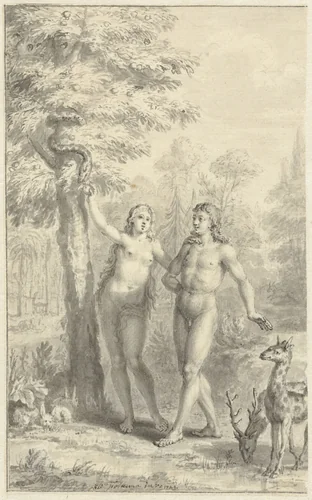
Folkema significantly broadened his artistic perspective by traveling to Amsterdam to study under Bernard Picart, a key figure in the period’s cosmopolitan printmaking industry. This advanced instruction proved crucial as Folkema secured prominent commissions demanding both technical rigor and thematic versatility. His contributions included plates for the 1712 edition of Royaumont's Bible and, perhaps most strikingly, detailed illustrations for the highly technical 1737 volume of Ruysch's Anatomy. It is a subtle but telling point of his career that the same hand was capable of rendering both pious devotional scenes and the intimate, complex cross-sections of the human body.
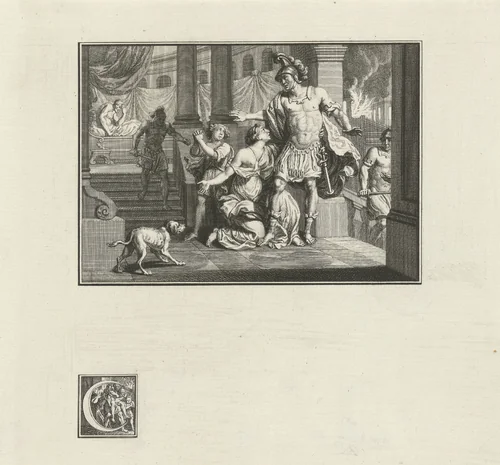
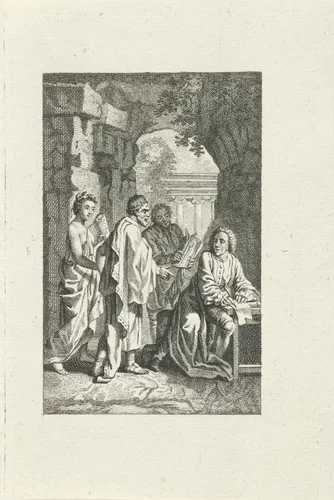
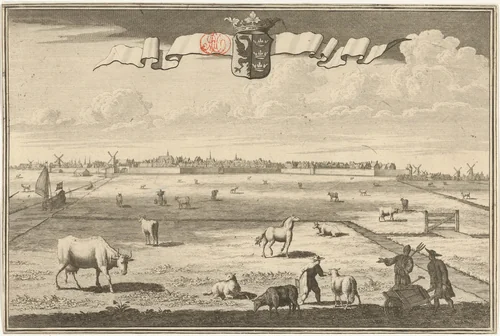
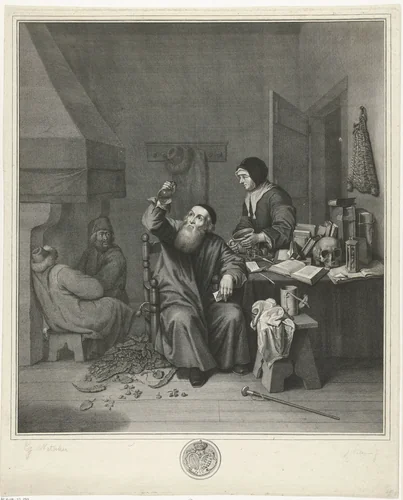
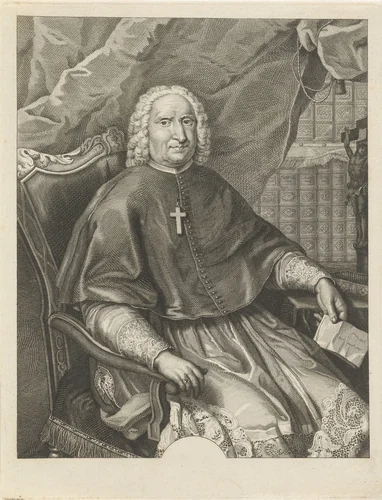
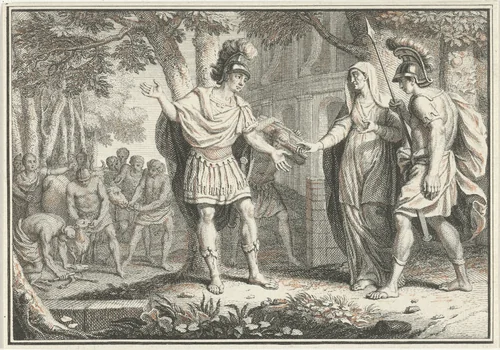
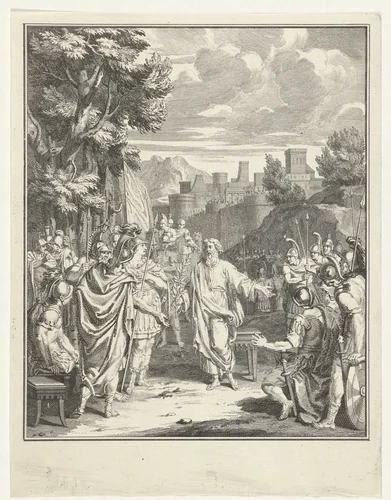
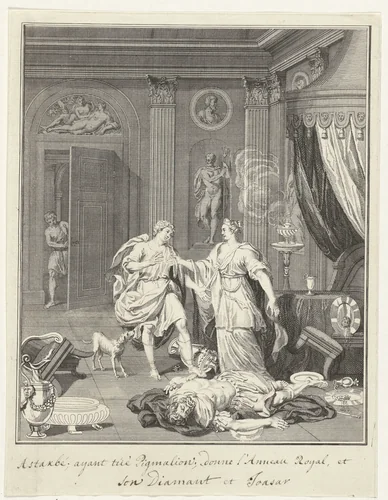
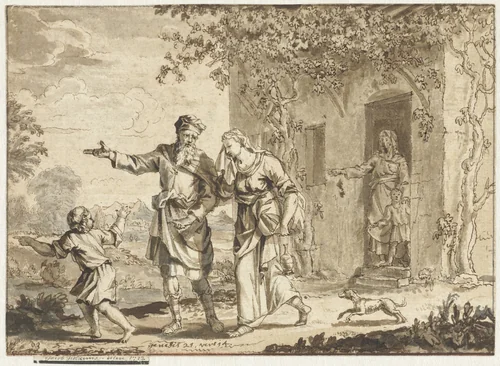
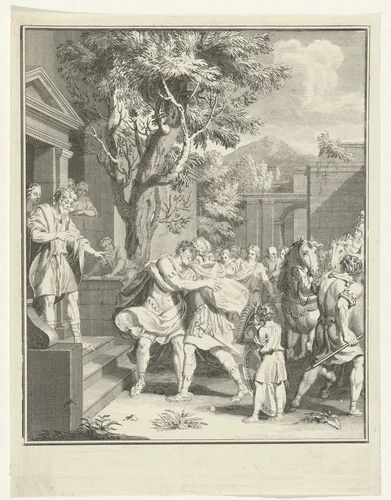
Technically, Folkema excelled as an engraver and was notably proficient in mezzotint, a challenging intaglio method that allowed for deep, nuanced tonal gradients. This mastery of tone ensured that his reproductive prints and original compositions achieved a visual richness essential for museum-quality display. Among the substantial body of Jacob Folkema prints are allegorical works, such as Time discovering the Bust of F. Rabelais, historical narrative pieces like Aeneas vlucht uit het brandende Troje, and foundational topographical views, including Gezicht op Sneek.
Folkema’s workshop was a collaborative enterprise; he was often assisted by his sister, Anna Folkema, an accomplished miniaturist in her own right, who also contributed several independently executed plates. His legacy extends beyond original design, encompassing crucial reproductive work, such as plates for the Dresden Gallery based on paintings by masters including Charles Le Brun and Niccolò dell'Abbate. Today, Folkema’s works are held in major institutional collections, including the Rijksmuseum, ensuring that his meticulous, high-quality prints remain preserved in the public domain for continued scholarly and artistic appreciation.