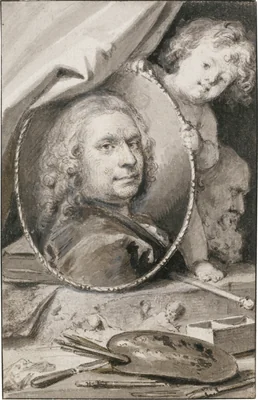
Jacob de Wit
Jacob de Wit was a significant Dutch artist and interior decorator, whose career spanned the late seventeenth and early eighteenth centuries, from 1600 to 1705. He established himself as a master of large-scale decorative schemes, often executing his paintings in situ to create unified visual environments for wealthy Dutch patrons. His comprehensive skill set allowed him to move fluidly between two primary genres: devotional religious painting and elaborate allegorical decoration.
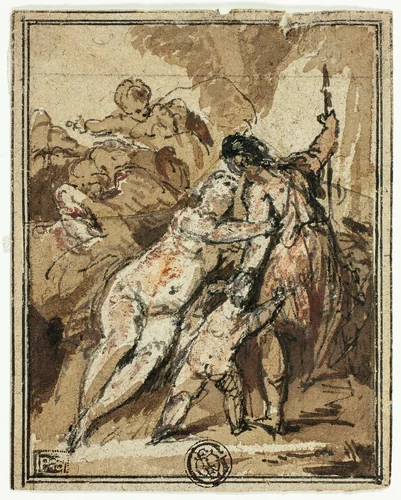
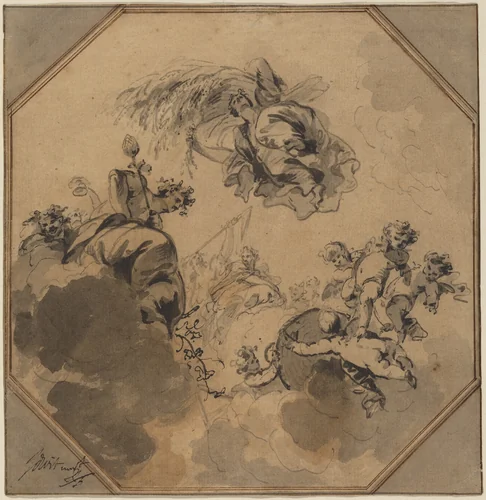
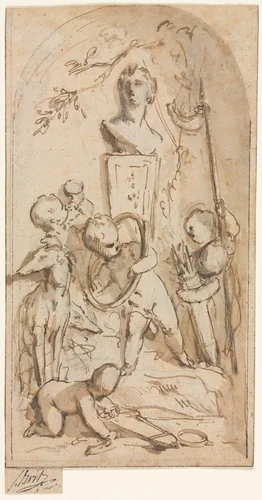
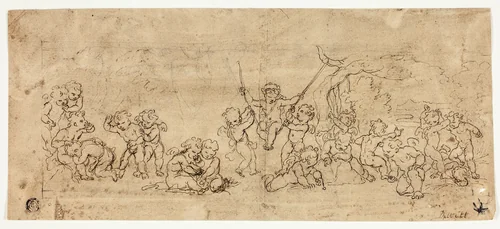
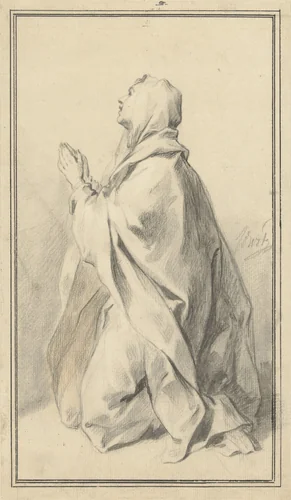
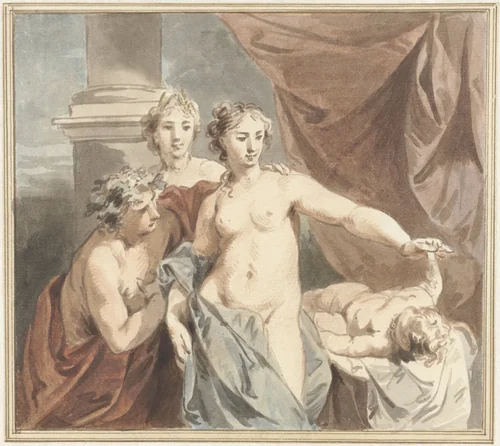
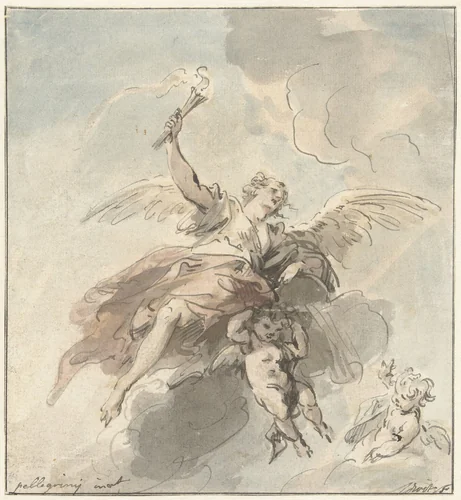
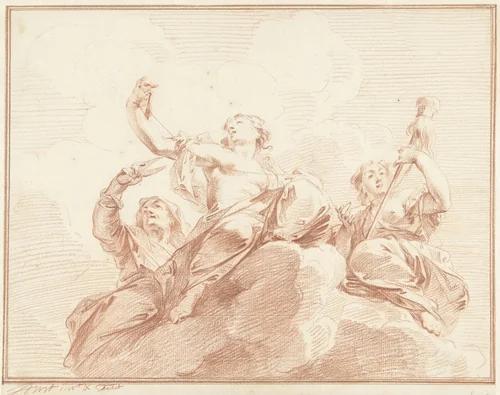
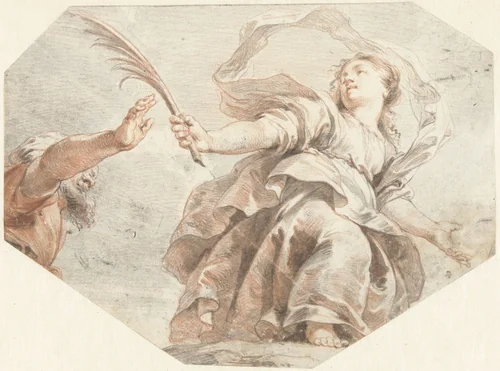
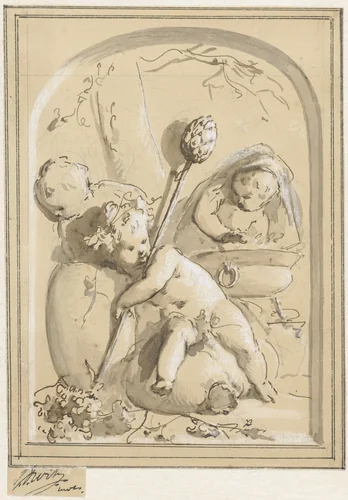
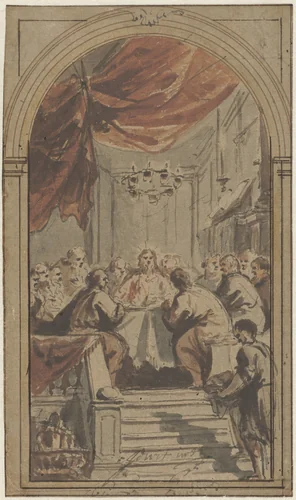
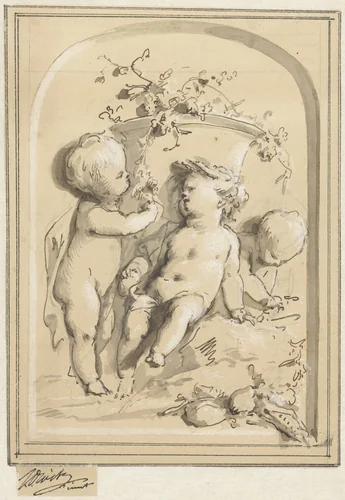
De Wit was highly prolific in the production of religious scenes, often commissioned for chapels or private homes. However, his work in interior decoration, particularly ceiling painting, reveals a mastery of classical narrative and illusionistic space. Works such as Study for a Ceiling: Allegory of the Harvest with Dionysus and Ceres display his skill in trompe l'oeil, where figures appear to float against the sky, subtly merging painting with architecture. This dedication to integrating visual narratives is also clear in his mythological subjects, designed to imbue domestic spaces with classical refinement. The dynamic drama captured in pieces like Venus Trying to Retain Adonis and Bust of Diana with Putti and Hunting Attributes illustrates his sophisticated handling of the human form and mythological symbolism. De Wit was particularly adept at positioning classical figures mid-action, granting these deities an amusing, nearly theatrical dynamism that ensured even profound subjects retained a lively decorative quality.
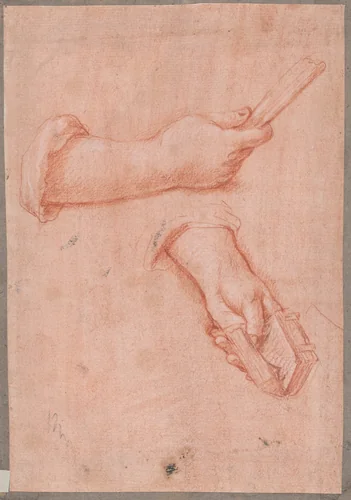
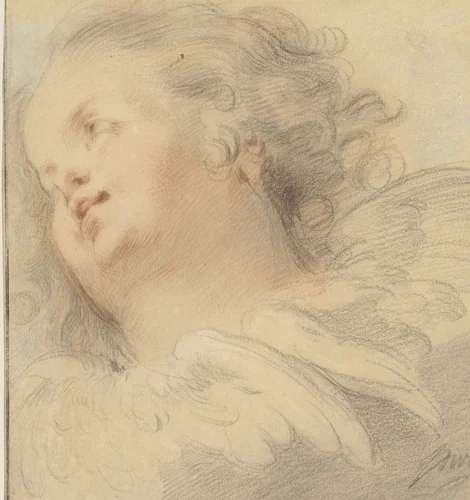
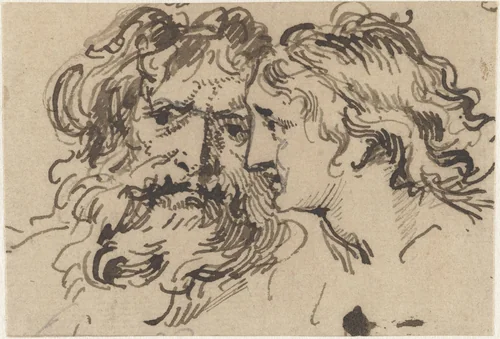
The quality and ambition of De Wit’s output secured his position among the foremost decorators of his era. While many of his major commissions remain attached to their original architectural settings, numerous preparatory studies and drawings survive, offering crucial insights into his meticulous process. Fifteen such drawings are currently housed in prestigious institutions, including the Rijksmuseum, the Metropolitan Museum of Art, and the Art Institute of Chicago. The lasting interest in the artistry behind these large-scale works has ensured that many key Jacob de Wit prints and drawings have entered the public domain, making this downloadable artwork widely accessible for scholarship and appreciation worldwide.
Source: Wikipedia · CC BY-SA 4.0