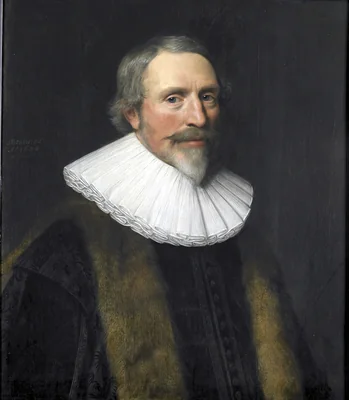
Jacob Cats
Jacob Cats occupies a unique position in Dutch cultural history, recognized primarily for his seminal literary contributions as a celebrated poet, humorist, jurist, and politician. His fame rests chiefly upon his highly influential emblem books, which established him as a master of moral instruction and wit. However, a significant yet often secondary corpus of graphic work reveals a distinct artistic practice active later in the eighteenth century, demonstrating Cats’s sustained engagement with visual narrative and contemporary genre depiction.
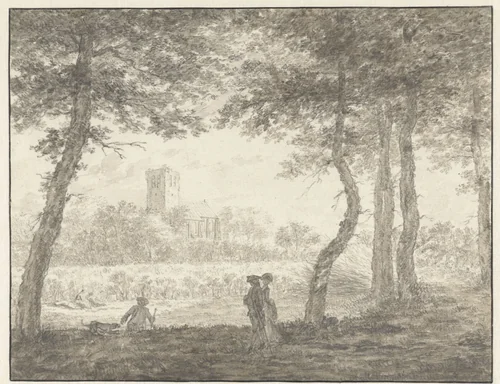
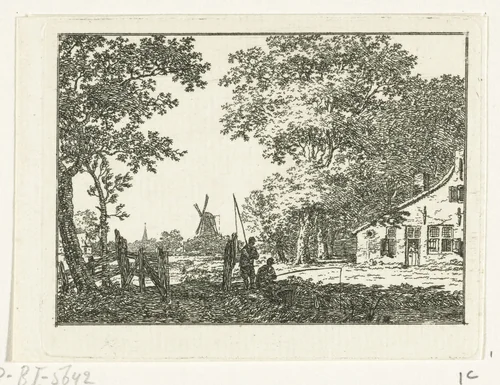
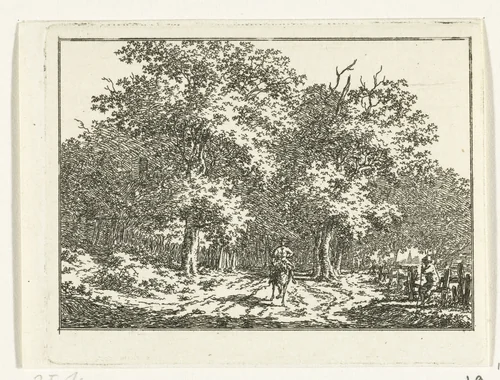
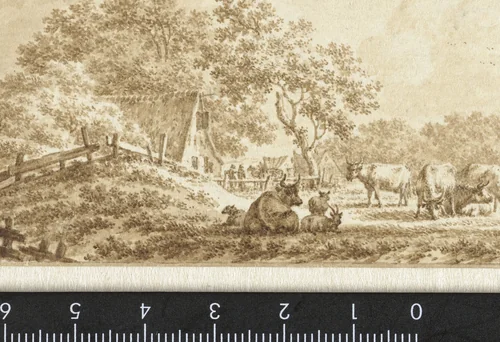
Active primarily between 1751 and 1768, Cats produced a modest but focused oeuvre consisting of approximately ten known drawings and five distinct prints. These works, held in major institutions like the Rijksmuseum, provide intimate, detailed documentation of mid-eighteenth-century Dutch social and topographical life. Unlike the explicitly didactic themes of his literary work, Cats’s visual pieces often capture transitory, everyday moments.
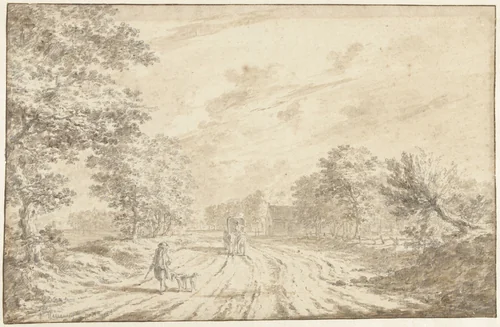
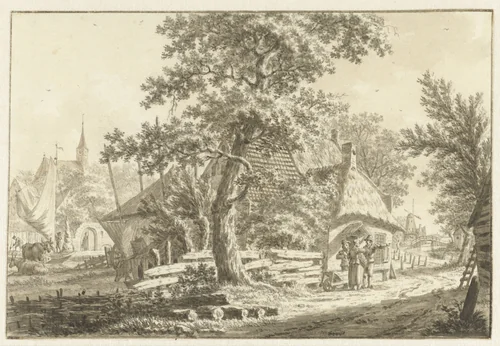
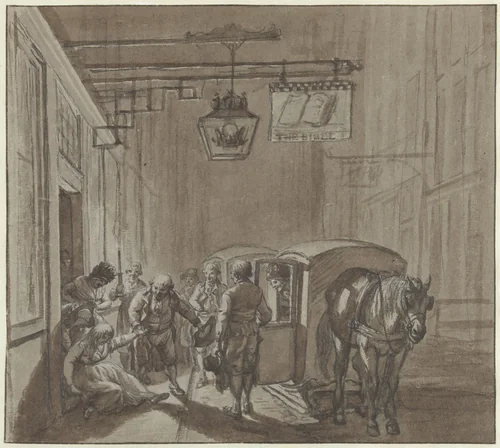
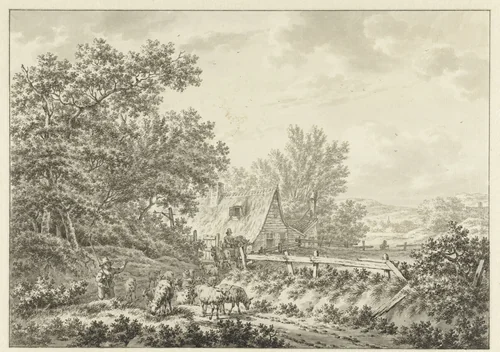
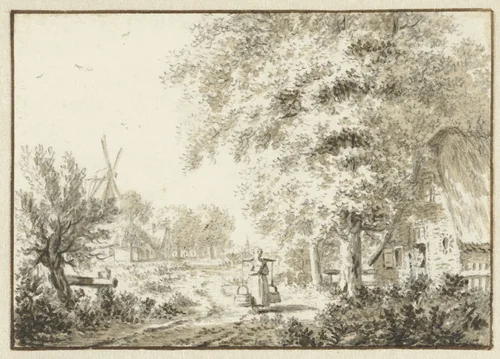
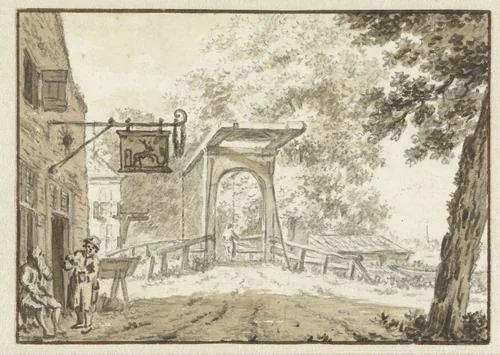
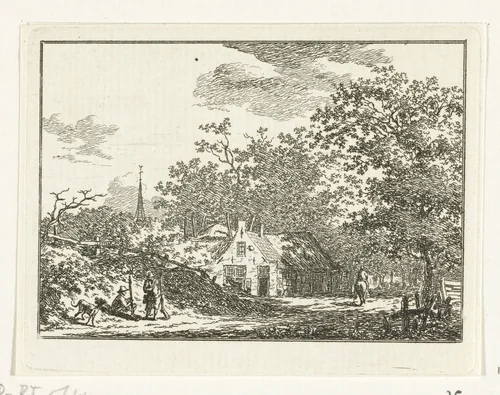
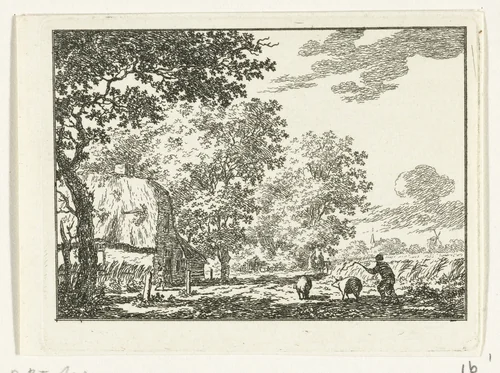
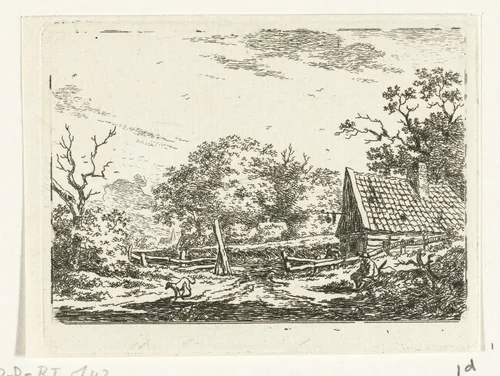
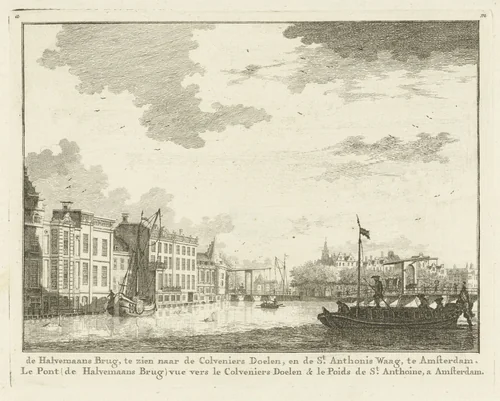
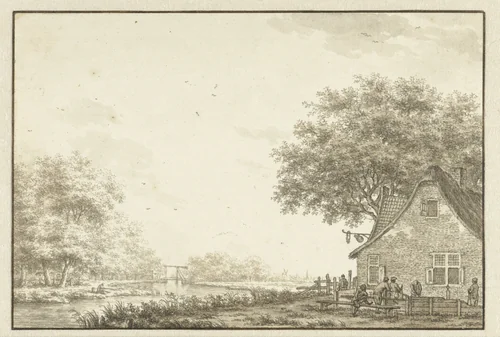
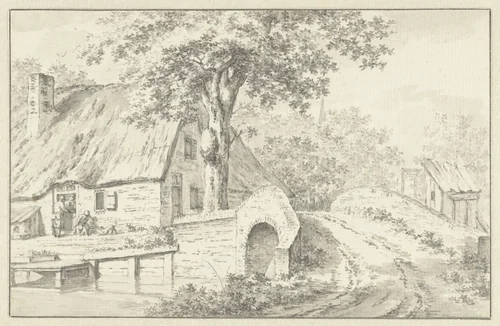
His subjects focus on rural settings, local architecture, and the mechanics of travel and social congregation. Works such as Dorpsgezicht met enkele personen voor een huis (Village view with a few people in front of a house) reveal a skilled hand in rendering atmospheric light and spatial depth, while De Herenweg met het Posthuis documents specific sites crucial to civic and commercial life.
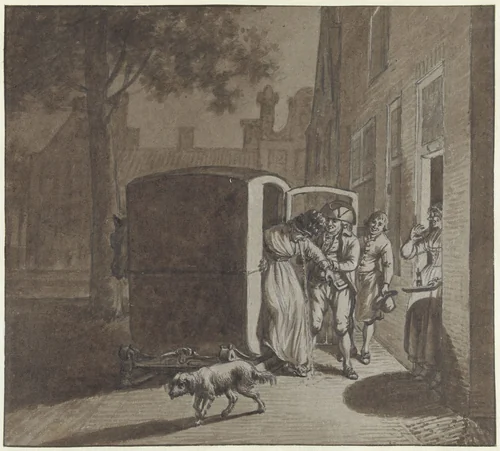
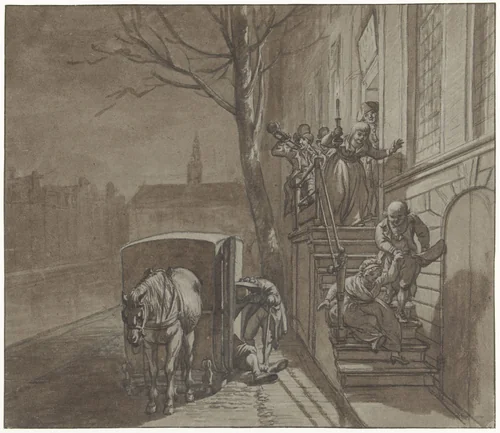
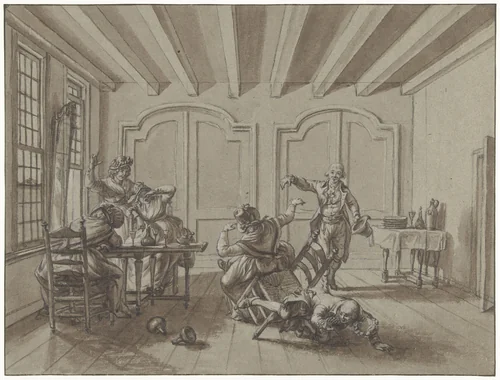
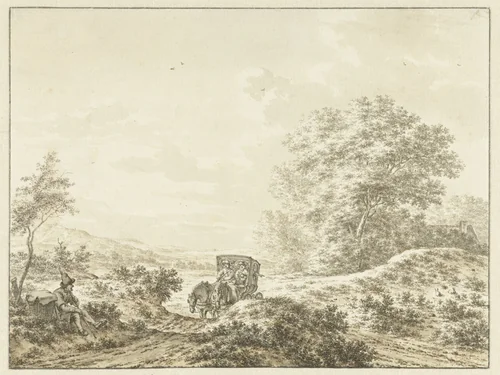
A recurring preoccupation in the artist's visual repertoire is the dynamic of social encounter—the moment of separation or reunion. Titles like De thuiskomst van twee leden van de vriendenkring (The homecoming of two members of the circle of friends) and Het verlaten van de herberg (The leaving of the inn) subtly reflect a fascination with arrival and departure, suggesting a keen eye for the quiet emotional weight attached to movement and connection. This emphasis on relational themes offers a visual counterpoint to the moralizing framework of his earlier emblem books, moving from generalized aphorism toward specific human interaction.
While many of his contemporaries focused on increasingly elaborate interior scenes, Jacob Cats prints capture the open road and the rural periphery, providing valuable, detailed historic documentation. Given their status within major institutional holdings, the works are often available today as high-quality prints and are frequently found in the public domain, making his distinctive contribution to 18th-century graphic arts widely accessible as downloadable artwork for scholars and enthusiasts alike.
Source: Wikipedia · CC BY-SA 4.0