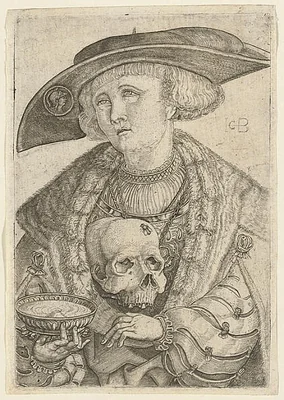
Jacob Binck
Jakob Binck (c. 1500-1569) established a prolific and decidedly international career as a German engraver, etcher, painter, medalist, and art dealer. Though often categorized as a peripheral member of the celebrated Little Masters, Binck’s practice was characterized not only by meticulous small-scale graphic work but also by extraordinary geographic mobility and an astute business acumen.
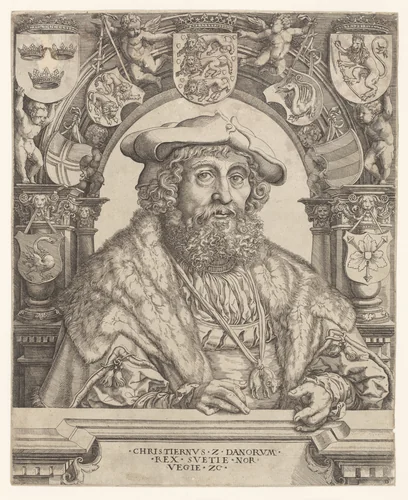
Binck’s professional itinerary was decidedly peripatetic, securing commissions across Northern Europe. Unlike many of his contemporaries who remained largely rooted in specific imperial cities, Binck embraced the life of the traveling court artist, a role that required versatility in both creation and commerce. He was employed prominently by various ruling houses, holding a particularly significant and long tenure working for the Danish court. His willingness to operate as a copyist and dealer, in addition to creating original compositions, suggests an entrepreneurial spirit essential for navigating the complex, competitive patronage networks of the sixteenth century. He also spent a productive period residing in Antwerp, then a vital hub for print publication and trade.
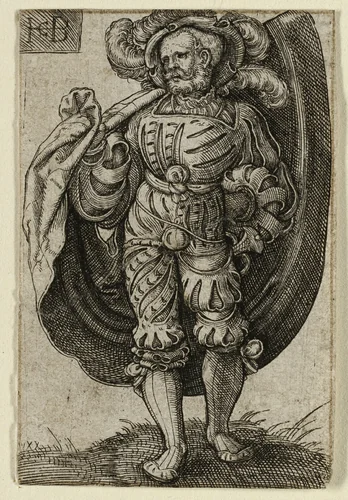
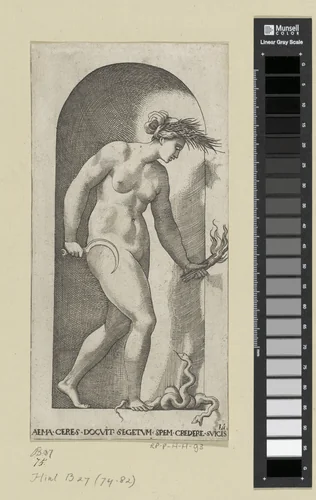
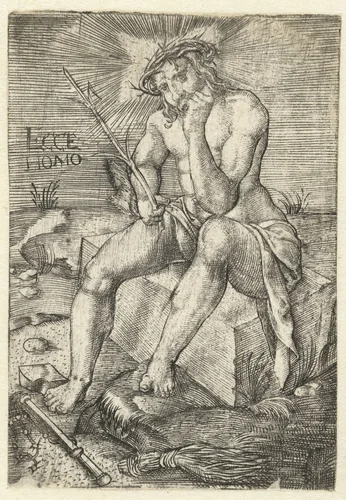
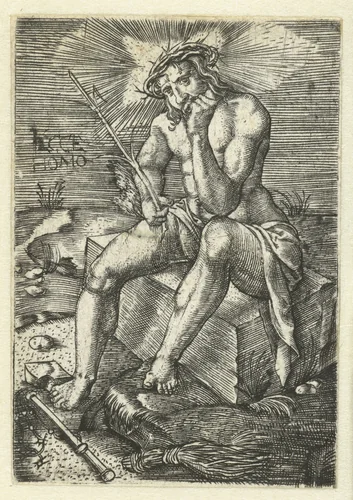
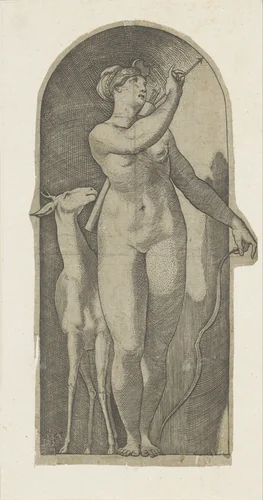
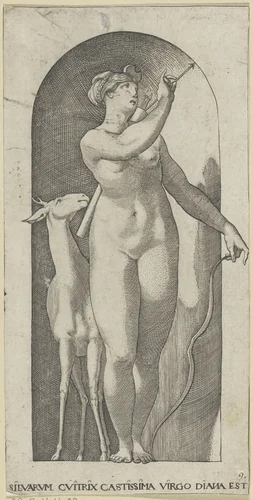
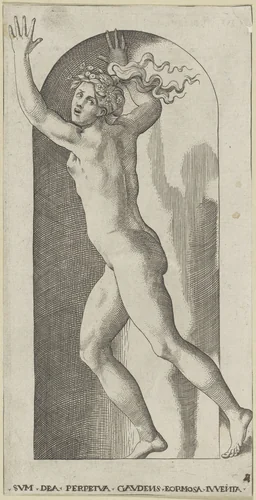
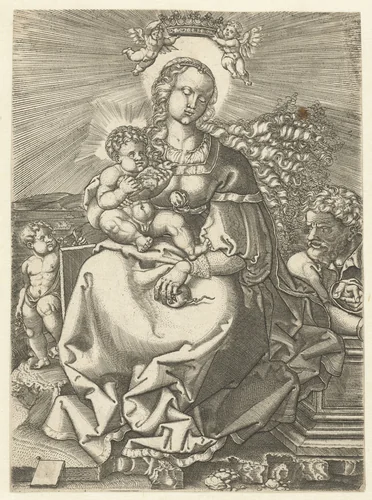
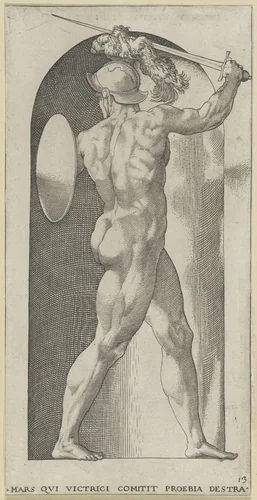
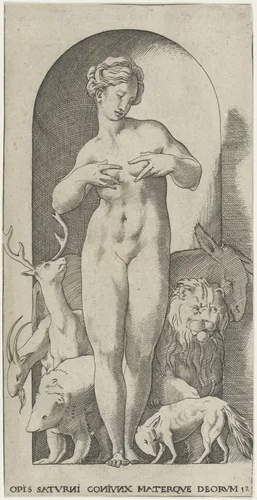
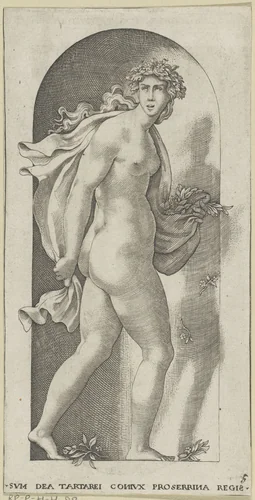
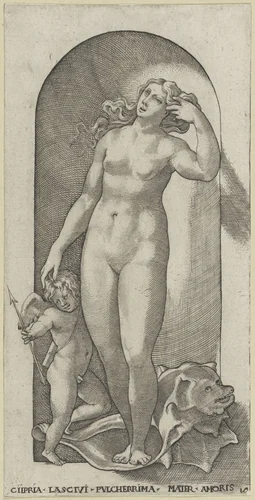
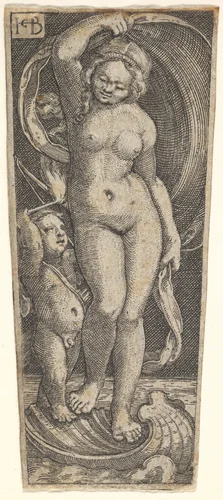
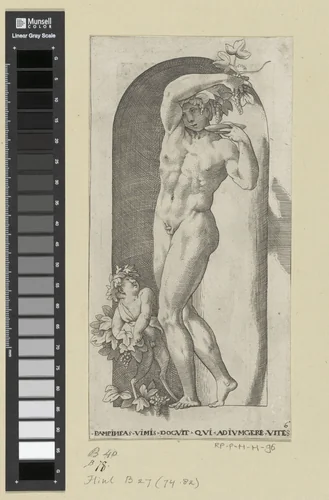
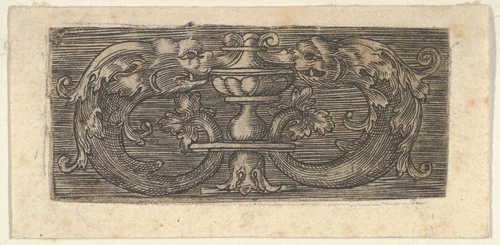
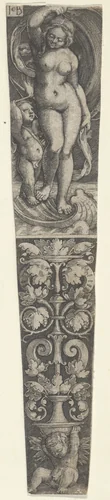
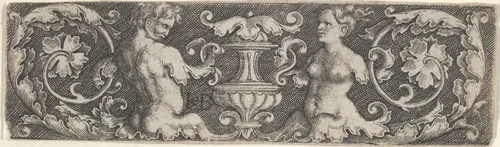
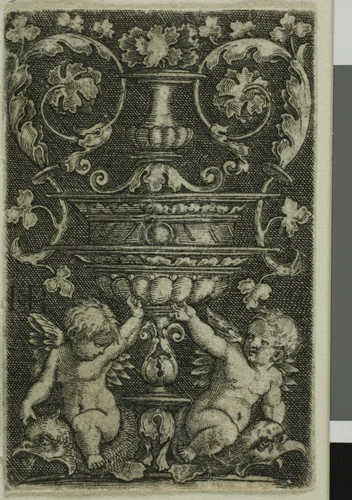
His core output as a printmaker, particularly active during the period recorded between 1501 and 1514, reveals a precision typical of the Little Masters group. He specialized in small-format compositions, frequently depicting mythological and classical figures. Works such as Ceres and Diana exemplify his command of line work and ability to render dynamic human form on a diminutive scale. His proficiency extended to military subjects, evident in the detailed action of The Standard-Bearer, as well as religious iconography, including the repeated treatment of Christus op de koude steen.
The technical strength and clarity of Binck’s engravings ensured their rapid circulation across Europe. Today, his surviving Jacob Binck prints remain key documents of early sixteenth-century graphic arts, housed in major institutions globally, including the Rijksmuseum, the Metropolitan Museum of Art, and the Art Institute of Chicago. These museum-quality works, demonstrating the technical rigor required of the era’s finest engravers, are frequently studied by historians. Many of these important images are now digitized and available as high-quality prints, ensuring Binck’s significant contribution to the graphic history of the Northern Renaissance remains accessible to modern audiences.
Source: Wikipedia · CC BY-SA 4.0