Jacob
Jacob, a printmaker active during the transitional years of the early sixteenth century, occupies a distinctive, if brief, position in the history of graphic art. Known primarily through a small corpus of just eleven surviving impressions, his artistic output was concentrated intensely between 1503 and 1504. Despite the brevity of his documented career, the ambition and technical sophistication of his central project assure his place among early masters whose works are now highly sought after by institutions, including the comprehensive holdings of the Metropolitan Museum of Art.
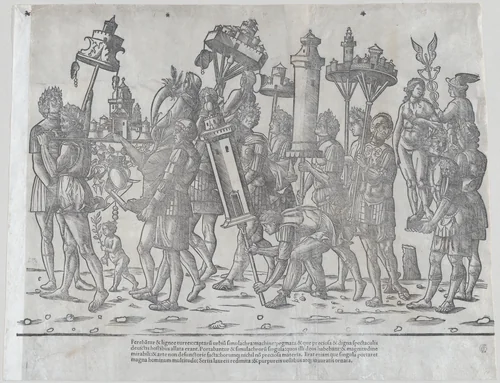
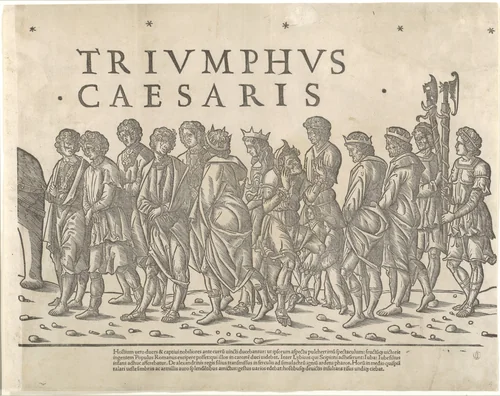
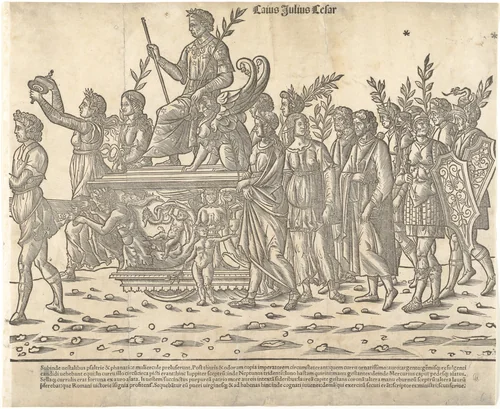
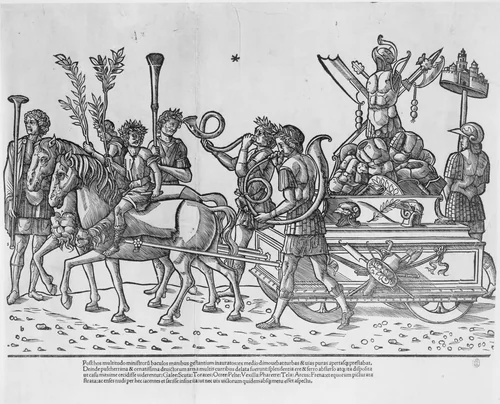
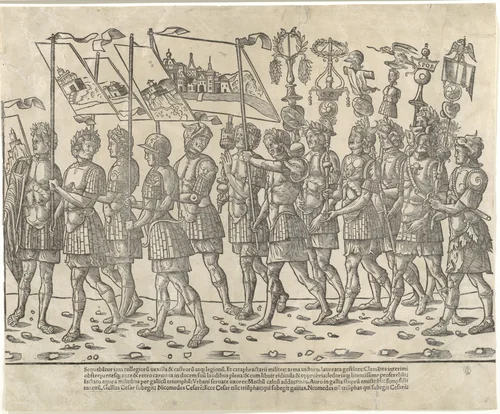
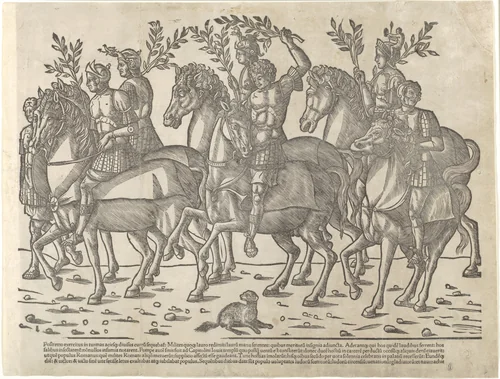
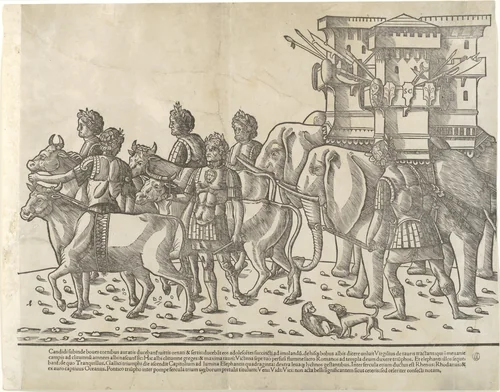
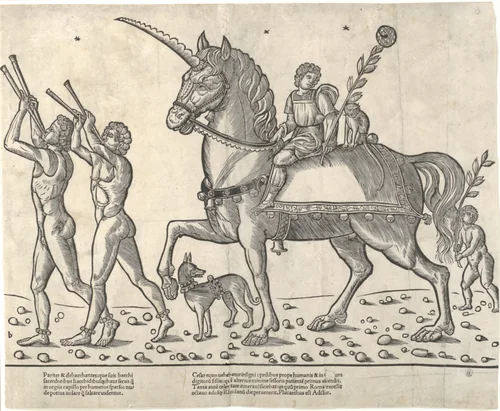
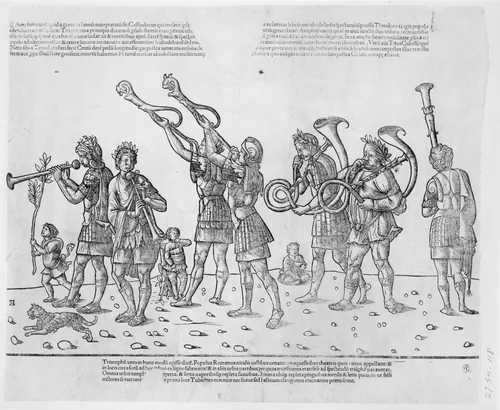
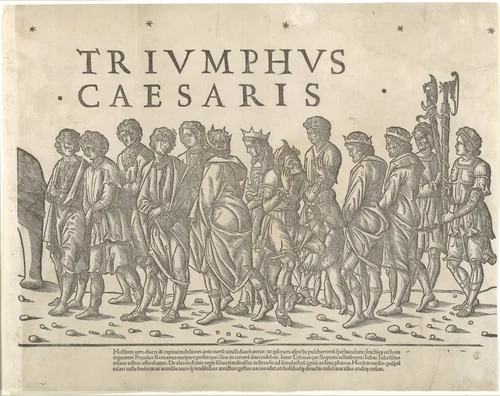
Jacob’s principal achievement is the monumental series, The Triumph of Caesar, a complex visual narrative likely intended to be displayed as a continuous frieze. This highly detailed sequence demonstrates an impressive command of composition and classical subject matter, translating the grand spectacle of Roman imperial ceremony into the emerging language of high-quality prints. The surviving components of this extraordinary undertaking include the highly detailed Statues of Venus and Mercury, along with the dynamic depictions of Caesar riding on his chariot and the accompanying Chariot with trophies of war.
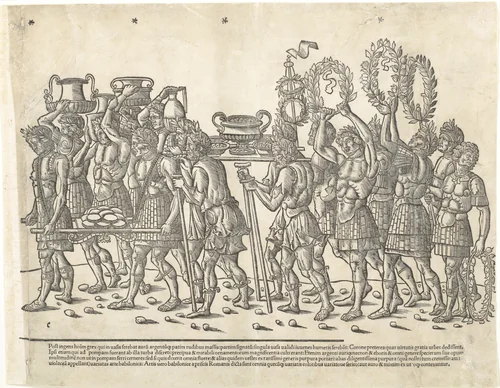
The scope of Jacob’s vision is underscored by panels such as Figures bearing trophies and carrying wreaths, which meticulously capture the retinues and symbolic weight of the procession. The artist favored etching and engraving techniques that allowed for precise rendering of texture and depth, suggesting he was closely aligned with or influenced by contemporary Northern masters who were bridging late Gothic detail with nascent Renaissance classicism. It is perhaps the most intriguing aspect of Jacob’s legacy that such substantial, multi-sheet compositions were completed during such a confined period of activity, hinting at a singular focus and intense dedication to history painting in print form.
While documentation on Jacob’s life outside this two-year window is sparse, the lasting presence of his work in prestigious collections confirms its museum-quality status. His prints offer invaluable insights into the iconographic preoccupations of the era. Thanks to institutional preservation efforts, these historically important images are frequently digitized, making high-quality prints and downloadable artwork available for scholarly study.