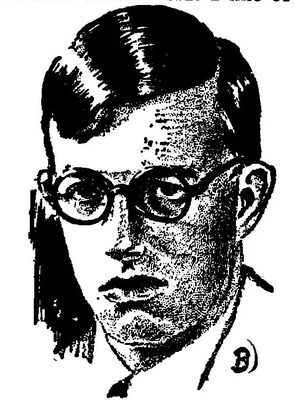
Jack Williamson
John Stewart Williamson (1906-2006), while widely recognized for his substantial career as an influential American science fiction writer, maintained a fascinating, rigorous artistic practice documenting American material culture during the critical years of the Great Depression. Active primarily between 1935 and 1941, Williamson participated in the Works Progress Administration’s ambitious initiative, the Index of American Design. His visual contributions were devoted to highly detailed, precise renderings of historical domestic and industrial objects, ultimately aimed at creating a permanent visual record of the nation’s craft and design heritage.
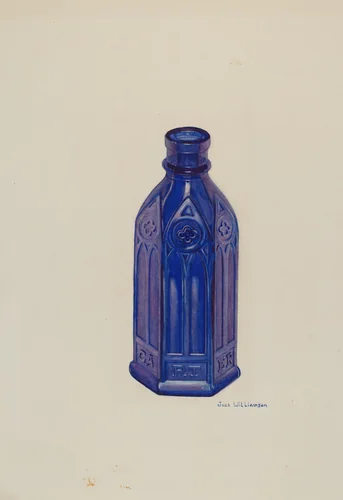
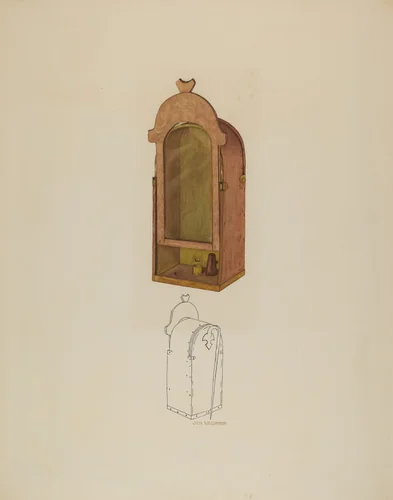
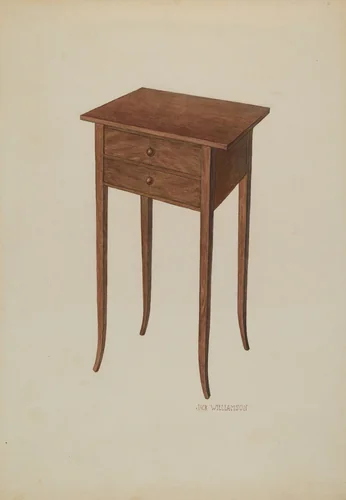
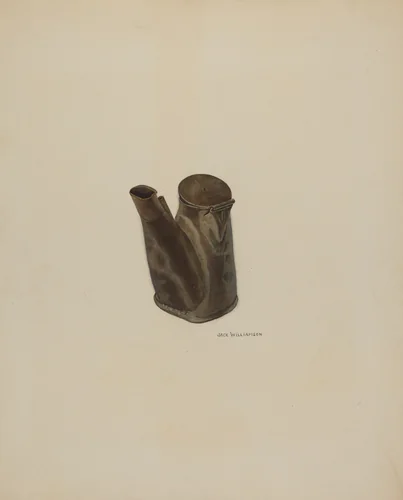
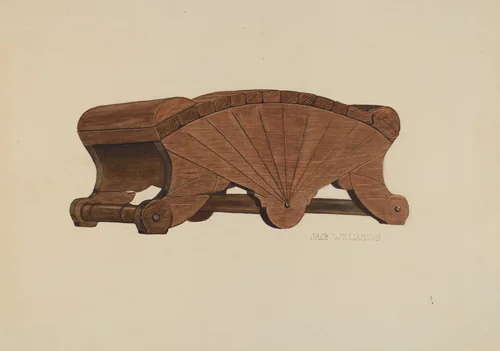
His artworks within the Index are characterized by their clarity, technical accuracy, and commitment to functional form, transforming utilitarian items into significant cultural artifacts. Williamson’s specific focus was the documentation of essential household objects, capturing the evolution of design from the colonial period through the mid-nineteenth century. His portfolio includes exacting studies such as the sturdy simplicity of the Table, the historical lighting source depicted in the Whale Oil Lamp, and the rustic utility captured in the Footstool. Other entries feature the structural documentation of the Ink Bottle and the practical artistry of the Candle Lantern. These Jack Williamson prints serve today not merely as artistic interpretations but as indispensable historical reference documents. The enduring quality of this documentary effort ensures these items are recognized as being of museum-quality importance, and they are now accessioned into significant institutional collections, including the National Gallery of Art.
The meticulousness required for this visual cataloging stands in compelling contrast to the artist’s primary professional legacy. Williamson earned the moniker "Dean of Science Fiction" and holds the distinction of having coined the term genetic engineering. This unique dual identity—a mind obsessed with the minutiae of historical design while simultaneously charting the deepest future of human evolution—lends a particular intellectual weight to his artistic output. Like many artists of the period, he occasionally used pseudonyms, including Will Stewart and Nils O. Sonderlund, when publishing written work, suggesting a lifelong interest in exploring various conceptual frameworks.
As artifacts of a government effort to preserve threatened cultural history, many of these Index works are today in the public domain. This accessibility allows researchers and institutions around the world to utilize the high-quality documents he produced, often accessing the detailed artwork as free art prints or downloadable artwork for study and display.
Source: Wikipedia · CC BY-SA 4.0