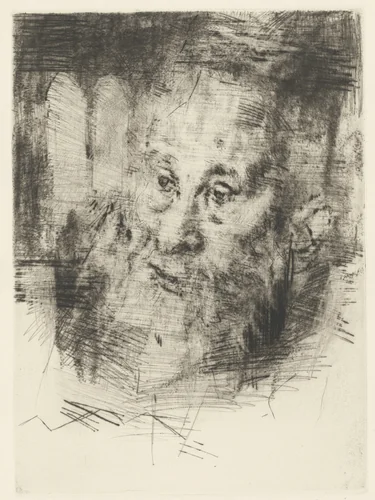
Jack Levine
Jack Levine stands as a pivotal figure in mid-twentieth century American art, celebrated for his incisive, often darkly comedic, commentary on societal failures and institutional decay. Active professionally from the early 1940s through the mid-1980s, Levine established himself as a leading proponent of Social Realism and a defining member of the Boston Expressionist movement. Unlike many contemporaries who shifted toward purely abstract modes of painting, Levine maintained a steadfast commitment to figuration, utilizing expressionistic brushwork and saturated color to achieve psychological depth rather than mere pictorial description.
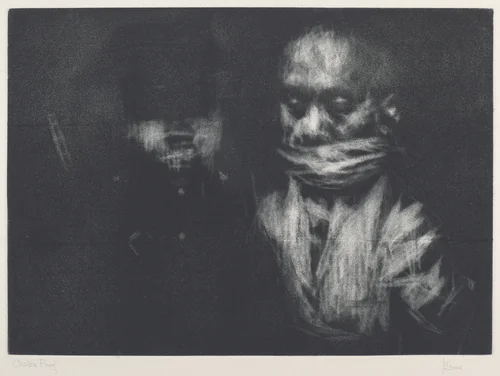
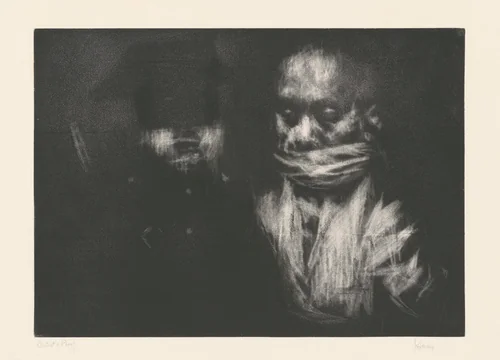
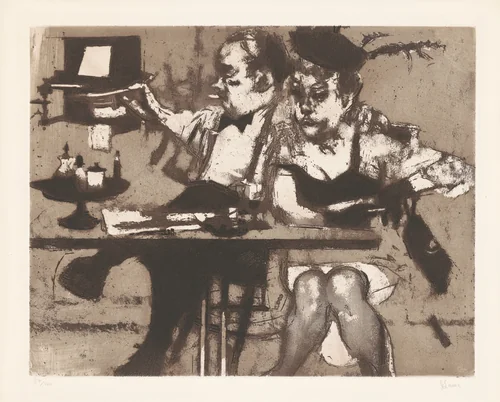
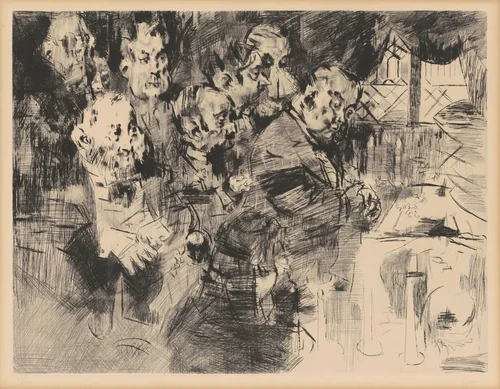
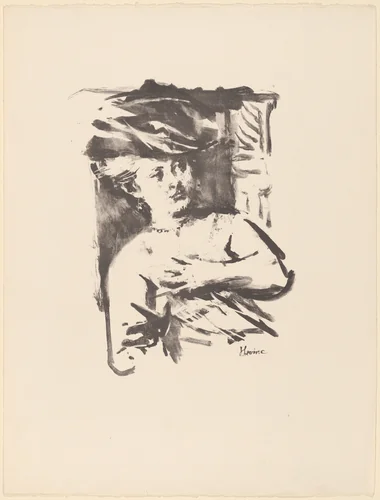
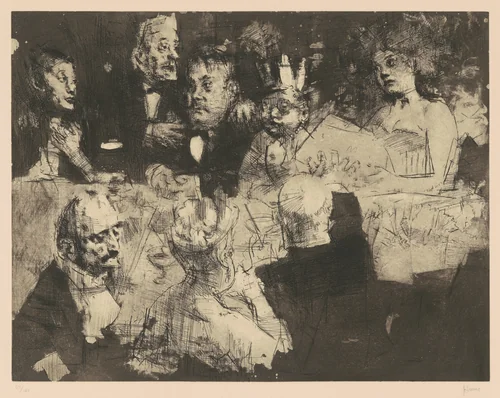
His artistic output, encompassing significant Jack Levine paintings and a robust catalog of graphic works, served primarily as biting social satire. Levine’s targets were meticulously chosen and broad, ranging from the mundane hypocrisies of modern urban life to monumental themes of political corruption, biblical narratives, and the overall fragility of the human condition. Prints such as The Prisoner and Careless Love exemplify his ability to distill complex moral narratives into visually arresting compositions. The grand spectacle of corruption finds powerful realization in pieces like Gangster's Funeral, where the sheer gravity of the subject is subtly undermined by its own theatrical, almost operatic, staging.
As a core artist of the Boston Expressionist circle, Levine shared the regional movement's characteristic rejection of slick academic formalism. He preferred a passionately executed application of paint and a devotion to subjective experience over detached observation. Critics often compared him to latter-day European satirists like Goya or Daumier, yet Levine’s visual language remained distinctly American, laced with a sharp, cynical humor that only occasionally betrayed a genuine, almost sentimental concern for the plight of the marginalized.
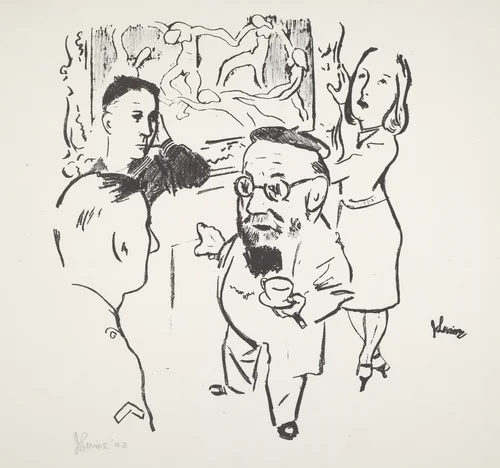
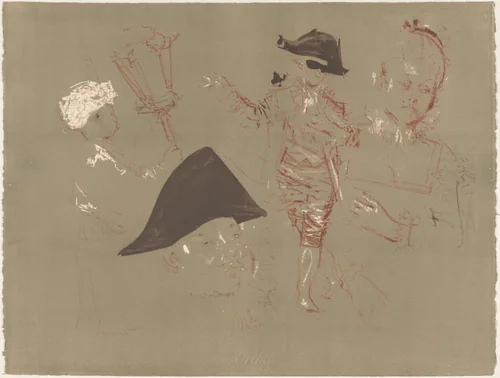
Levine's dedication to the graphic arts meant that his works, including the intriguing 1940s study Matisse and U.S. Servicemen, achieved wide circulation and enduring impact. Today, the sociological relevance of his critiques remains pertinent, ensuring continuous study of his substantial body of work. His legacy is safeguarded in collections such as the National Gallery of Art, with many early Jack Levine prints now entering the public domain. This accessibility allows enthusiasts to easily obtain high-quality prints and museum-quality downloadable artwork for continued appreciation and scholarship.