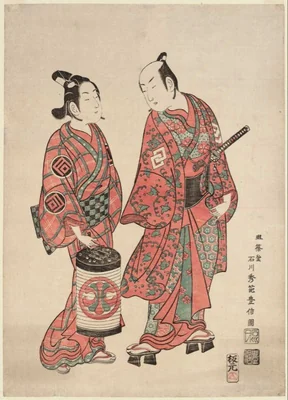
Ishikawa Toyonobu
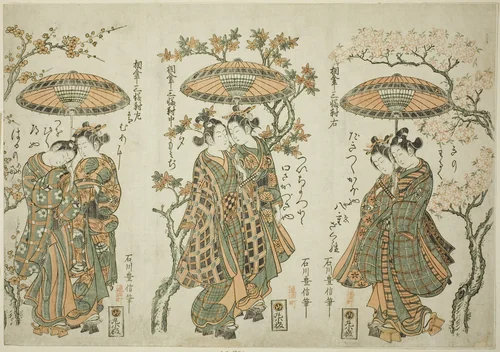
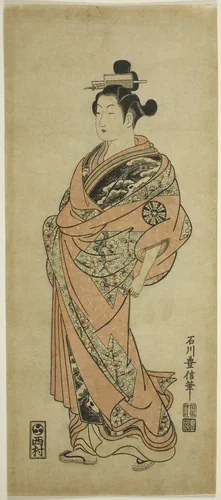
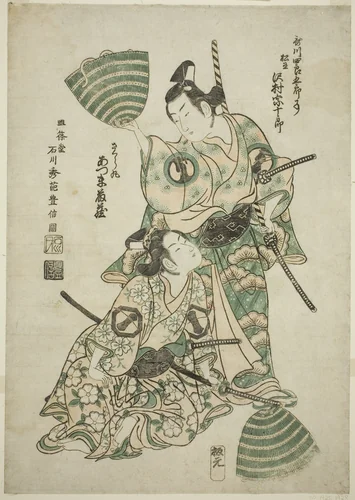
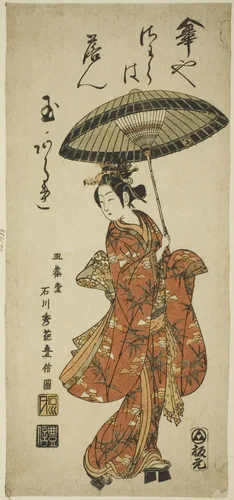
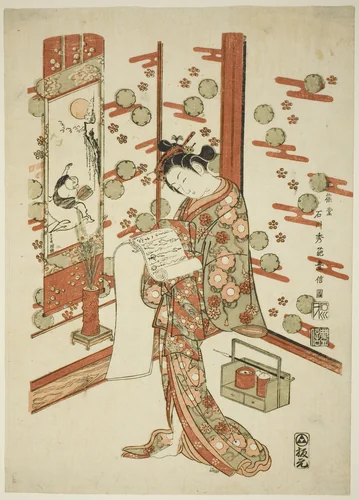
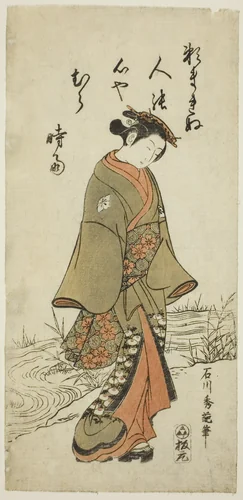
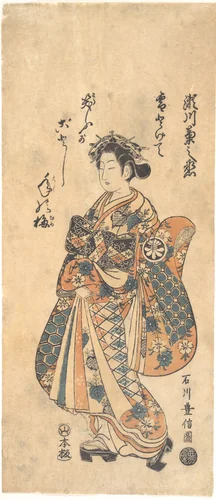
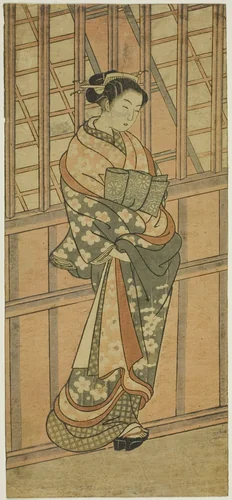
Ishikawa Toyonobu, active during the early decades of the 18th century (circa 1711-1736), stands as a significant figure in the foundational period of Japanese ukiyo-e printmaking. His career coincided with the crucial transition from sparsely colored or entirely monochromatic prints toward the sophistication of the benizuri-e process, a technical evolution that utilized two or three printed colors, most often red and green. This development allowed for greater nuance in costume design and composition, a quality essential for his chosen subject matter.
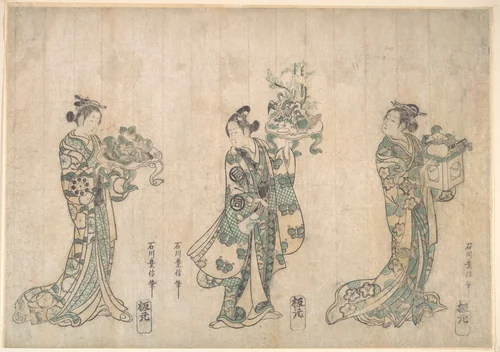
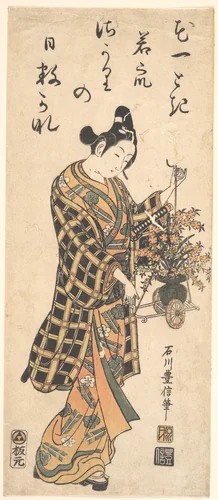
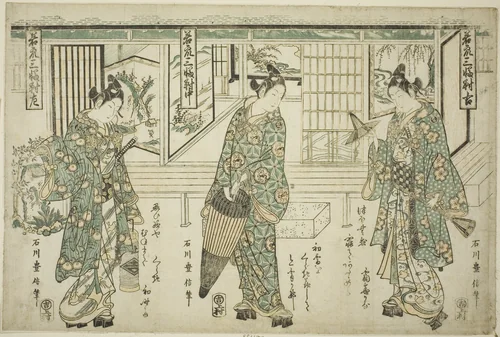
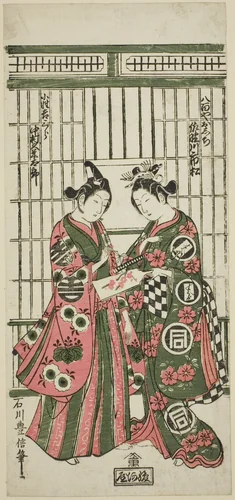
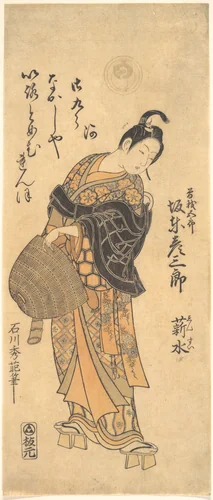
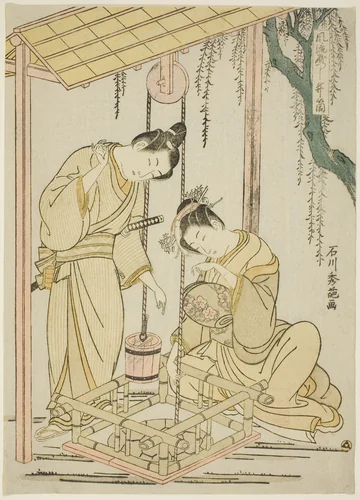
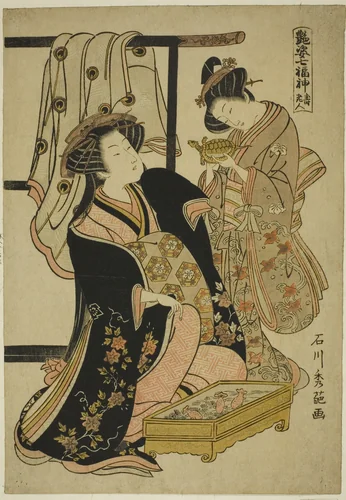
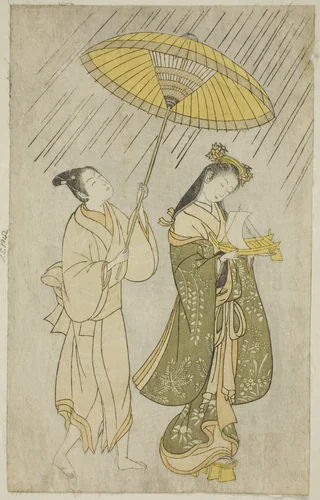
Toyonobu specialized in depicting the fleeting glamour of the Edo period, mastering both bijin-ga (pictures of beautiful women) and yakusha-e (actor portraits). His compositions display a confident line and an appreciation for theatrical gesture, visible in works such as The Dance of the Scarves and the dynamic Actor Sanokawa Ichimatsu as Young Samurai riding on Horse-back. The surviving body of work, though small, consisting of approximately fourteen known prints and a solitary Ishikawa Toyonobu painting, reveals an artist attuned to the demands of contemporary popular culture, capturing the dramatic intensity of the Kabuki stage, as seen in his portrayal of The Actor Bandō Hikosaburo I in a Female Role.
It is perhaps a minor irony, given the clarity and control of his distinctive style, that Toyonobu’s historical identity remains partially obscured. Art historical sources occasionally suggest he may be the same figure as Nishimura Shigenobu, a lesser-known contemporary artist. Regardless of these lingering questions of attribution, his artistic contribution cemented his reputation as a master draftsman of the period.
His distinctive style is easily recognizable among documented Ishikawa Toyonobu prints available today. Fortunately, much of his highly detailed work is preserved, providing museum-quality examples for study. Major international institutions, including the Metropolitan Museum of Art and the Art Institute of Chicago, house key examples of his oeuvre, ensuring their accessibility. Many of these seminal works are now entering the public domain, guaranteeing that his legacy, established during the formative years of Japanese print culture, continues to be appreciated globally.
Source: Wikipedia · CC BY-SA 4.0