Indonesia
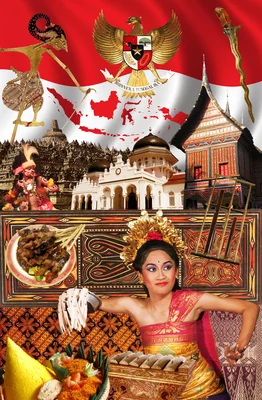
Indonesia, the world’s largest archipelagic state, comprising over 17,000 islands including the major cultural centers of Sumatra, Java, and Sulawesi, represents one of the globe's most vital historical wellsprings of complex fiber arts. Spanning the immense space between the Indian and Pacific oceans, the country’s geographical complexity (1,904,569 square kilometers) has fostered a rich diversity of material and stylistic traditions, particularly in textiles.
The artistic production associated with Indonesia, specifically documented examples dating to the early nineteenth century (circa 1801), showcases sophisticated weaving and dyeing techniques fundamental to the region’s cultural identity. This historical period highlights the essential role of finely crafted fabrics in symbolizing status, wealth, and spiritual belief across the highly populated islands. Java, the world’s most populous island and home to over half the country’s population of more than 280 million people, was historically a crucible for innovation in resist-dyeing, though specialized forms flourished throughout the archipelago.
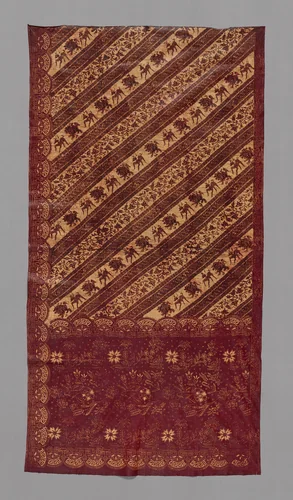
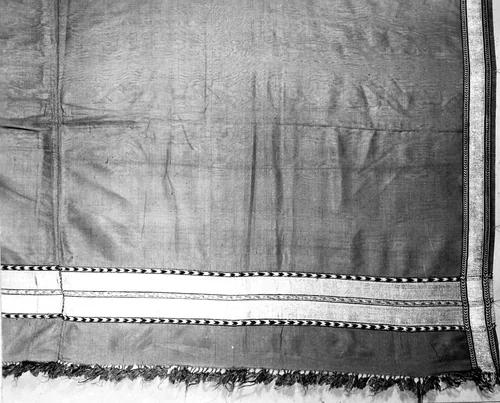
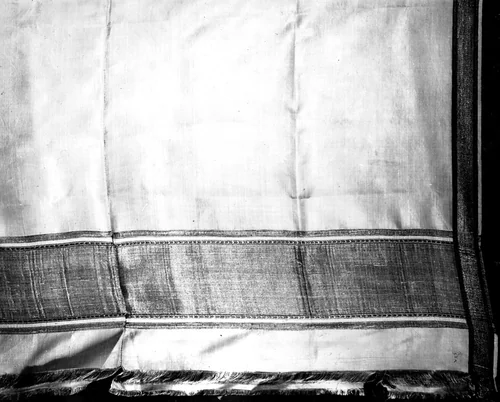
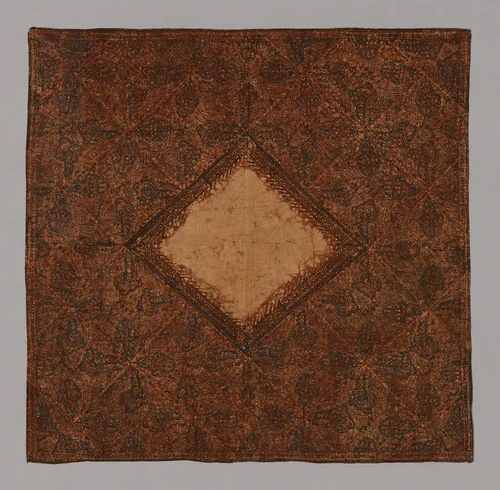
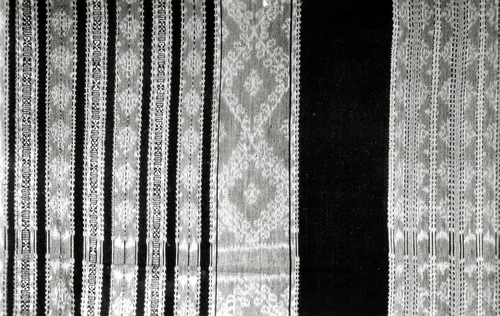
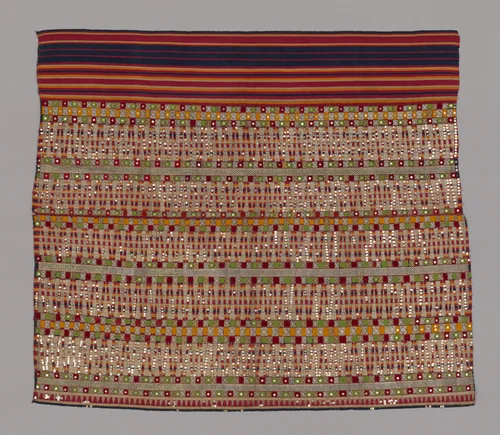
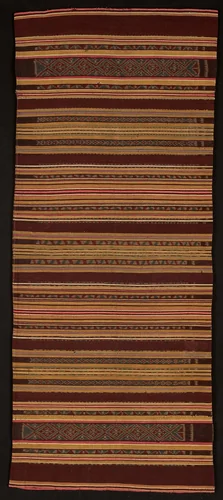
A concentrated grouping of identified works from this period—including the Panel (From a Skirt), multiple examples of Sashes and Sarongs, and the distinct Tapis Sarong (Skirt)—provides a clear glimpse into the formal, functional, and decorative standards of the time. These objects, often created as highly personalized ceremonial or daily wear, stand as museum-quality examples of pre-modern Indonesian craftsmanship. One might observe that despite the country's vast scale, textile production often remained intensely local, reinforcing distinctive regional identities even within the broader archipelagic state.
The enduring legacy of this artistry is reflected in major international holdings, such as those maintained by the Art Institute of Chicago. While the works themselves are unique artifacts, their historical patterns and designs remain accessible globally, frequently inspiring modern designers. Today, the foundational techniques seen in these early textiles are available for study and admiration, with high-quality prints and references to traditional Indonesia prints often found in scholarly and public domain collections, ensuring this vibrant cultural history remains visible worldwide.
Source: Wikipedia · CC BY-SA 4.0