India
India emerges as a singular cultural locus in world history, a nation of immense scale situated centrally in South Asia. Geographically defined by its position on the Indian Ocean, the Arabian Sea, and the Bay of Bengal, the region’s expansive land borders fostered a unique interchange of traditions, materials, and iconographies. Since its independence in 1947, the country has become the world’s most populous democracy, yet its artistic heritage stretches back through millennia, culminating in a period of particularly intensive production between 1375 and 1601 C.E.
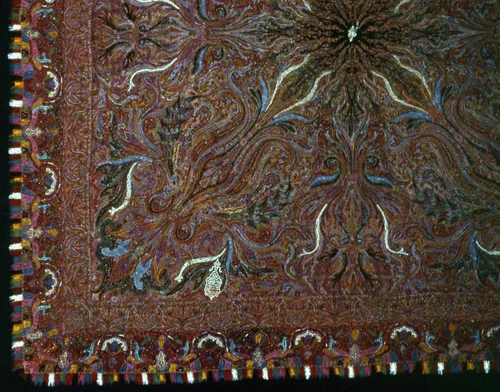
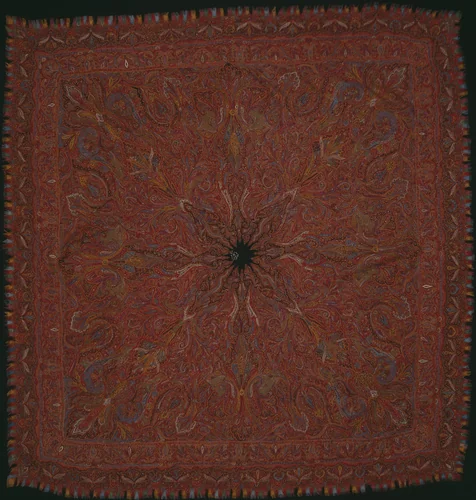
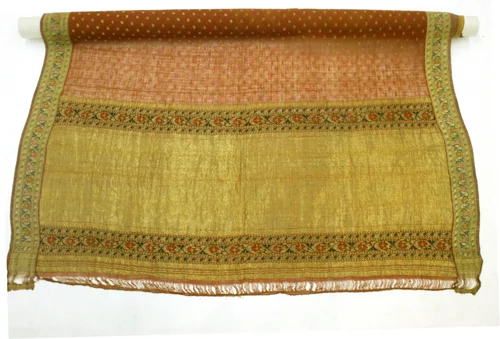
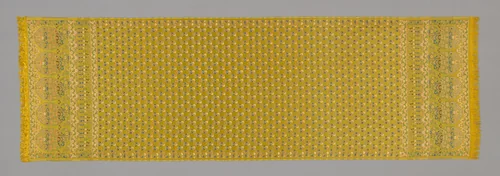
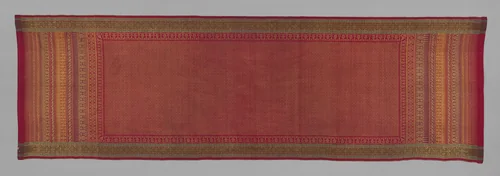
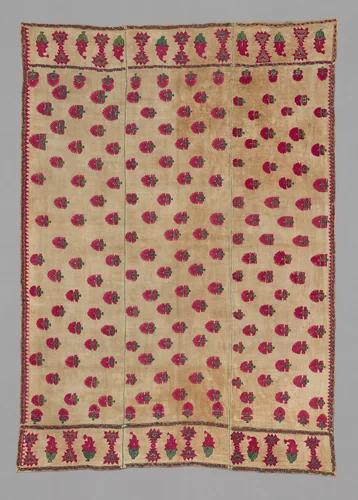
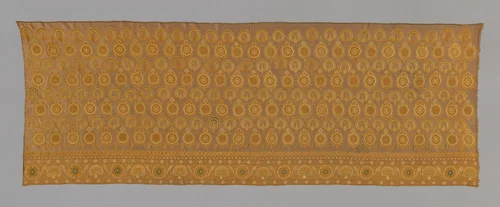
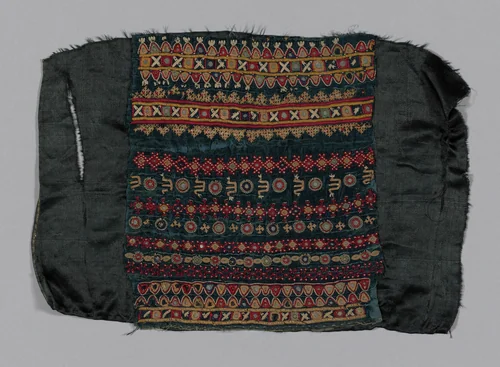
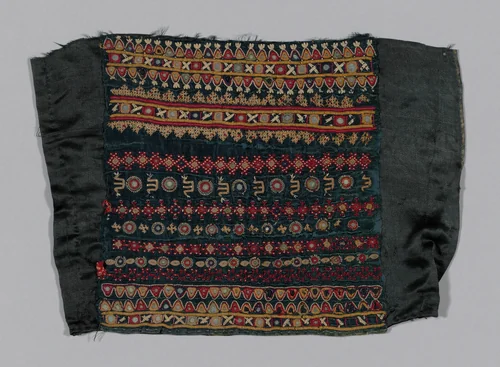
The artistic output of this period reflects extraordinary diversity and technical refinement, encompassing a recorded corpus of ten paintings, three highly intricate textiles, and two detailed drawings. This wealth of material demonstrates the ability of India's workshops and courts to simultaneously sustain monumental architecture, complex courtly life, and the delicate execution required for manuscript arts.
Illumination and calligraphy provided a primary outlet for visual expression. Works like the Page from a copy of the Qur'an exemplify the mastery of sacred text and geometric precision vital to Islamic art across the subcontinent. Historical narratives and literary culture were likewise preserved and celebrated, perhaps best demonstrated by Amir Khusrau Dedicates His Poem to Sultan Ala al-Din Khalji, page from the Quintet (Khamsa) of Amir Khusraw Dehlavi. This manuscript folio captures a moment of crucial literary patronage, illustrating the deep ties between art and political power.
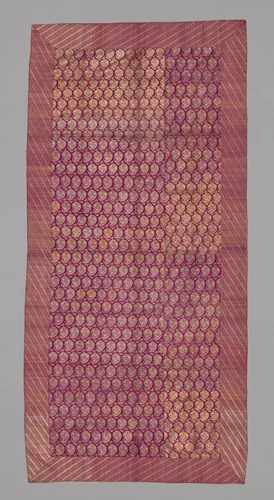
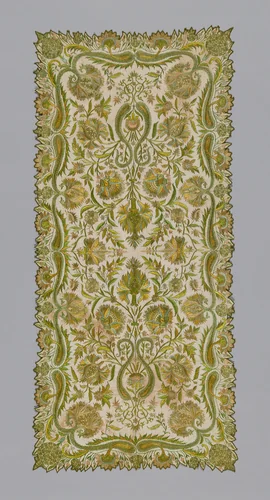
Beyond illumination, artists excelled in complex decorative arts. The intricate weaving displayed in the surviving Rug indicates a sophisticated mastery of fiber and pattern that appealed across class lines. Similarly, the composite forms and refined execution found in the Album Page with Calligraphic Specimen and Animal Border speak to a culture that valued refined connoisseurship. It is remarkable how this vast cultural region managed to sustain such specific, high-quality output across multiple competing courts over two centuries.
Today, the influence of these traditions endures, with significant examples held in major institutions worldwide, including the Art Institute of Chicago. While original India paintings remain highly coveted, the aesthetic legacy ensures that many historical India prints are now available as downloadable artwork, making these museum-quality designs accessible for contemporary study and appreciation.
Source: Wikipedia · CC BY-SA 4.0