India Rajasthan
India Rajasthan refers to the robust artistic production originating from the princely states of Rajasthan, India, during the late medieval and early modern periods. The identified corpus of work dates the documented activity of artists associated with this region to the fifty-year period between 1695 and 1745.
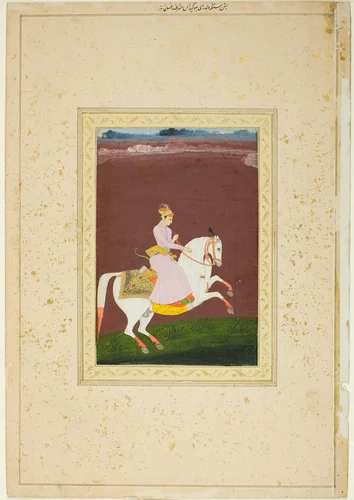
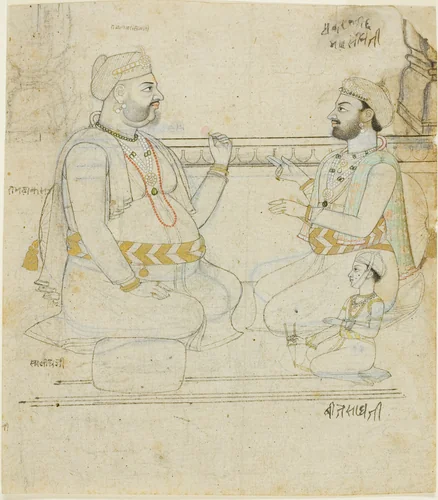
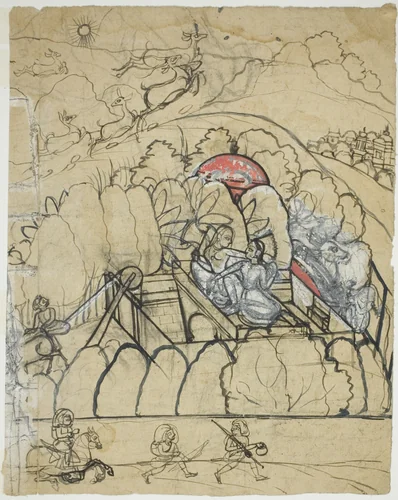
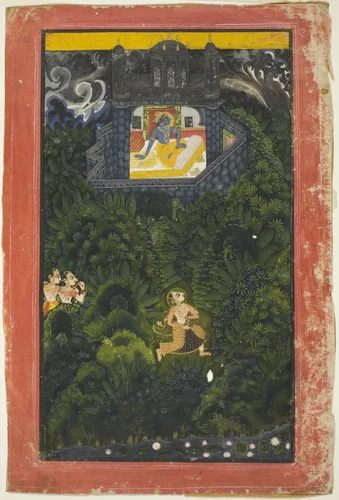
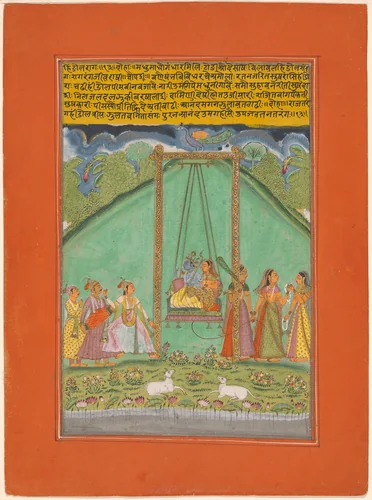
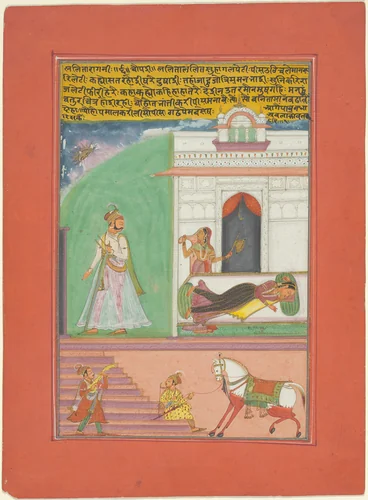
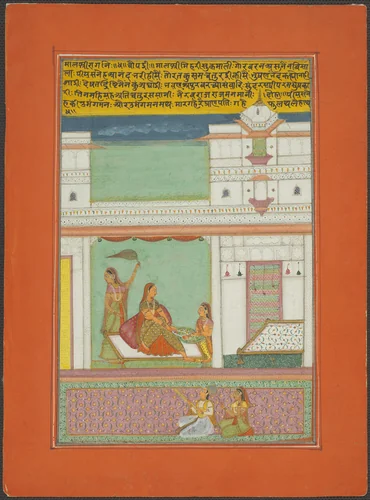
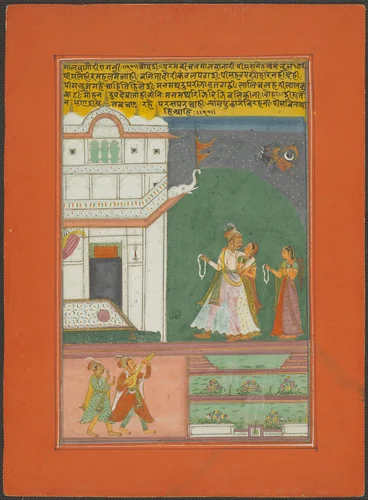
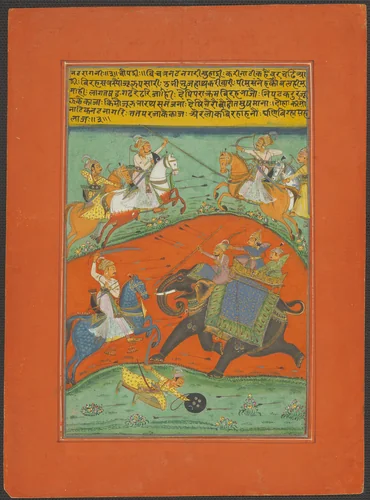
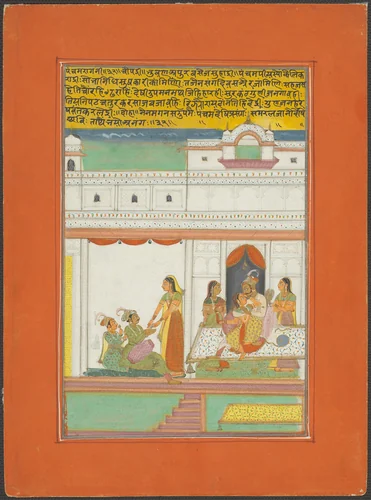
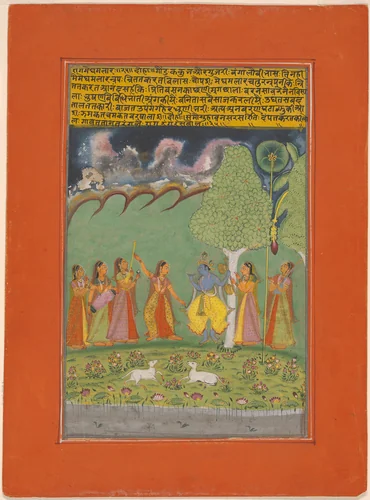
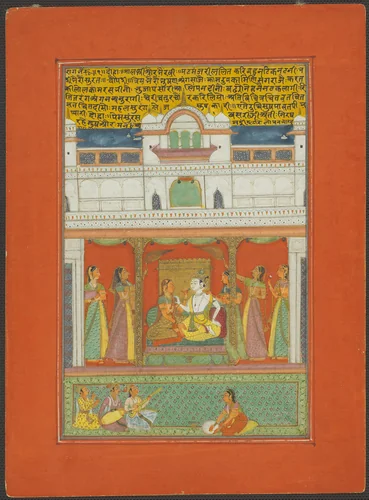
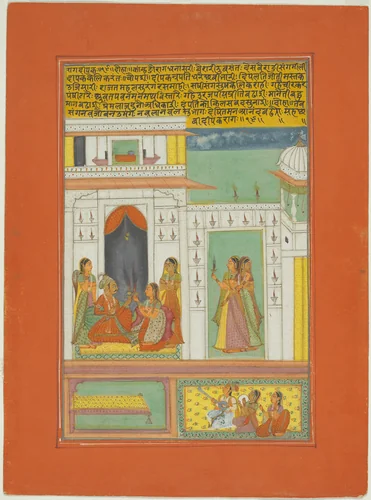
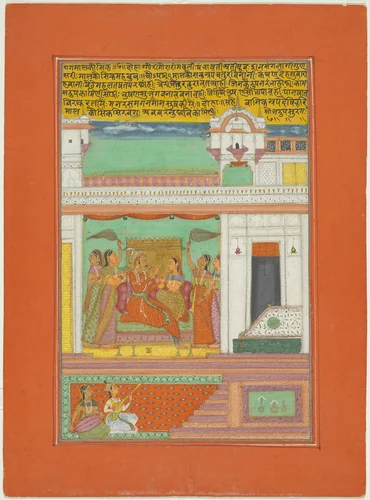
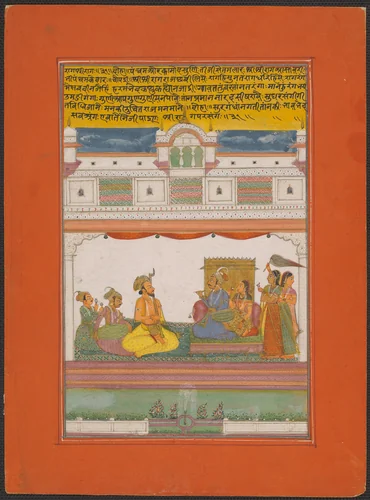
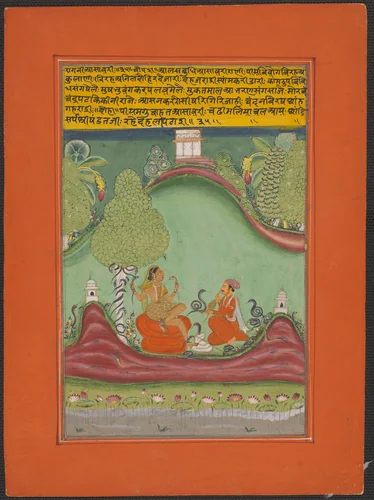
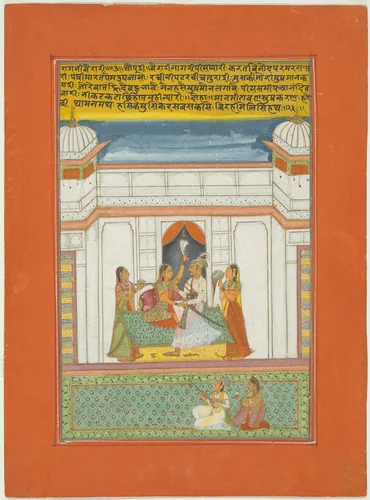
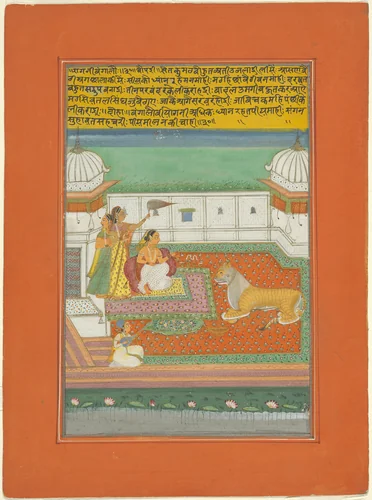
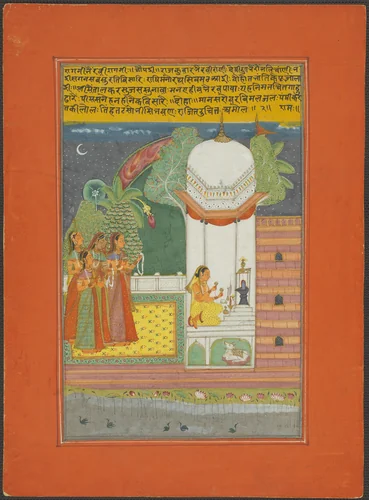
The recorded output consists primarily of paintings, with fourteen such pieces documented, complemented by one known example of intricate metalwork. The subject matter typically centers on courtly life, portraiture, and poetic or devotional narratives. Specific examples include the depiction of hierarchy and status in Two Rajput Noblemen with a Child and the dynamic, romantic narrative captured in Abhisarika Nayika (Heroine Running to Meet her Lover). Scenes of daily life, such as Two Ladies Converse at a Step-Well (Baoli) in a Walled Garden, further illustrate the range of subjects covered by India Rajasthan paintings.
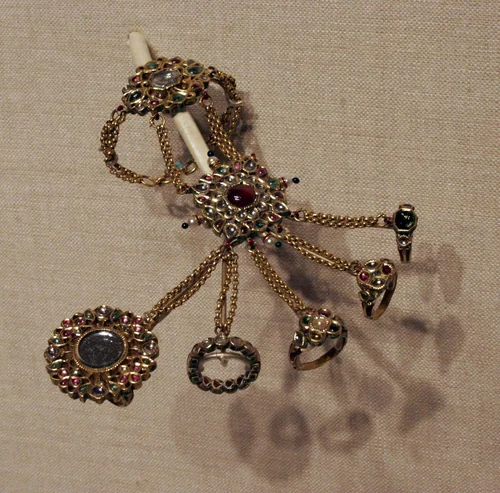
Fifteen works are currently represented in museum collections, confirming the artistic significance and technical mastery of these historical workshops. The decorative arts are represented by pieces such as the elaborate Hand Ornament (Hathphul) and Thumb Ring (Arsi), demonstrating proficiency in material culture beyond pigment and paper. The Art Institute of Chicago holds examples of this work, establishing its placement within major Western institutional collections. Today, much of this historical material is available as downloadable artwork and high-quality prints, ensuring the continued study of these distinct India Rajasthan prints.