Ike Taiga
Ike Taiga (1723-1776), born in Kyoto, is one of the pivotal figures in the history of Japanese painting and calligraphy from the Edo period. His work is primarily identified with the bunjinga movement, or literati painting, a sophisticated genre that he and his contemporary, Yosa Buson, successfully perfected. Taiga’s contribution was essential in translating the high-minded ideals of traditional Chinese scholar-painting into a dynamic and distinctly Japanese visual vocabulary.
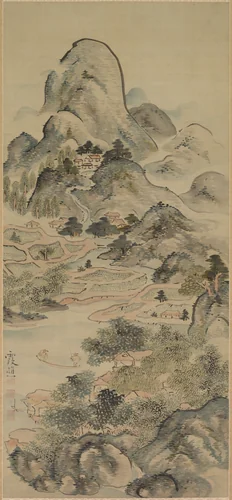
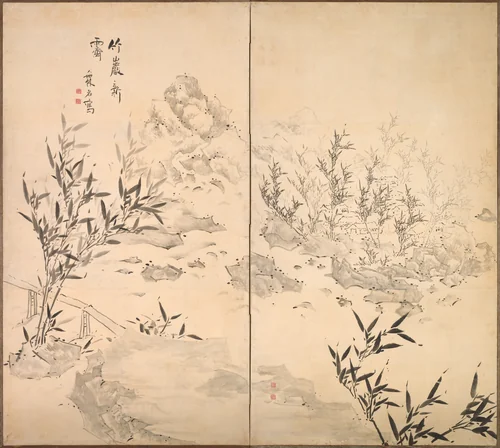
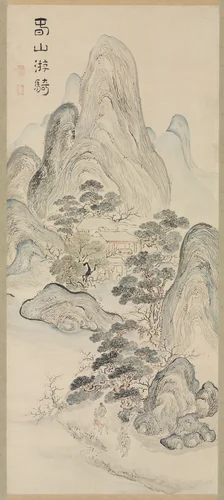
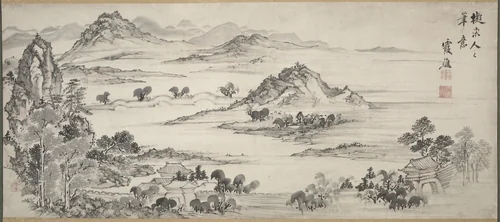
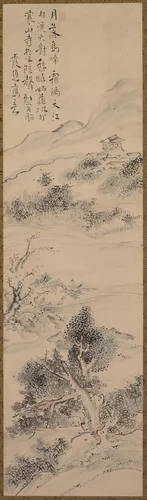
The core of Taiga’s artistic endeavor lay in his profound appreciation for classical Chinese culture and painting techniques. His commitment to this heritage is evident in the scholarly composition and refined brushwork seen in early works like Fishing in Springtime and the disciplined structure of Bamboo in Fine Weather after Rain. However, Taiga was not content simply to emulate historical models. He was an innovator who incorporated elements that were strikingly modern and occasionally revolutionary for the eighteenth century, resulting in a vibrant hybrid aesthetic. This synthesis of strict tradition with progressive methodology gave his bunjinga an uncommon vitality, allowing intellectual complexity and visual energy to coexist naturally within compositions such as Spring Landscape and the expansive views presented in West Lake.
As a leading bunjin, or literati man, Taiga was highly influential, maintaining vigorous connections within the most prominent social and artistic circles across Kyoto and other parts of the country throughout his lifetime. His dedication to the itinerant scholar-artist lifestyle, which necessitated constant travel, underscored his commitment to authenticity and allowed his distinct style to be disseminated widely.
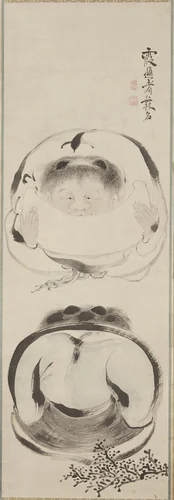
His enduring significance is measurable not only by the influential role he played in shaping Japanese art but also by the sustained institutional interest in his surviving output. Today, original Ike Taiga paintings, including characteristic works like Kanzan and Jittoku, are held in major Western collections, affirming their museum-quality status. For those studying the Edo period, the continued relevance of his art ensures that high-quality prints and downloadable artwork are frequently sought after, with many significant examples of Ike Taiga prints becoming available through public domain collections.
Source: Wikipedia · CC BY-SA 4.0