Iakov Chernikhov
Iakov Chernikhov stands as one of the most intellectually compelling figures of early Soviet modernism, an architect, graphic designer, and architectural theorist whose primary contribution resides in the spectacular genre of the architectural fantasy. Active during a critically explosive period between 1928 and 1933, Chernikhov was fundamentally associated with the Constructivist movement, yet his work swiftly transcended utilitarian dogma, proposing a deeply imaginative vision for the machine age.
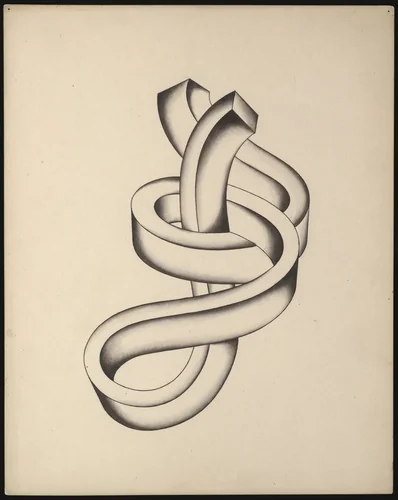
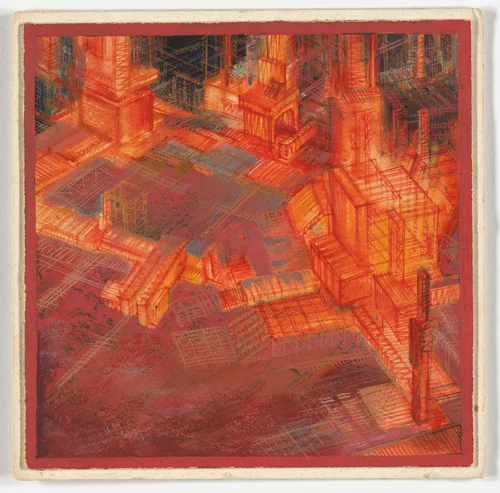
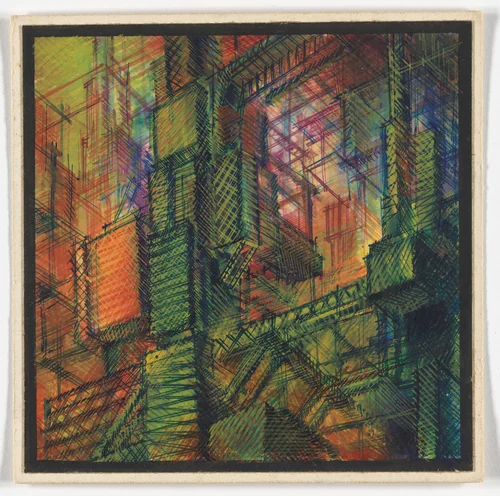
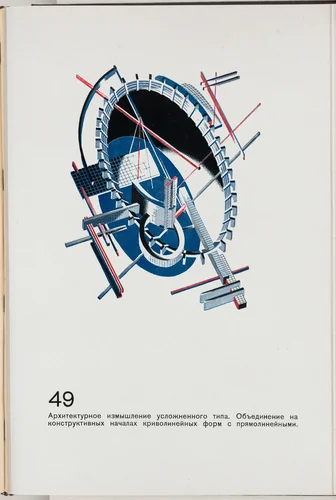
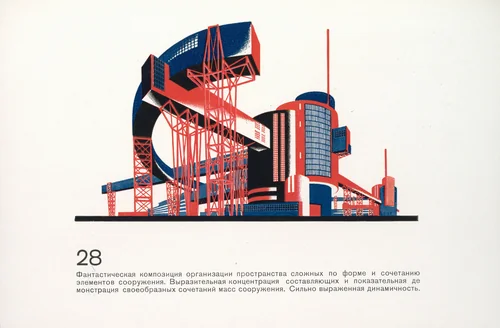
His significance lies in his role as a conceptual synthesizer. Contemporaries described him as a composite of the Enlightenment classicist Claude Nicolas Ledoux, the dramatic scenographer Giovanni Battista Piranesi, and the Italian Futurist Antonio Sant’Elia. This unique synthesis resulted in complex, often impossible, renderings that fused vast mechanical geometries with breathtaking spatial drama. Chernikhov utilized studies such as Dimensional Curve Interlace and the intricate perspectives within the Study for the Cycle of Architectural Landscapes no.2 and no.3 to explore the formal limits of structure, weight, and motion.
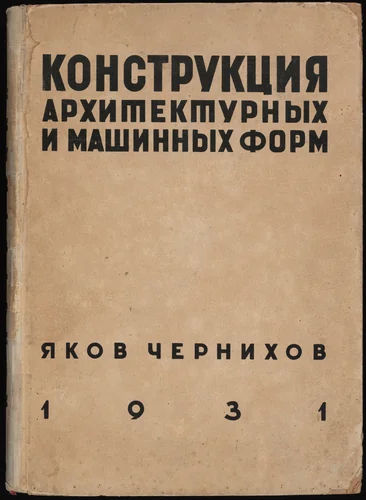
Chernikhov’s primary lasting achievement rests not in executed structures, but in his influential publications, which were produced in Leningrad and ranked among the most innovative design texts of their time. Books like Konstruktsiia arkhitekturnykh i mashinnykh form (The Construction of Architectural and Machine Forms) and Arkhitekturnye Fantazii served as visual manifestos, demonstrating complex compositional principles that became touchstones for designers internationally. These illustrated works, replete with detailed axonometric and perspective drawings, functioned as a potent theoretical counterpart to the realized architecture of the era.
The sheer volume and complexity of his drawn output suggests an intellect operating at the theoretical limits of possibility, meticulously mapping out worlds that could exist only on paper. Although he completed a handful of functional architectural projects, it is the spectacular non-utilitarian nature of the Iakov Chernikhov prints and drawings, many of which are held in prestigious collections such as the Museum of Modern Art, that cemented his historical status. Today, these influential conceptual works are widely available for study as downloadable artwork, ensuring that his monumental, high-quality prints continue to resonate with artists and architects worldwide.
Source: Wikipedia · CC BY-SA 4.0